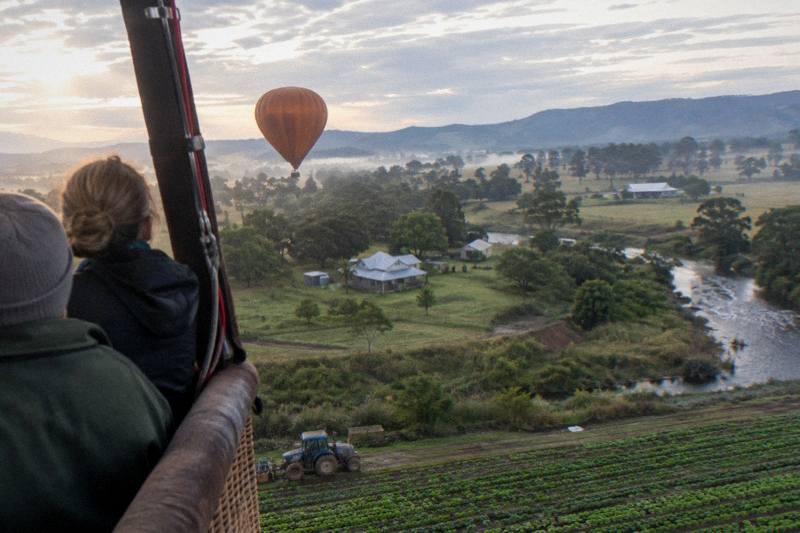
Hot Air Balloon Landing: What To Expect
The landing is the part of a balloon flight most first-time passengers worry about, so this guide walks through it step by step with the operator's own published detail.
Short answer
The operator, Floating Images, says landings can be bumpy and the basket may lie on its side briefly. Passengers stand in the basket, hold the rope handles, bend their knees at touchdown, then a ground crew that has followed the balloon retrieves it. Helping with pack-down is optional. The flight lasts about 1 hour, and a landing counts as completed after 40 minutes in the air.
For the wider picture of the day, start with the queensland ballooning guide.
| Quick Facts | Detail |
|---|---|
| Operator of the Ipswich flight | Floating Images |
| Meeting point | Car park, Ipswich Visitor Information Centre, Queens Park |
| Flight time | About 1 hour in the air |
| Landing character | Can be bumpy; basket may lie on its side briefly (operator statement) |
| After landing | Optional pack-down help, return by company vehicle, then breakfast |
| Completed flight | A landing counts as completed if the flight ran over 40 minutes |
How Does A Hot Air Balloon Landing Work?
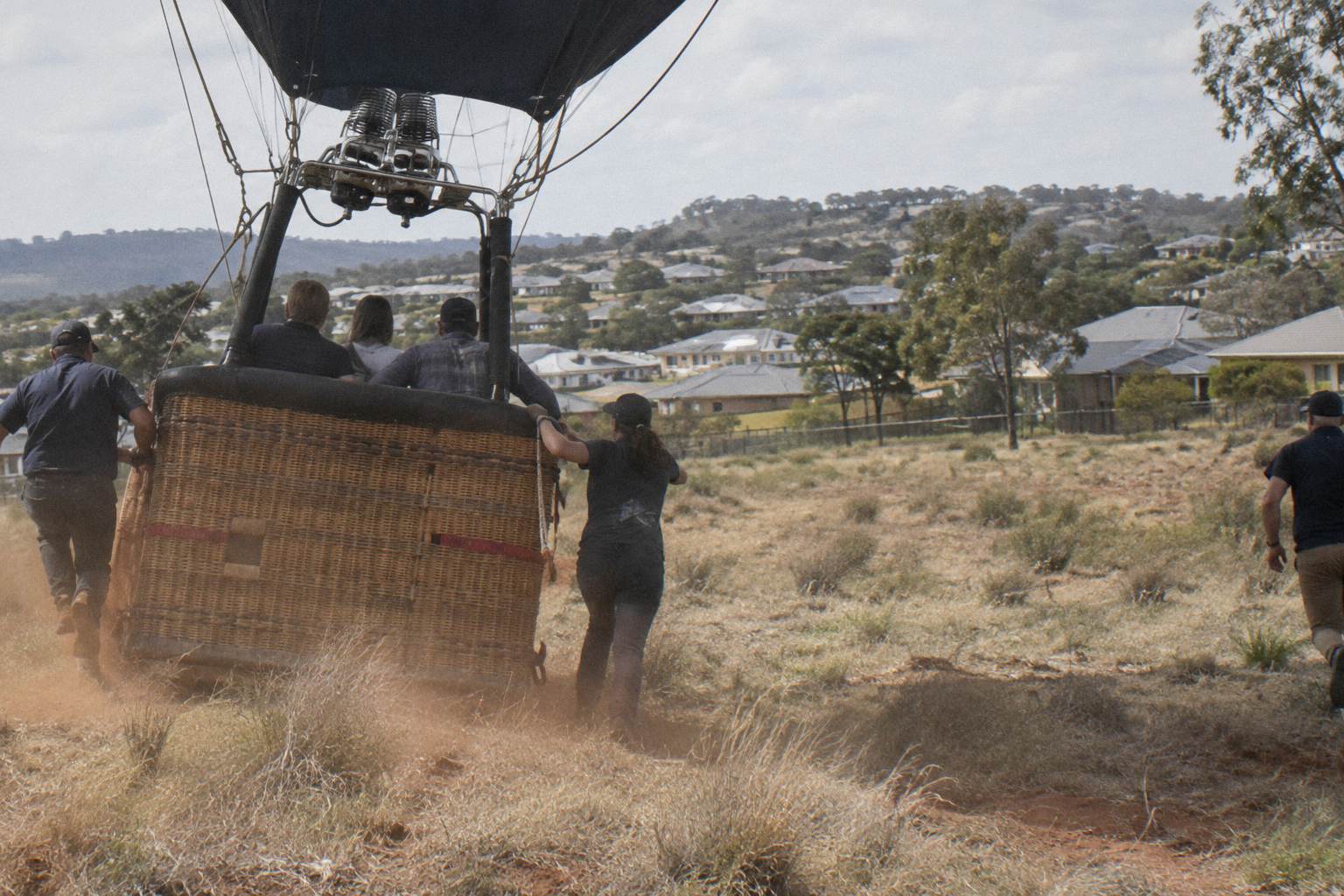
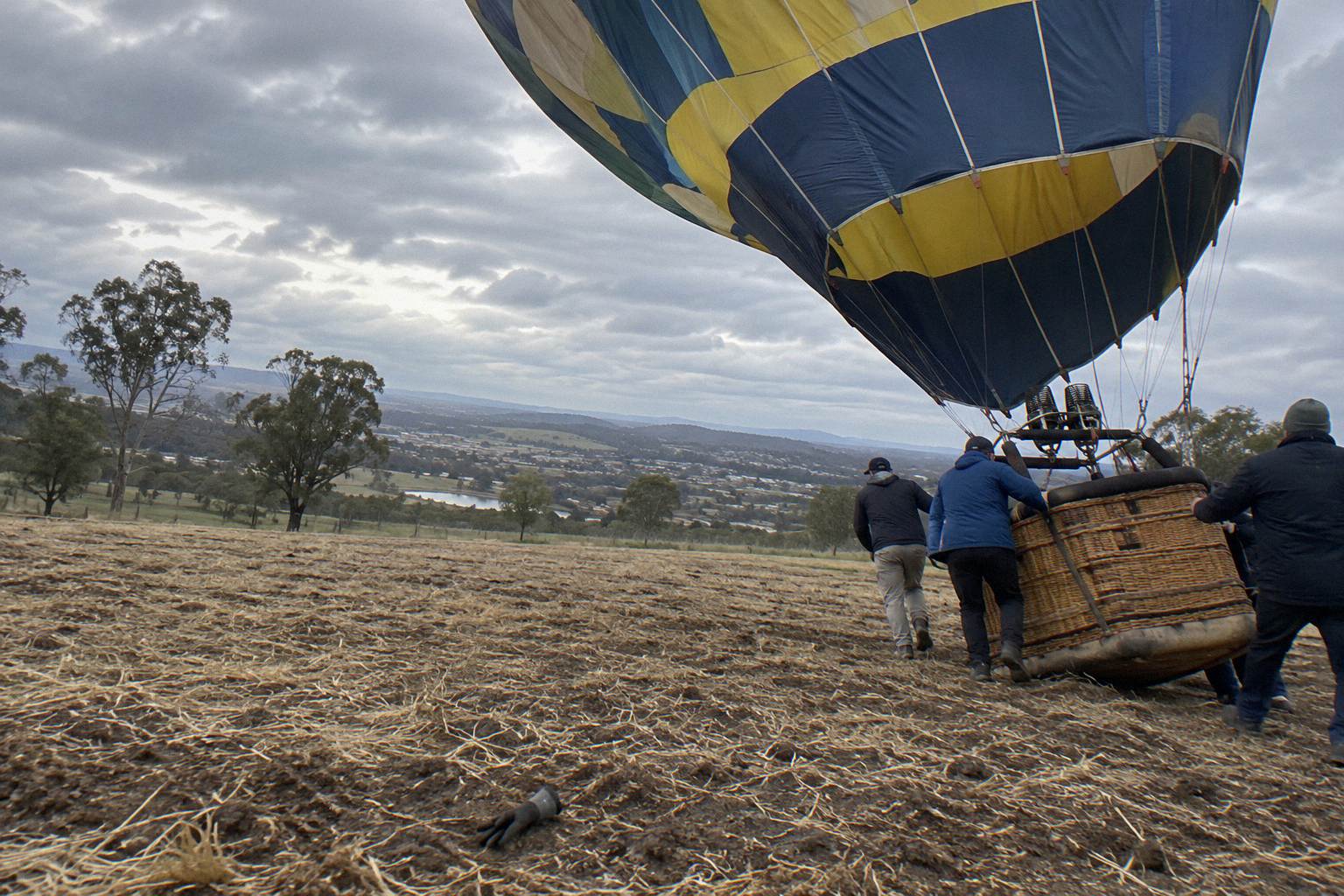
A hot air balloon landing starts minutes before touchdown, when the pilot selects a clear paddock or park sized for the balloon and the ground crew, following by road, closes in. Passengers face away from the direction of travel, bend their knees and hold the rope handles, then brace and stay in the basket until told to climb out, since the day's wind shapes the touchdown.
A balloon has no steering wheel and no brakes. The pilot controls height, and height buys different wind directions, which is how the flight is steered at all. On the Ipswich Scenic City And Country Hot Air Balloon Flight, the launch site is chosen each day from the wind and can be anywhere from 3 minutes to about 20 minutes' drive from the meeting point, so the landing field is equally a decision made that morning, not a fixed spot. The operator's ground crew follows the balloon by road for the whole flight and is normally close by when it lands.
Two things follow from that. First, the landing is the one part of the flight the pilot cannot rehearse in advance, which is why the operator is careful with its wording: landings can be bumpy, and the basket may lie on its side briefly. Second, the landing is not the end of the programme. After touchdown comes deflation, optional pack-down, a drive back to the Ipswich Visitor Information Centre, and then breakfast at Fourth Child Restaurant, 215 Brisbane Street, where the commemorative flight certificate is presented. The full programme runs about 3 to 4 hours door to door.
If the flight lands earlier than the full hour, the operator's terms define a completed flight as one of more than 40 minutes in the air. That is worth knowing before you book, because it sets the expectation for what counts as the product you paid for. Check availability
Are Hot Air Balloon Landings Rough?
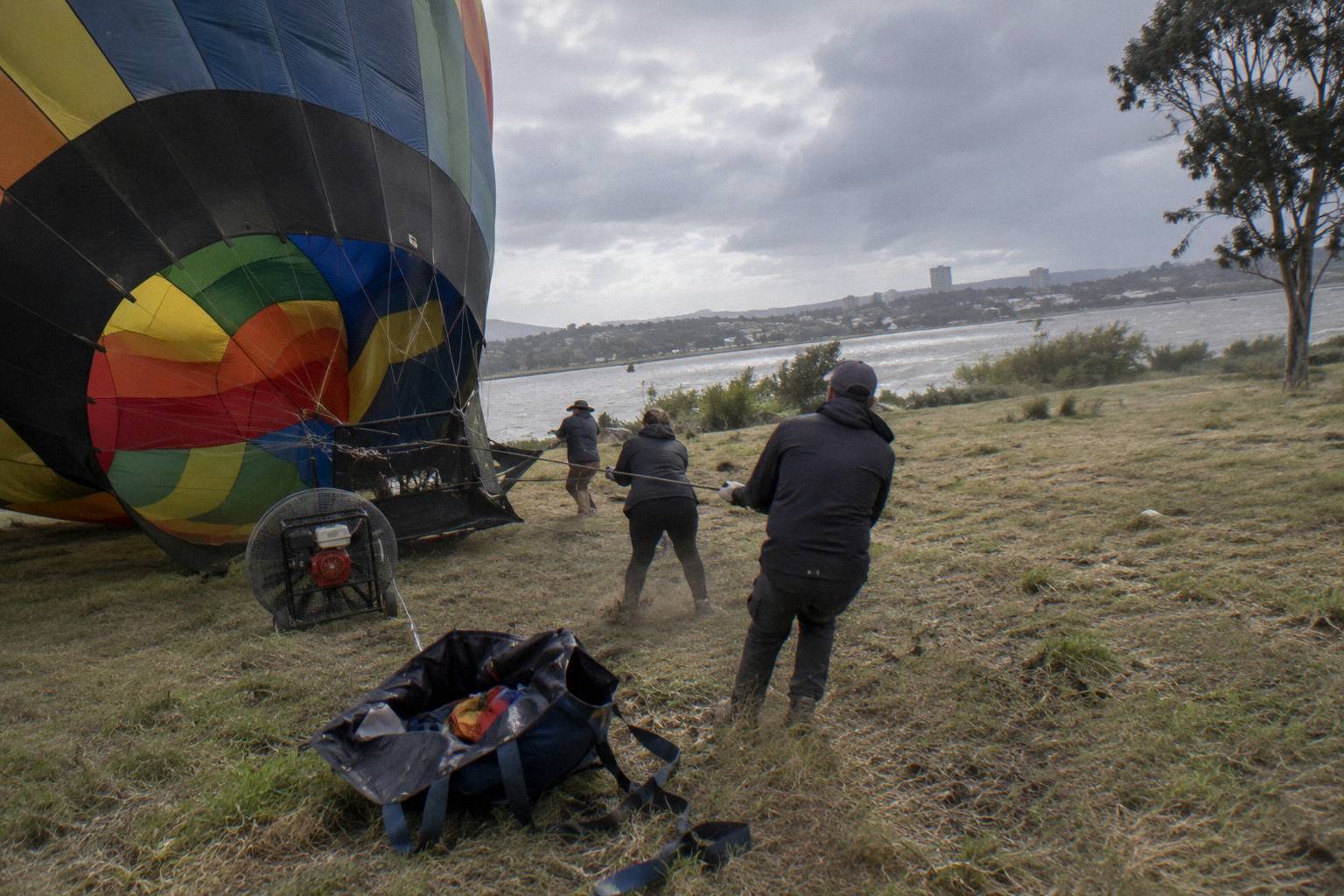
Yes, they can be, and Floating Images says so plainly: landings can be bumpy, and the basket may briefly lie on its side as the envelope comes down onto it, which is a normal landing rather than an emergency. On a calm morning you may barely stagger; in breezier conditions the basket can slide or tip, so no honest page promises a soft landing.
The physical reason is simple. A balloon basket weighs a good deal with ten passengers aboard, and it has no suspension. Whatever horizontal speed the wind carries at landing height, the basket carries too, and that energy has to go somewhere: into a short slide across grass, a tip onto its side, or both. The pilot's job is to pick a field and a moment where that energy is small. The operator says it is legally obliged to cancel flights when the ground wind is more than 20 km/h, which puts a hard ceiling on how rough a scheduled landing is allowed to be in the first place.
What the operator does publish is the passenger side of it. There are no seats in the basket: everyone stands or leans for about the hour, using the rope handles, with two footholds for climbing in and out over a side about 1.2 m high. Landings can be bumpy, the basket may lie on its side briefly, and pack-down help afterwards is optional. There is no door, no wheelchair facility, and passengers must climb in and out unaided. If any of that gives you pause, ask the operator directly when you book: it does not publish anything further about landing technique or landing injuries, so this page will not invent any.
For nerves generally, the question of whether hot air balloon rides are worth it is worth a read, because the honest answer includes the landing as one of the parts people remember most, in a good way, once it is behind them.
What The Ground Crew Does After Touchdown
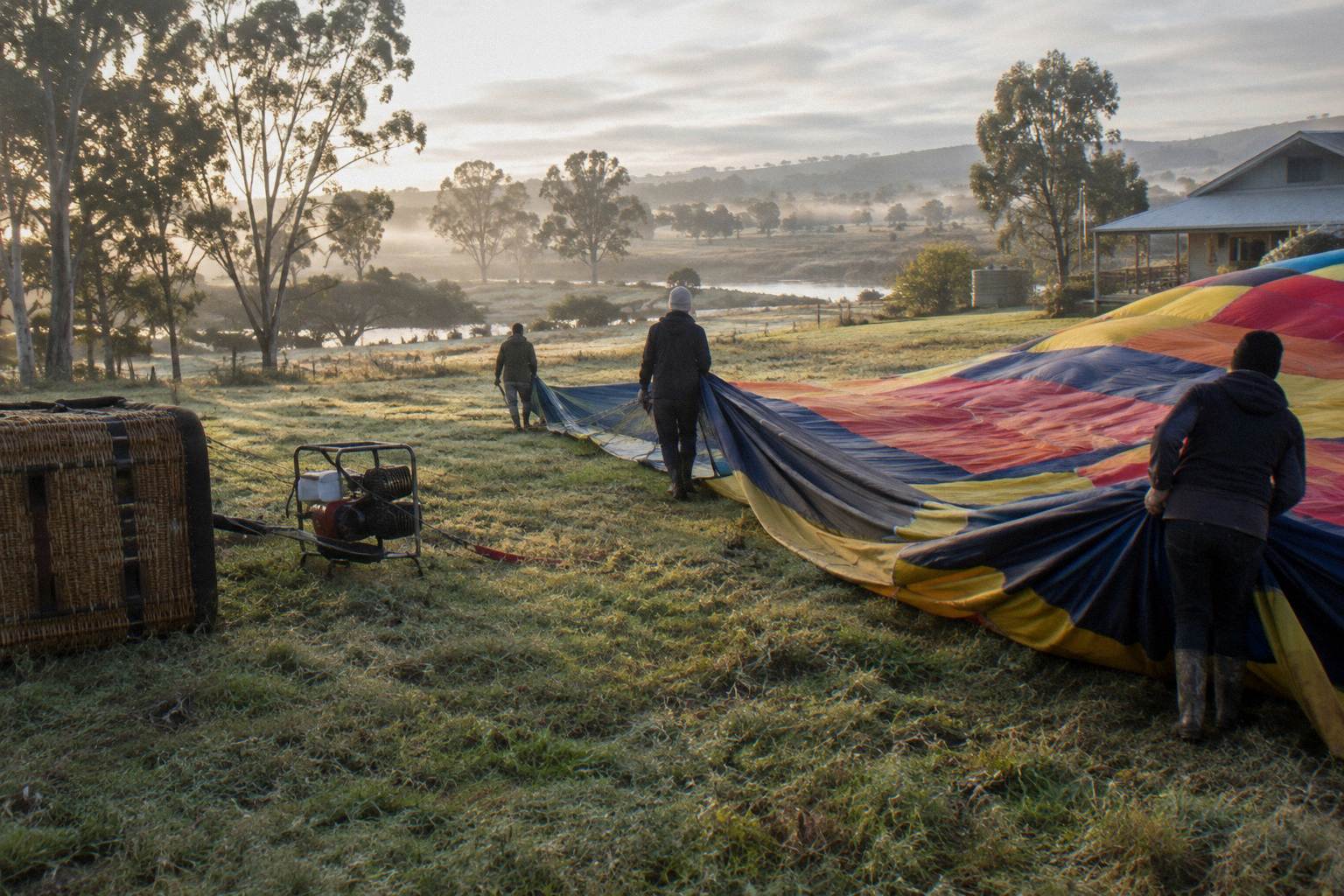
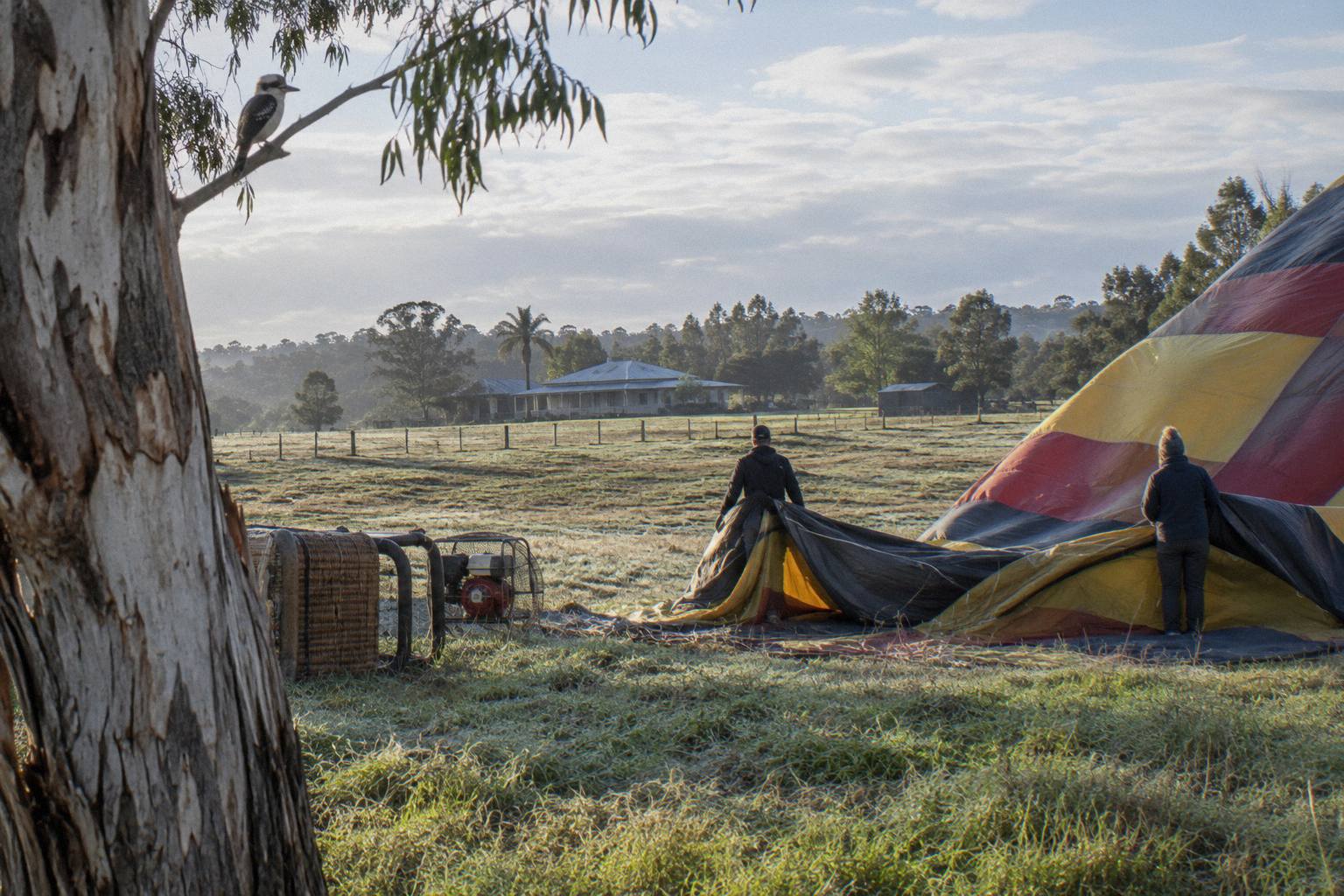
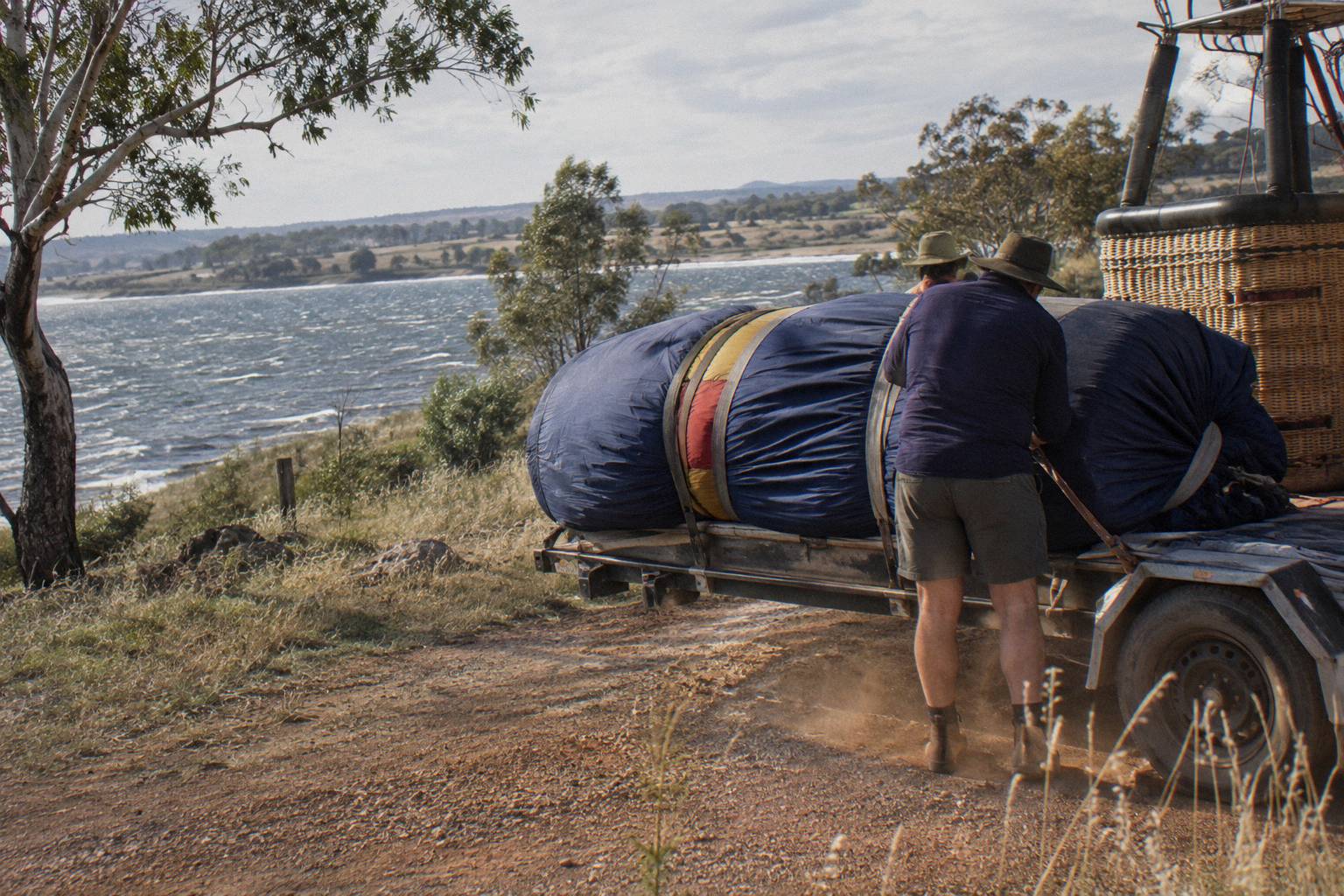
After touchdown, the crew deflates the envelope and gathers it in, having followed the balloon by road throughout the flight so they are with the basket as it comes to rest. The balloon and passengers are then recovered by company vehicle, and everyone returns to the Ipswich Visitor Information Centre before breakfast, with optional pack-down help from passengers listed as part of the experience.
Pack-down is quieter and slower than the flight. The crown line comes first, a crew member walking the envelope out as the air leaves it, and then the fabric is gathered and pushed into its bag. Twenty to thirty minutes is the operator's stated set-up time before the flight, and the reverse process takes a similar order of time. The operator's inclusions list names optional help with inflation and deflation as a genuine part of the day: some passengers love standing on the fabric as it is rolled up, others stand well back and take photos, and both are fine.
The return logistics matter for planning your morning. The company vehicle takes guests from the meeting point to the launch site at the start, the ground crew follows the balloon during the flight, and afterwards everyone returns to the Visitor Information Centre before breakfast at Fourth Child Restaurant. In-flight digital photos, taken from a camera mounted on the balloon, can be pre-purchased or chosen at breakfast, which is a natural moment to look back at the landing itself. The operator's own on-the-day page describes this sequence in full: the day outline on the operator's site.
One practical limit to hold onto: once the group leaves the Visitor Information Centre there are no toilets in the basket, the vehicles, or at the take-off and landing sites in parks and fields. The Centre's toilets open about 10 to 15 minutes before the nominated meeting time, and the restaurant has its own. Use them both, because the landing paddock has nothing.
Where Does The Balloon Land?
Nobody can say in advance, and the landing spot is chosen by the wind on the day: whichever clear paddock or park the wind and the pilot deliver across the Ipswich, Scenic Rim and Somerset country the operator flies over. There is no published list of landing sites, since launch site, route and landing field all shift with each morning's wind.
The operator's named view list gives a sense of the terrain the landing happens in: the heritage city of Ipswich with its Queenslanders, churches and parks; the Brisbane skyline, Mt Coot-tha and Moreton Bay; Flinders Peak, Mount Walker, Cunningham's Gap and Mount Tamborine; the Bremer and Brisbane Rivers, Wivenhoe Dam; and the Great Dividing, McPherson and D'Aguilar ranges. Which of those appear, and which field the basket settles in, depends entirely on the morning's wind. The operator says almost all of Greater Brisbane is visible from its flights, but it also says the actual route depends on the day, and both statements are true at once.
Landings in South East Queensland are, in this sense, ordinary agricultural events. The crew seeks the landholder's ground, the basket comes to rest, and the field is left as it was found. Passengers should expect dew, long grass or both underfoot at the landing site, which is the operator's stated reason for sturdy enclosed shoes: no sandals, thongs, open toes or heels. The launch site, for comparison, is between 3 and about 20 minutes' drive from the meeting point, and the landing can be further afield again before the drive back.
What To Wear And How To Stand For Landing
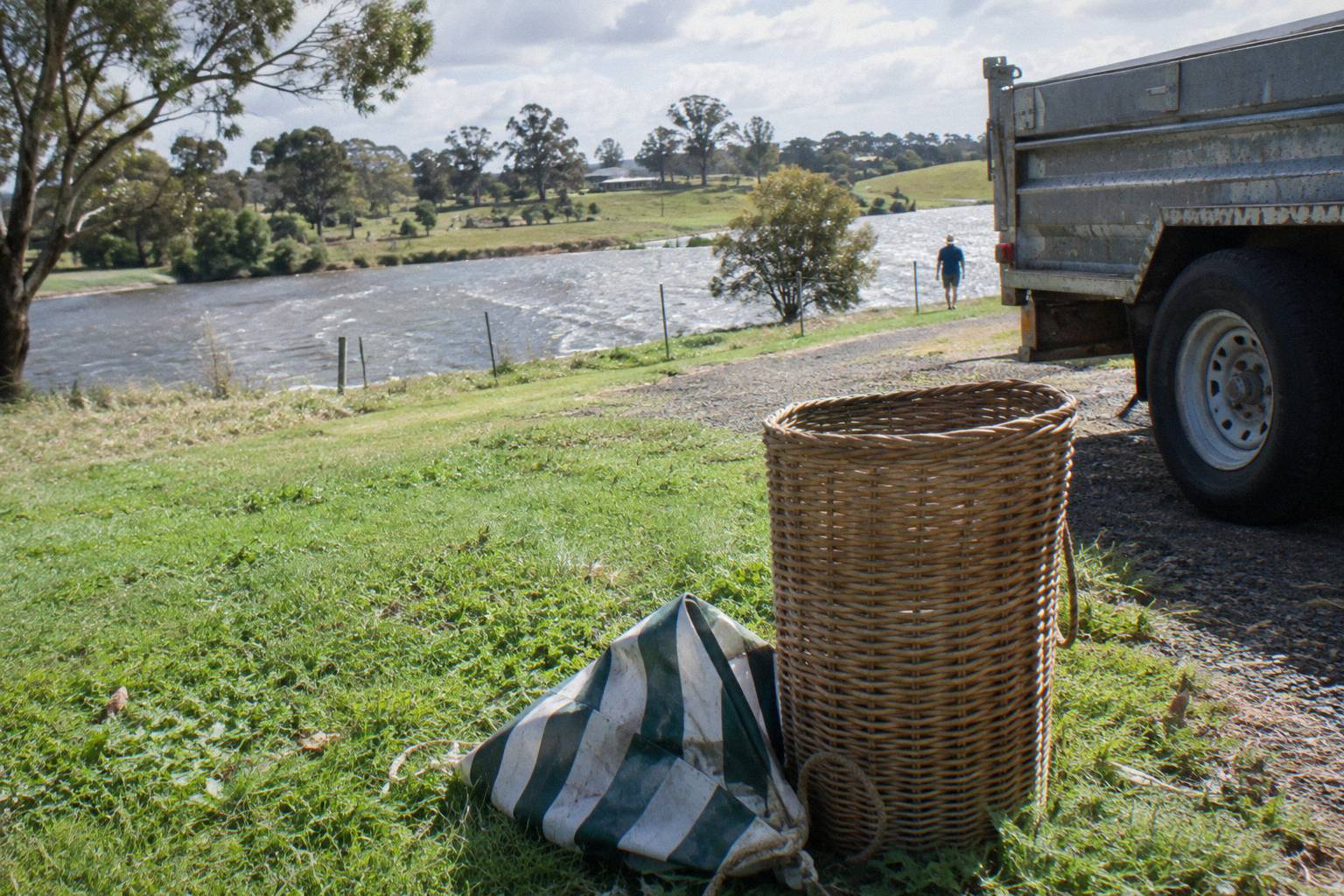
Wear comfortable layers, a hat, sunglasses, and sturdy enclosed shoes for dew or long grass, and skip white. At landing, stand in the basket, hold the rope handles, and bend your knees at touchdown; the basket may tip onto its side briefly, and you stay put until the pilot or crew tells you to climb out through the two footholds.
The clothing list is not decoration. Landing fields are wet with dew most mornings, the grass can be long, and the basket tips. Loose items are the real hazard: hats that fly off, phones held out for video, sunglasses perched on a collar. The operator recommends a camera or video camera and says outright that it remains the guest's responsibility at all times, which is worth taking literally at the moment of touchdown, when both hands belong on the handles. What to wear on a balloon flight covers the wardrobe question in full.
| Item | Operator guidance | Why it matters at the landing |
|---|---|---|
| Shoes | Sturdy enclosed shoes; no sandals, thongs, open toe or heels | Dew, long grass, a bumpy touchdown and a possible basket tip |
| Clothing | Comfortable layers; avoid white | Cold at the field before sunrise, dew and grass stains on landing |
| Head and eyes | Hat, sunglasses | Sun arrives fast after sunrise; hats need to be secure at landing |
| Hands | Rope handles at touchdown | Both hands free of phones and cameras when the basket meets the ground |
| Camera | Bring one; it stays your responsibility | Photos can be bought at breakfast anyway, from the balloon-mounted camera |
The standing position deserves a line of its own because it is the one thing the operator asks of every passenger at the same moment. There are no seats, walkers, sticks or crutches allowed in the basket, and everyone must stand unaided for the hour; the landing brace, knees bent, back foot braced, hands on the handles, is simply the last minute of that hour. When the basket comes to rest, possibly on its side, passengers climb out unaided over the two footholds. Anyone with a mobility limitation must be accompanied by a support person, the operator says, and all passengers sign a medical waiver.
How The Landing Fits Into The Whole Morning
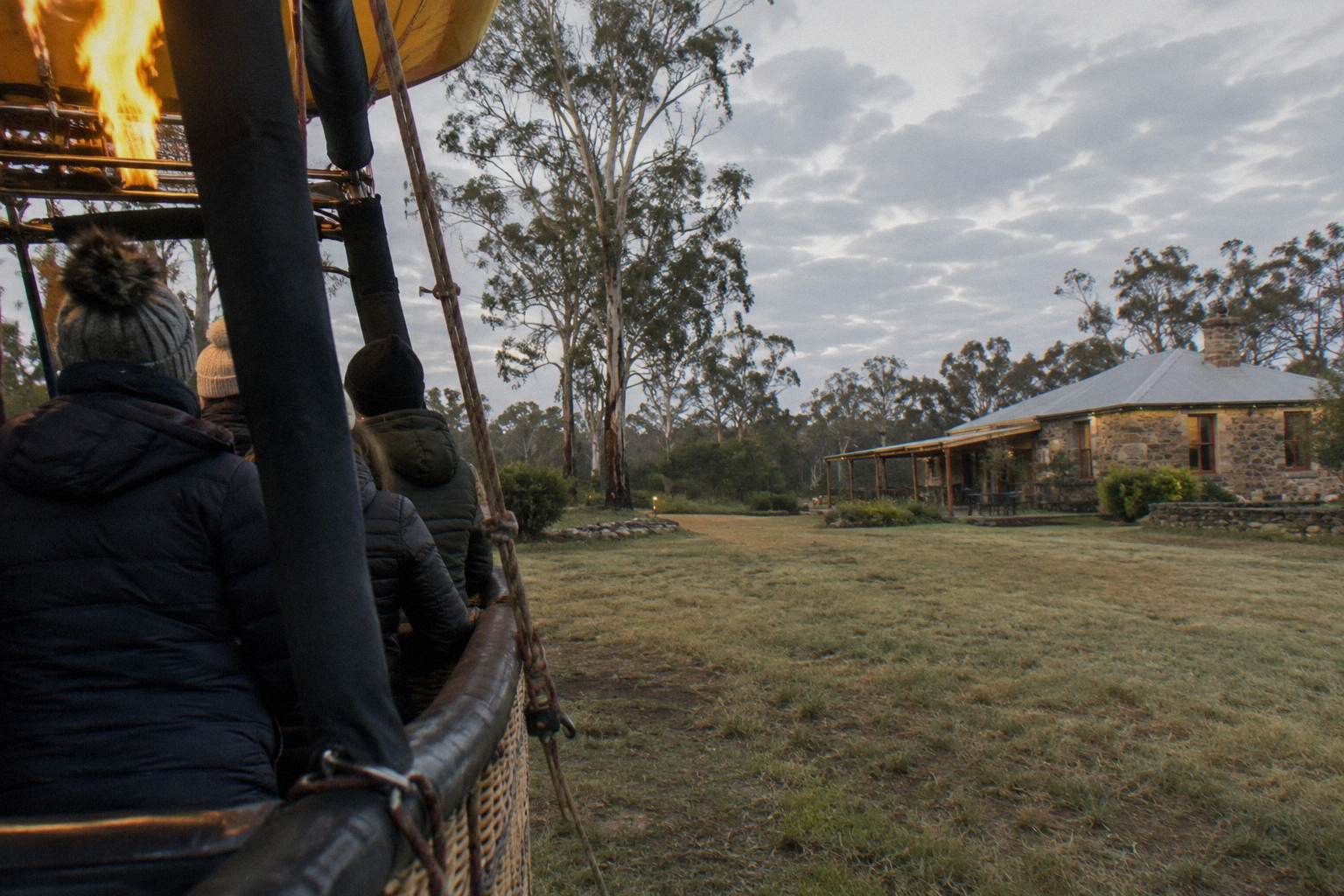
The landing falls about two and a half hours into a 3 to 4 hour programme, arriving after check-in 45 minutes before sunrise, the drive to the launch site, 20 to 30 minutes of set-up, and roughly an hour in the air, then the morning wraps up with pack-down, the drive back, and breakfast, with Queensland's lack of daylight saving keeping those clock times steady year-round.
| Time of year | Operator's estimated meeting time | Approximate sunrise, Ipswich |
|---|---|---|
| Jan to Feb | 4.15 to 4.45am | 05:06 to 05:31 |
| Mar to Apr | 4.45 to 5.15am | 05:49 to 06:05 |
| May to Jun | 5.30 to 6.00am | 06:21 to 06:36 |
| Jul to Aug | printed as 5.30 to 5.15am on the operator's page | 06:38 to 06:20 |
| Sep to Oct | printed as 5.00 to 4.30am on the operator's page | 05:47 to 05:13 |
| Nov to Dec | 4.00 to 4.15am | 04:49 to 04:47 |
The sunrise column is approximate, computed from the NOAA solar position calculation for Ipswich; the meeting-time column is the operator's own published table, including two rows the operator's page prints with apparent typographical slips. The takeaway for the landing is a simple one: in winter the whole programme happens in daylight that arrives late, and in summer the landing happens with the sun barely up. Either way the sequence is identical, and the weather call comes the evening before, when the operator asks passengers to ring between 7 and 7.30pm to confirm the flight is proceeding.
Because landing time depends on launch time, sunrise balloon flight timing is the companion page if you are deciding which month to fly. If the weather turns, the operator cancels and offers a reschedule or refund, and balloon flight weather and cancellations explains that side in detail.
How Landings Differ Across Nearby Flights
Physically, every flight ends the same way: a basket touches down in a field and the crew recovers it. What differs is everything around the landing. The Ipswich flight returns to the Visitor Information Centre and breakfasts at Fourth Child Restaurant, while the nearby Scenic Rim and Gold Coast flights are different operators with different logistics, from coach legs and hotel pickups to their own cancellation windows and no Ipswich launches, so never assume the Floating Images rules apply.
| Flight | Operator | Landing-side logistics | Cancellation window |
|---|---|---|---|
| Ipswich Scenic City And Country Flight | Floating Images | Ground crew follows; company vehicle; return to the Centre then breakfast | A$25 per person at 8 to 14 days; A$50 at 72 hours to 7 days; full fare inside 72 hours |
| Scenic Rim Classic Hot Air Balloon Flight | Hot Air | Canungra or Nerang meeting point, coach to launch; VIP pickup from Brisbane accommodation optional | Free cancellation up to 24 hours before, per the booking page |
| GoBallooning Gold Coast Flight With Photos | Go Ballooning | Meets at the Sheraton Grand Mirage, Main Beach | Free cancellation up to 24 hours before start time, per the booking page |
Take the three one at a time. The Ipswich flight is the only one of the eight that launches from Ipswich, with the basket-of-rovers logistics described above and the operator's own fares: flight only at A$460 adult and A$425 child per person as its published prices, breakfast package from A$450, and a flight for two from A$990. The Scenic Rim Classic flight by Hot Air runs about 5 hours with an hour in the air, self-drive to Canungra or Nerang, and the booking page shows the current price. The GoBallooning Gold Coast Flight With Photos runs about 4 hours from the Gold Coast, shows 4.9 from 707 reviews, and its booking page shows the current price too. None of the three shares a landing field with another, and none shares an operator with the Ipswich flight.
The distinction matters most for the nervous flyer choosing between them. If the worry is the landing itself, the physical event is comparable across operators and none of them promises a gentle one. If the worry is the whole morning, the differences are logistical: where you meet, how long the day runs, and what the cancellation terms are. Read the Scenic Rim balloon flights page for the fuller picture on those launches.
Mistakes That Trip People Up At Landing
The mistakes that trip people up at landing are ordinary things done at the wrong moment: stepping out before the crew says so, holding a phone instead of a handle at touchdown, and dressing for a hotel breakfast rather than a wet paddock, which is why the operator requires you to stay in the basket until told, handle your own camera, and wear sturdy enclosed shoes.
The recurring mistakes, in rough order of frequency:
- Treating the landing as the end. It is the middle of the last act: pack-down, the drive back and breakfast still follow, so keep your jacket on and your shoes tied.
- Reaching for the phone at touchdown. The pilot's briefing asks for knees bent and hands on the handles; the photos worth having can be bought at breakfast from the balloon-mounted camera anyway.
- Wearing the wrong shoes. Sandals and heels fail in wet grass, and the operator bars them outright.
- Skipping the evening weather call. The operator asks passengers to ring between 7 and 7.30pm the night before; miss it and you may drive to Queens Park for nothing.
- Assuming a toilet stop exists. After the Visitor Information Centre there are none until the restaurant, at the basket, in the vehicles or in the fields.
- Expecting a fixed landing field. The wind decides, and the operator publishes no landing site list.
One more, for the day's arithmetic: a flight counts as completed once it runs more than 40 minutes, per the operator's terms. Passengers who land at minute 45 sometimes feel short-changed until they read that clause, so read it before you fly rather than after. The operator's FAQ page carries its own wording on all of this: the operator's frequently asked questions.
Common Questions About The Balloon Landing
Are Hot Air Balloon Landings Rough?
The operator says landings can be bumpy and the basket may lie on its side briefly. That is the normal variant, not an accident. The operator also says it is legally obliged to cancel flights when the ground wind exceeds 20 km/h, which caps how strong a landing wind can be on a flight that proceeds.
Do You Fall Over When A Balloon Lands?
Passengers stand with knees bent and hands on the rope handles, and on a gentle landing that is enough to stay upright. On a firmer one the basket can slide or tip onto its side, and passengers end up braced against the basket wall or lying with it. You stay in the basket until the pilot or crew tells you to climb out.
Where Does The Balloon Land?
Wherever the wind and the pilot deliver it: a clear paddock or park across the Ipswich, Scenic Rim and Somerset country the operator flies over. The launch site alone varies from 3 to about 20 minutes' drive from the meeting point, and the operator publishes no landing site list. Ask the crew on the day.
What Happens After The Balloon Lands?
The envelope deflates, the ground crew gathers it in, and helping with pack-down is optional. Everyone then returns by company vehicle to the Ipswich Visitor Information Centre, and breakfast follows at Fourth Child Restaurant, where the commemorative flight certificate is presented and in-flight photos can be chosen.
Can A Balloon Land Early?
Yes, and the operator's terms count a flight as completed if it runs more than 40 minutes in the air. The advertised flight time is about one hour, but wind and suitable landing fields can shorten it.
What Should I Hold On To During The Landing?
The rope handles built into the basket, with both hands, knees bent, facing the direction the pilot indicates in the pre-landing briefing. Cameras and phones stay your responsibility at all times, and the safest place for them at touchdown is a zipped pocket.
The landing is the part of the morning the operator describes most cautiously, and this page has kept to what it publishes: bumpy is possible, the basket may lie on its side, the crew follows, and pack-down help is optional. Everything beyond that is a question for the operator when you book, and the team behind Ipswich Hot Air Balloon keeps this page aligned with the operator's own pages rather than with ballooning folklore.