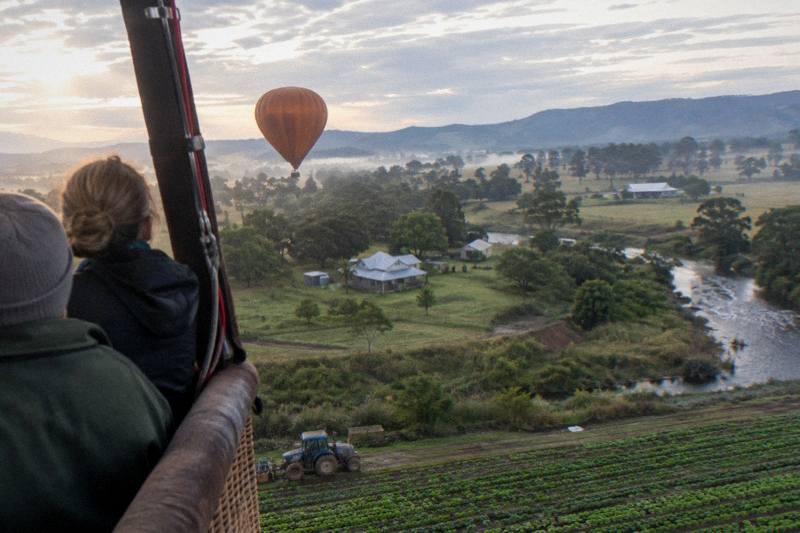
What To Wear On A Hot Air Balloon Flight
Balloon flights over Ipswich meet up to 45 minutes before sunrise in the coldest part of the day, in a field. Here is what to wear, why the operator bans sandals and open shoes, and what it says about white clothing.
Short answer
Wear comfortable layers you can shed, a hat, sunglasses and sturdy enclosed shoes; the operator of the Ipswich flight recommends exactly that and says to avoid white and skip sandals, thongs, open toe shoes and heels. Expect to stand for about an hour with no seats, meet before dawn in the coldest part of the day, and walk through dew or long grass at the launch and landing sites.
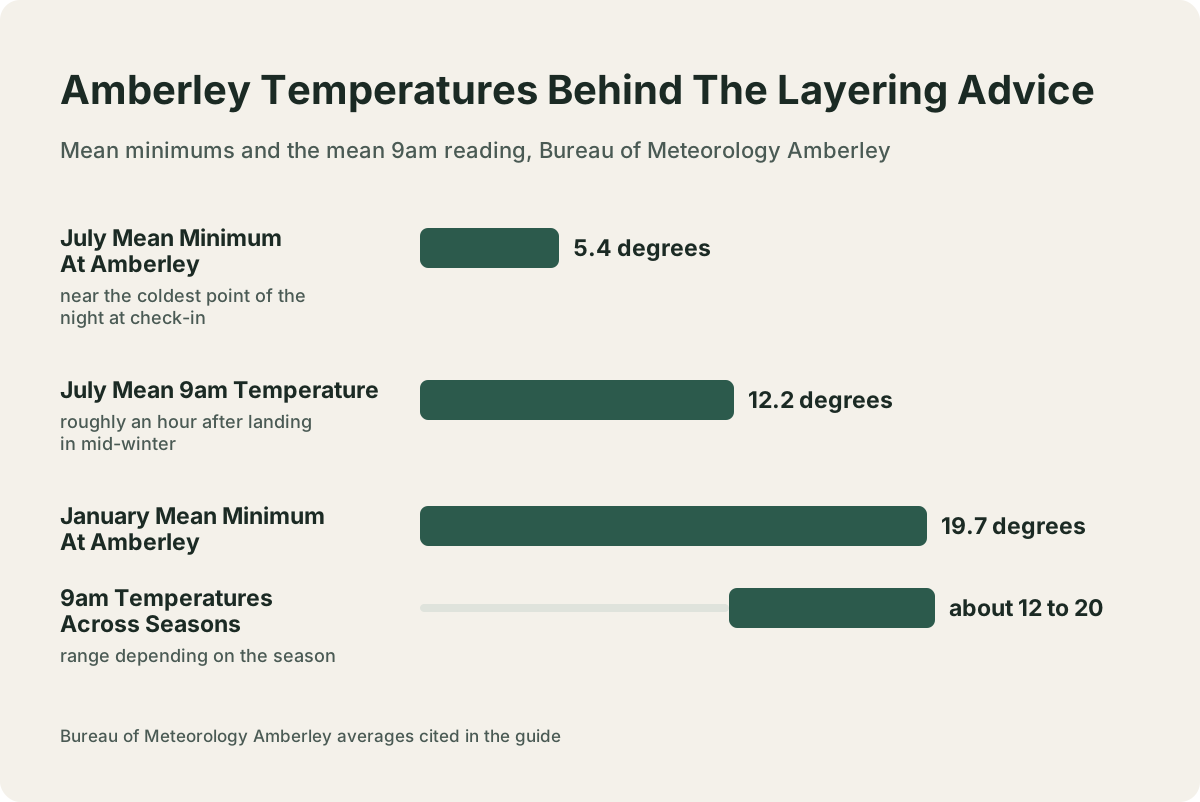
A hot air balloon flight in South East Queensland starts in the dark, in the coldest hour of the day, standing in a paddock while a balloon inflates. The operator of the Ipswich flight, Floating Images, tells passengers to wear comfortable layers, sunglasses, a hat and sturdy enclosed shoes, and it says to avoid white. That is the short version. The long version depends on the month: the Bureau of Meteorology's Amberley station, the closest long-term climate record to Ipswich, shows mean minimum temperatures ranging from 19.7 degrees in January down to 5.4 degrees in July, and a recorded low of -4.8. What you wear in summer and what you wear in mid-winter are two different outfits.
If you are still choosing a flight, start with the Ipswich sunrise flight, the only one in this coverage that launches from Ipswich itself, or check availability once your date is set.
| Item | Operator's guidance | Why it matters on the day |
|---|---|---|
| Top half | Comfortable layers | 9am temperatures range from about 12 to 20 degrees depending on the season; you warm up in the sun |
| Footwear | Sturdy enclosed shoes | Dew and long grass at launch and landing sites; two footholds to climb into the basket |
| Head | Hat and sunglasses | Burner heat above the head and low sun after take-off |
| Colours | Avoid white | The operator says so and publishes no reason |
| Banned | Sandals, thongs, open toe, high heels | Operator rule for launch and landing fields |
| Extras | Camera or video camera | Stays your responsibility at all times |
The Short Answer For An Ipswich Sunrise Flight
Wear comfortable layers, sunglasses, a hat and sturdy enclosed shoes for dew or long grass, and skip white, sandals, open-toe shoes and heels; since check-in is 45 minutes before sunrise, about 5.30am in winter and near the coldest point of the night, and there are no seats in the basket, your outfit needs to keep you warm and comfortable standing for about an hour.
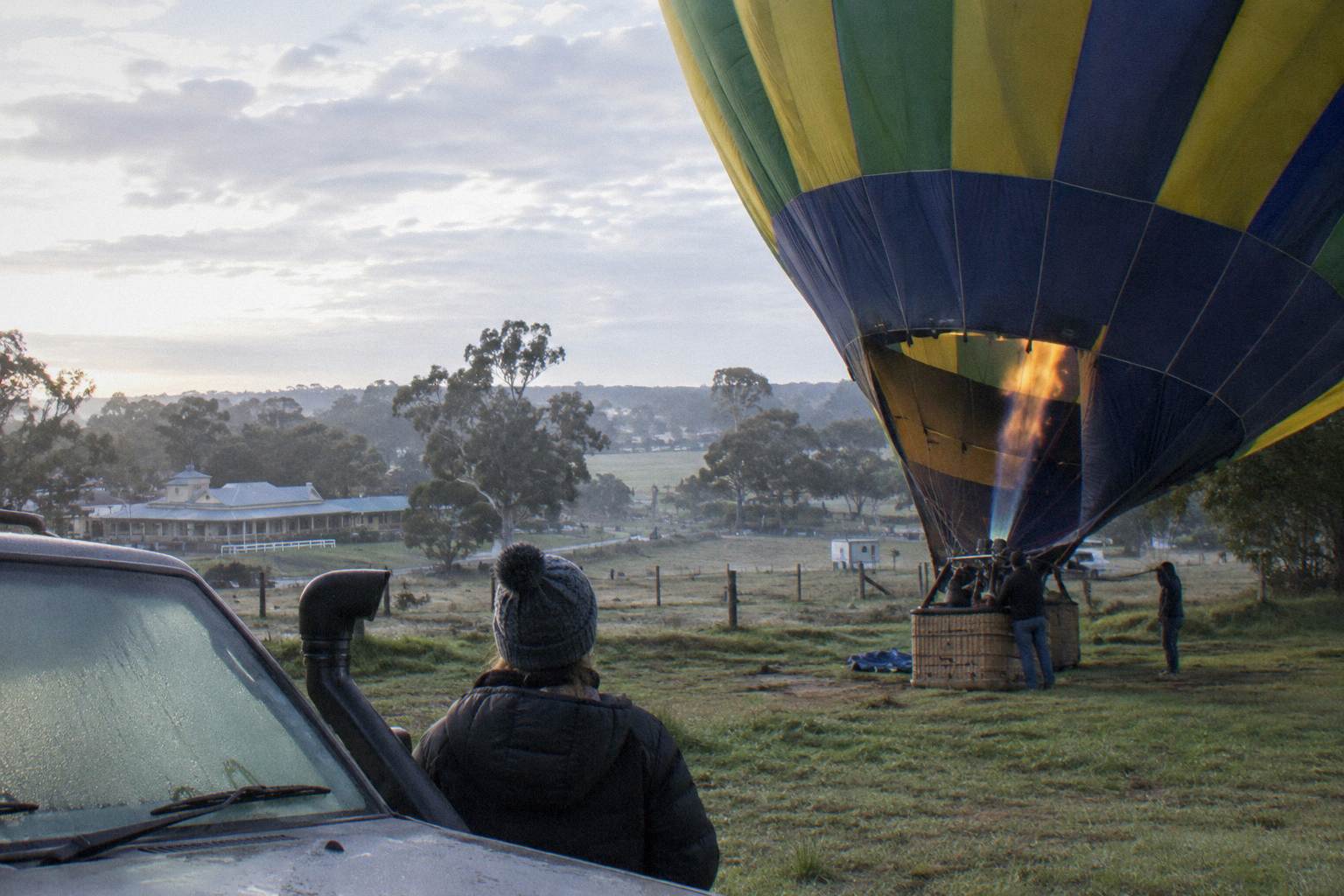
Floating Images meets its passengers in the car park of the Ipswich Visitor Information Centre at Queens Park, then takes the group by company vehicle to a launch site chosen that morning from the wind; the operator says the nearest is three minutes' drive away and the furthest about twenty. The launch site is a field. Grass at dawn in Ipswich is frequently wet with dew, and in the middle of the year it can be genuinely cold: the Bureau of Meteorology's Amberley record puts the July mean minimum at 5.4 degrees, with the lowest ground temperature ever recorded there at -9.1 degrees in August. Even in summer, a 4am start means you feel the night's minimum, not the day's maximum.
The physical shape of the experience drives the clothing list more than the temperature does. The basket has two footholds and a side about 1.2 metres high with no door, so every passenger climbs in and out unaided. Landings can be bumpy and the basket may briefly lie on its side. Once the group leaves the Visitor Information Centre there are no toilets in the basket, the vehicles, or at the take-off and landing sites. Clothing that lets you move, climb, brace and stand is not optional comfort; it is what the whole morning is built around.
The Centre's toilets, including one accessible unisex toilet, open about 10 to 15 minutes before the nominated meeting time, and the post-flight breakfast venue has its own facilities. That gives you one last chance to shed or add a layer before the vehicles leave. For more on the standing, climbing and no-toilet reality of the morning, the post on whether there is a toilet on a hot air balloon answers it in detail.
Why Layers Beat One Warm Jacket
Layers win because the morning swings through three climates in four hours: a cold dark paddock, a warming basket once the burner runs and the sun rises, and a sit-down breakfast indoors. A single thick jacket that suits the paddock is too much in the basket and wrong for breakfast. Three thin layers you can shed one at a time track all three stages, and the operator's own advice is comfortable layers.
Start with the numbers. The Amberley mean minimum is 5.4 degrees in July and 19.7 in January, but the mean 9am temperature, roughly an hour after landing in mid-winter, is 12.2 degrees in July. In other words, the morning itself warms by around seven degrees between check-in and mid-morning even in the coldest month, before the burner's heat and any sun are factored in. A base layer, a warm mid-layer and a windproof outer layer let you remove one at a time rather than choose between overheating and shivering.
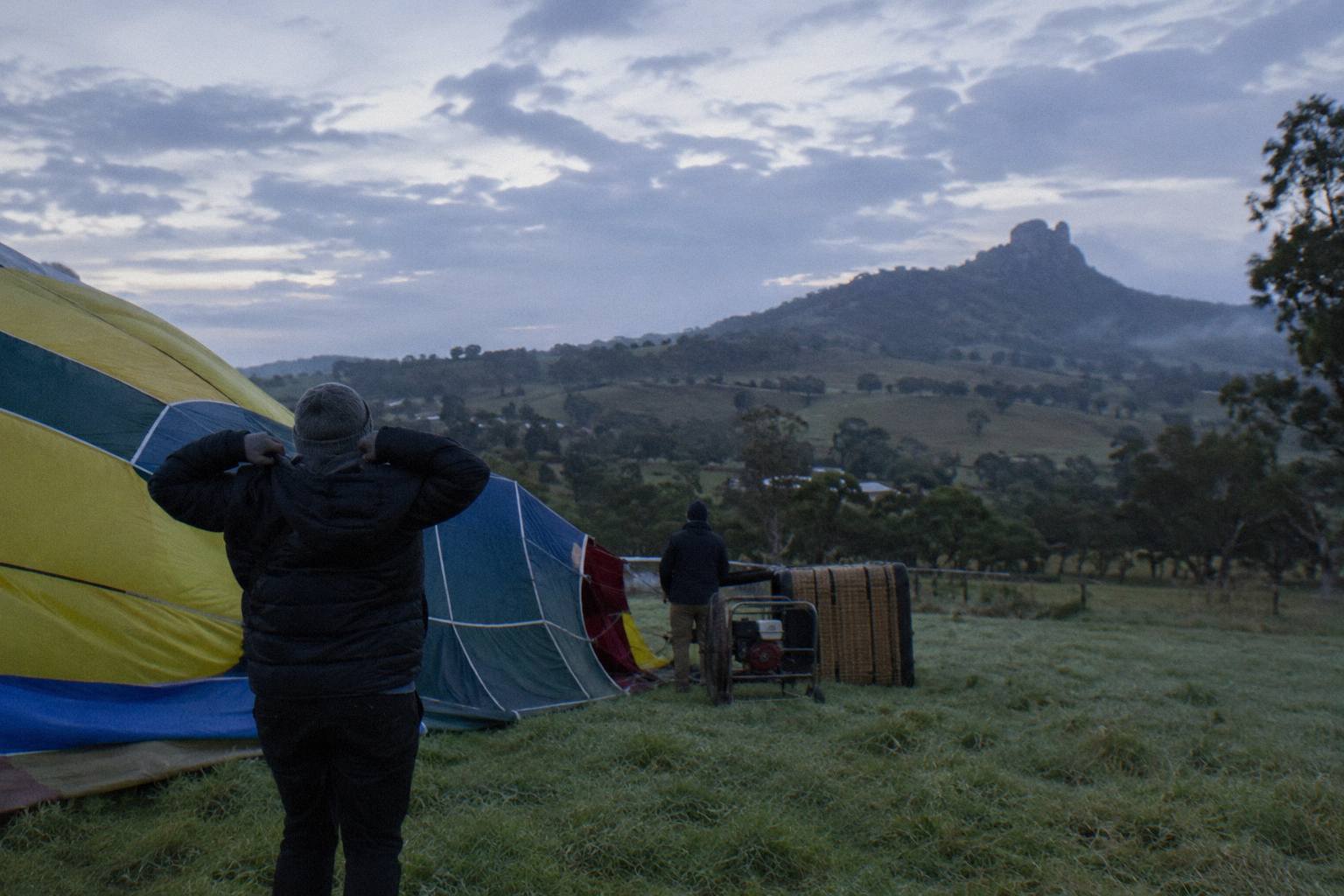
Fabric choice matters more than thickness. The morning involves dew, and landing sites can mean long grass or stubble paddocks. A pair of trousers and a long-sleeved base layer in something that dries fast will forgive a wet hem; heavy cotton that soaks through will not. The operator suggests a hat because the burner sits directly above the basket and radiates noticeable heat whenever it fires, and sunglasses because the sun, once it clears the ranges, comes straight into an open basket with nothing to block it.
The layered approach also survives the one variable nobody controls: the wind on the day. The operator's published terms note it is legally obliged to cancel flights when ground wind exceeds 20 km/h, and flights are weather dependent, so a morning that begins still can finish breezy at the landing site. Wind on damp clothing is the fastest way to get cold at the end of an otherwise warm flight. If you want to understand how often weather moves these flights, the guide to balloon flight weather and cancellations works through the operator's cancellation and refund terms.
Two nearby options in the same region handle the same cold start differently and are worth comparing while you pack. The Bubbles, Alpacas And Breakfast Balloon Flight runs 5 to 6 hours total with hotel pickup from the Gold Coast, Surfers Paradise and Broadbeach, so you wait for your pickup indoors rather than in a car park; its rating is 4.9 from 46 reviews. Its breakfast is chosen at booking, either O'Reilly's Canungra Valley Vineyards with alpacas, or the Langham, so the shed-a-layer moment comes at a vineyard or a hotel rather than an Ipswich restaurant.
The Brisbane Scenic Rim Balloon Flight With Canungra Vineyard Breakfast, rated 5.0 from 23 reviews, is about 4 hours total with a 1 hour flight, and its meeting point is confirmed at booking. Its full hot breakfast with a Canungra vineyard visit and wine tasting gives the same end-of-morning warm-up. Neither of these launches from Ipswich; they are Scenic Rim flights by different operators, listed here because the same layering logic applies at their equally early meeting times.
Footwear: Why Enclosed Shoes Are The Rule
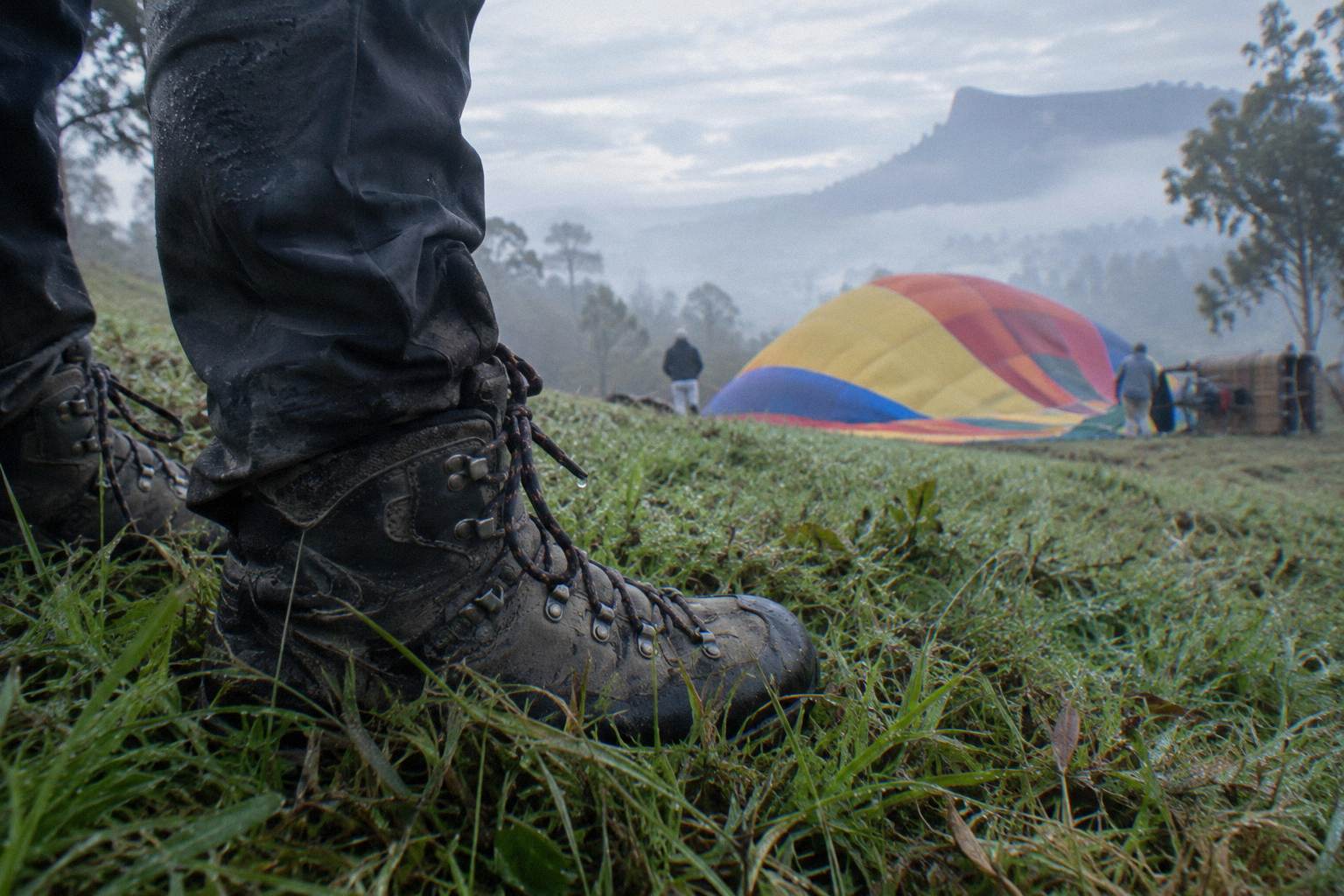
Enclosed, sturdy shoes are the operator's rule, not a suggestion: no sandals, thongs, open toe shoes or high heels. The reasons are the ground underfoot and the basket itself. Launch and landing sites are fields with dew or long grass, and getting in means climbing two footholds over a side about 1.2 metres high, then standing for an hour, so footwear has to grip, stay on and protect your feet through all of it.
Think about what your feet actually do. You stand in a dark paddock for the 20 to 30 minutes the operator allows for balloon set-up, optionally helping with inflation and deflation. You climb into the basket. You stand or lean, with no seats, for about an hour. At landing the basket can bump and, per the operator's own briefing notes, may lie on its side briefly, and you then climb back out over the same 1.2 metre wall. Then you walk back across whatever field you landed in. A heel catches in grass, a thong slips on a dewy foothold, and an open toe offers nothing against a basket floor after a bumpy touchdown.
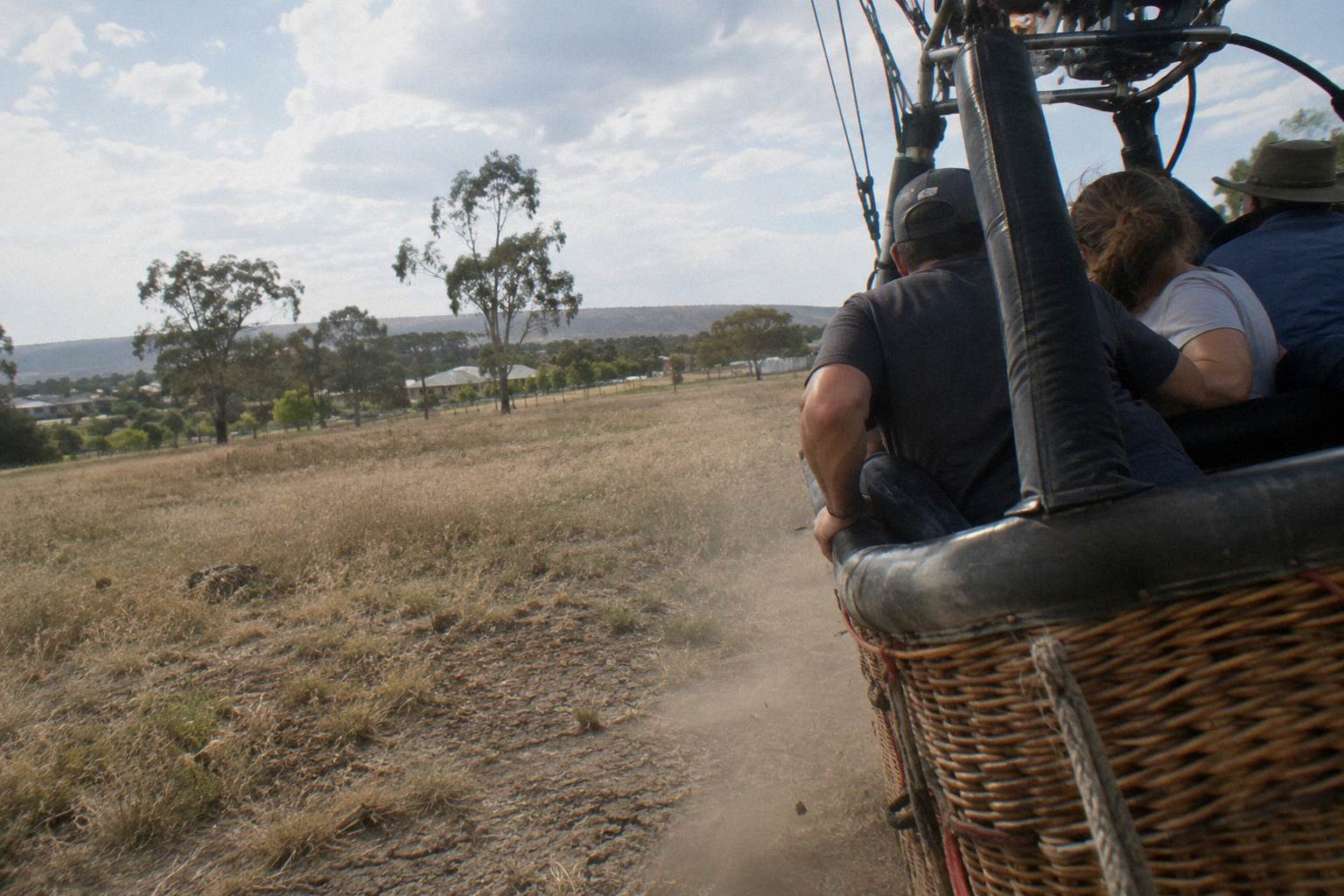
Wear something with a sole that grips and an upper that covers the foot. An old pair of runners or light hiking shoes is ideal; they dry fast, they flex for the footholds, and you will not mourn a mud ring on them. In the coldest months, add warm socks: mean 9am temperatures sit at 13.3 degrees in June, 12.2 in July and 14.2 in August, but check-in is earlier and colder than that, and your feet are the part of you standing in wet grass. The operator's FAQ and on-the-day pages carry the full footwear and clothing guidance: the operator's FAQ states the dress rules directly.
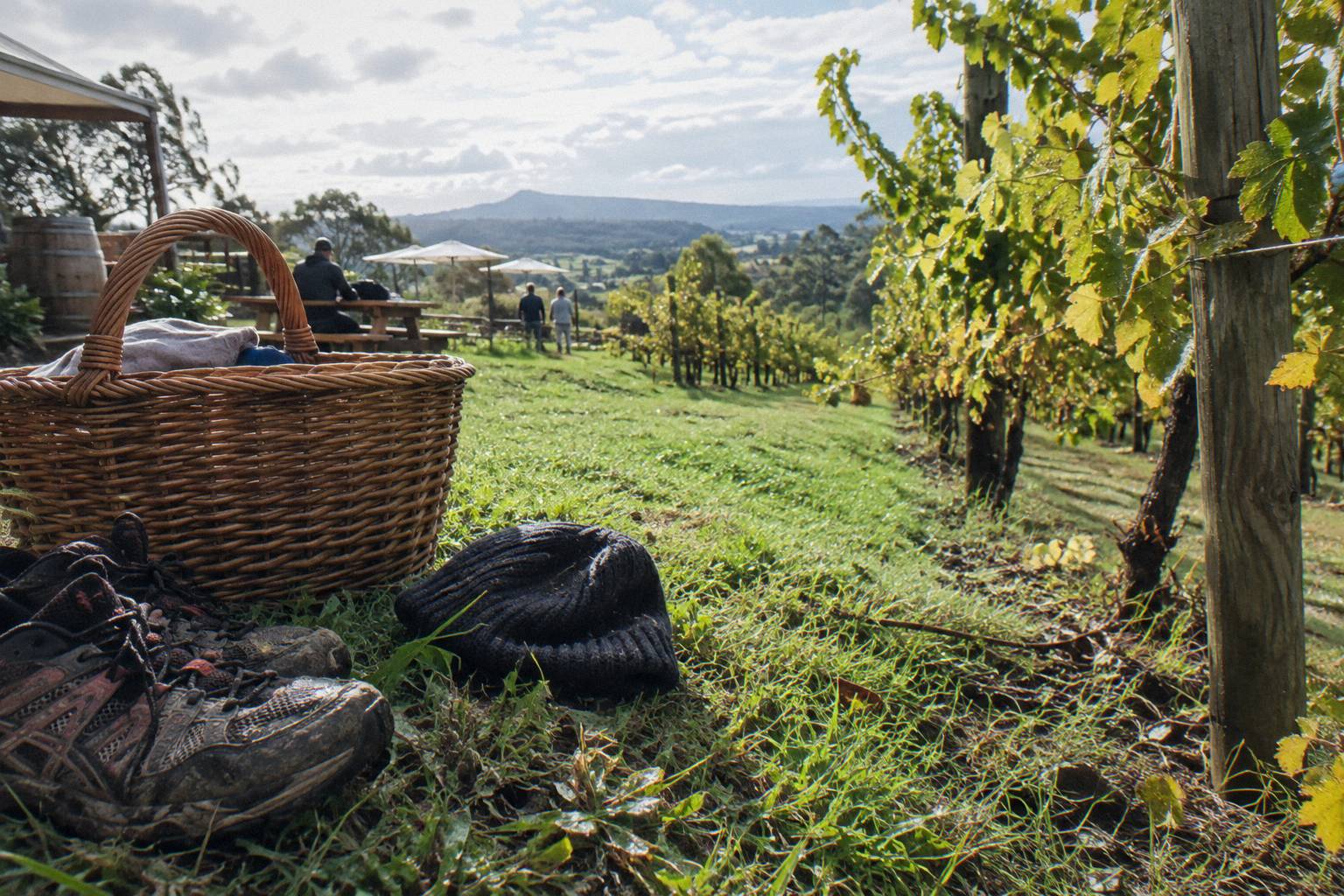
One footwear-adjacent point that trips people up: the operator does not publish any restriction on backpacks, handbags or luggage as such, but everything you bring stays your responsibility and there is nowhere to stow anything. The basket holds people standing up, not baggage. Whatever fits in your pockets is the practical limit, and clothing with usable pockets is quietly one of the best packing decisions you can make.
Why Can't You Wear White On A Hot Air Balloon
The operator advises against white but publishes no explanation, so no official reason can be given here. Factually, you stand beneath an open flame burner, above dew and long grass, and brace for a bumpy landing where the basket may tip; any of these could mark a white garment, though that is context rather than the operator's stated rationale.
This question gets asked often enough that it deserves its own straight answer, and the straight answer is that the research record contains the instruction but not the explanation. The operator's clothing guidance, on its FAQ and on-the-day pages, lists comfortable layers, sunglasses, a hat and sturdy enclosed shoes, and says to avoid white. It does not publish why. Inventing a reason, whether soot, stains or fashion advice, would be putting words in the operator's mouth. If the reason matters to you, ask when you book; the operator takes phone bookings and answers email at bookings@floatingimages.com.au.
What is documented is the environment your clothing has to survive. The burner hangs directly overhead, which is the same reason the operator recommends a hat. Landing sites are working fields. The aviation context is documented too: commercial balloon flights in Australia operate under CASA Part 131, the rule set covering balloons and hot air airships, which you can read about on the CASA Part 131 page. None of that names your shirt colour, so treat "avoid white" as an operator instruction whose reasoning sits behind the scenes.
The practical translation is easy: choose colours you would not mind marking. Dark trousers, a mid-coloured jacket and a hat cover the guidance without any thought. The same logic applies to the operator's in-flight photos, which are taken on most flights from a remote-controlled camera mounted on the balloon and offered at breakfast, so whatever you wear may appear in photographs you can buy.
What The Cold Feels Like: Month By Month
The cold shifts sharply from month to month: Bureau of Meteorology mean minimums run from 19.7 degrees in January down to 5.4 in July, so summer flights feel mild but dark and damp, while winter flights are genuinely cold at check-in, with meetings ranging from about 4.00am in November and December to about 5.30am in May and June, always 45 minutes before sunrise.
The sunrise figures are computed from the NOAA solar position calculation for Ipswich, and Queensland keeps standard time year-round with no daylight saving, so the same clocks apply in every month. The temperatures are the Bureau of Meteorology's long-term Amberley averages, the station nearest Ipswich. More of these guides are collected on Ipswich Hot Air Balloon.
| Month | Approx. sunrise | Approx. check-in (45 min before) | Mean minimum (C) | Layer plan |
|---|---|---|---|---|
| Jan | 05:06 | about 04:21 | 19.7 | Light base layer, light jacket |
| Feb | 05:31 | about 04:46 | 19.5 | Light base layer, light jacket |
| Mar | 05:49 | about 05:04 | 17.9 | Base layer plus mid-layer |
| Apr | 06:05 | about 05:20 | 14.0 | Base layer, mid-layer, jacket |
| May | 06:21 | about 05:36 | 10.0 | Three layers, beanie |
| Jun | 06:36 | about 05:51 | 7.0 | Three warm layers, beanie, warm socks |
| Jul | 06:38 | about 05:53 | 5.4 | Full winter layers, gloves |
| Aug | 06:20 | about 05:35 | 6.2 | Full winter layers, gloves |
| Sep | 05:47 | about 05:02 | 9.5 | Three layers, beanie |
| Oct | 05:13 | about 04:28 | 13.4 | Base layer, mid-layer, jacket |
| Nov | 04:49 | about 04:04 | 16.3 | Base layer plus mid-layer |
| Dec | 04:47 | about 04:02 | 18.4 | Light base layer, light jacket |
Two patterns are worth reading off the table. First, the coldest months are also the calmest on the ground: mean 9am wind bottoms out at 5.2 km/h in May, 5.5 in June and 5.3 in July, against 9.2 in November, which is one reason winter flights suit people who feel the cold least. Second, the recorded extremes are far below the means, with an all-time low of -4.8 degrees in July, so a winter booking deserves one more layer than the mean suggests. The Bureau's climate averages for the Amberley station, including the full wind and rainfall tables, are published at the Bureau of Meteorology.
The operator itself says it generally flies year-round and names no best season, and there is no official best month to point to. The month question for comfort rather than clothing is covered from the passenger side in the post on what month is best for a hot air balloon, which weighs the same BOM numbers against rain days and cloud cover.
If mid-winter 4.45am starts sound like something you would rather meet from a heated hotel lobby, the Scenic Rim Classic Hot Air Balloon Flight offers a self-drive meeting point at Canungra or Nerang, with a VIP option that collects from Brisbane accommodation. It runs about 5 hours total with 1 hour in the air, and the booking page shows the current price.
Hats, Sunglasses And Other Extras
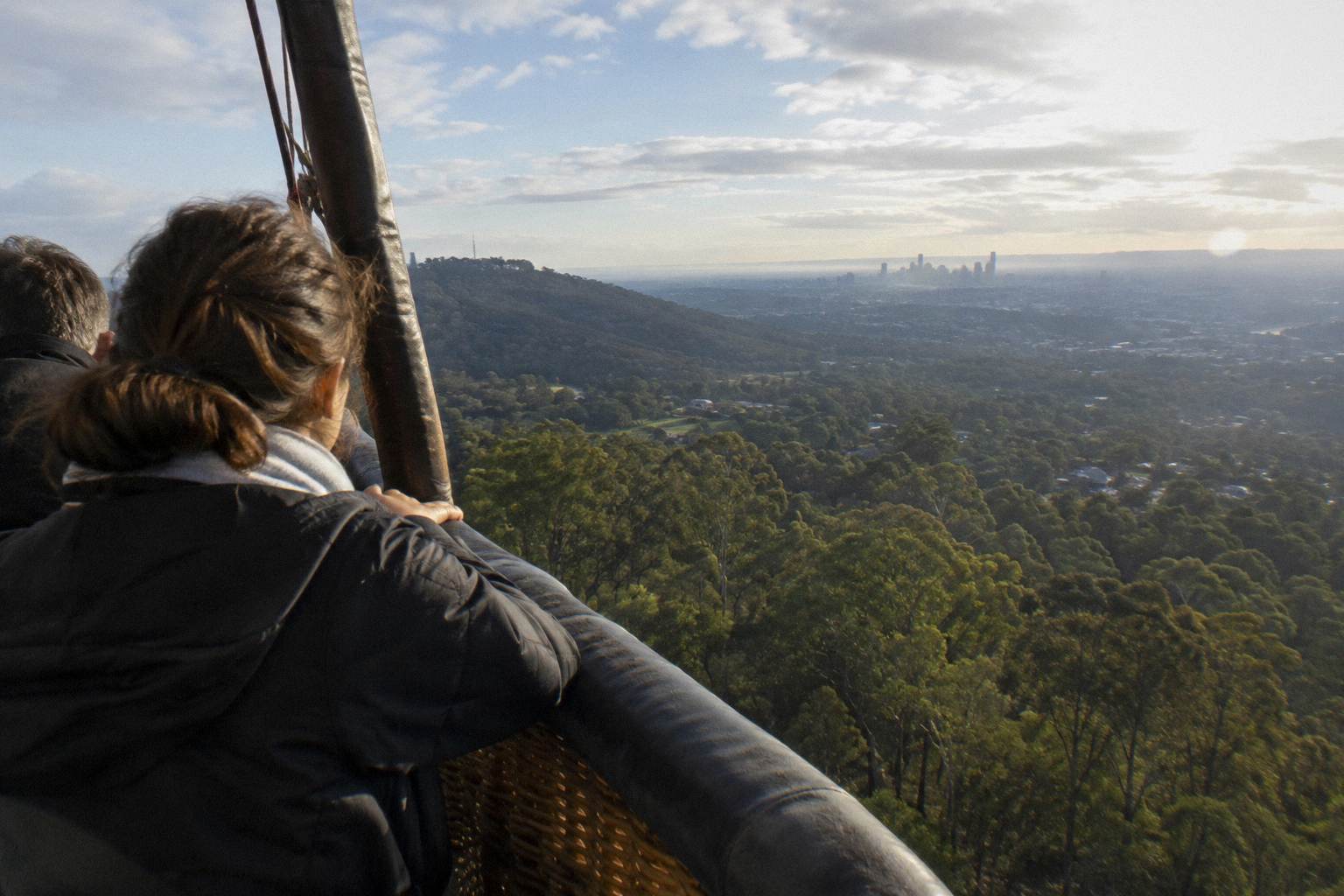
A hat and sunglasses are on the operator's own list, and the reasons are overhead: the burner above the basket radiates heat every time it fires, and the rising sun comes straight into an open basket with nothing to block it. Beyond those two, the useful extras are a camera, pockets, and warm socks or gloves in the middle third of the year. Everything you bring stays your responsibility at all times.
The hat point surprises people who expect only cold. Balloon baskets are open at the top and the burner sits above them; a plain cotton beanie or cap keeps radiant heat off your scalp and, in winter, does double duty keeping you warm before take-off. Sunglasses matter from about 20 minutes after take-off onwards, when the sun climbs over the Great Dividing Range and the operator's typical operating heights, from treetop up to 1,000 to 3,000 feet, put nothing between you and it. The operator does not fly above 4,500 feet, and at any of those heights the glare is unfiltered.
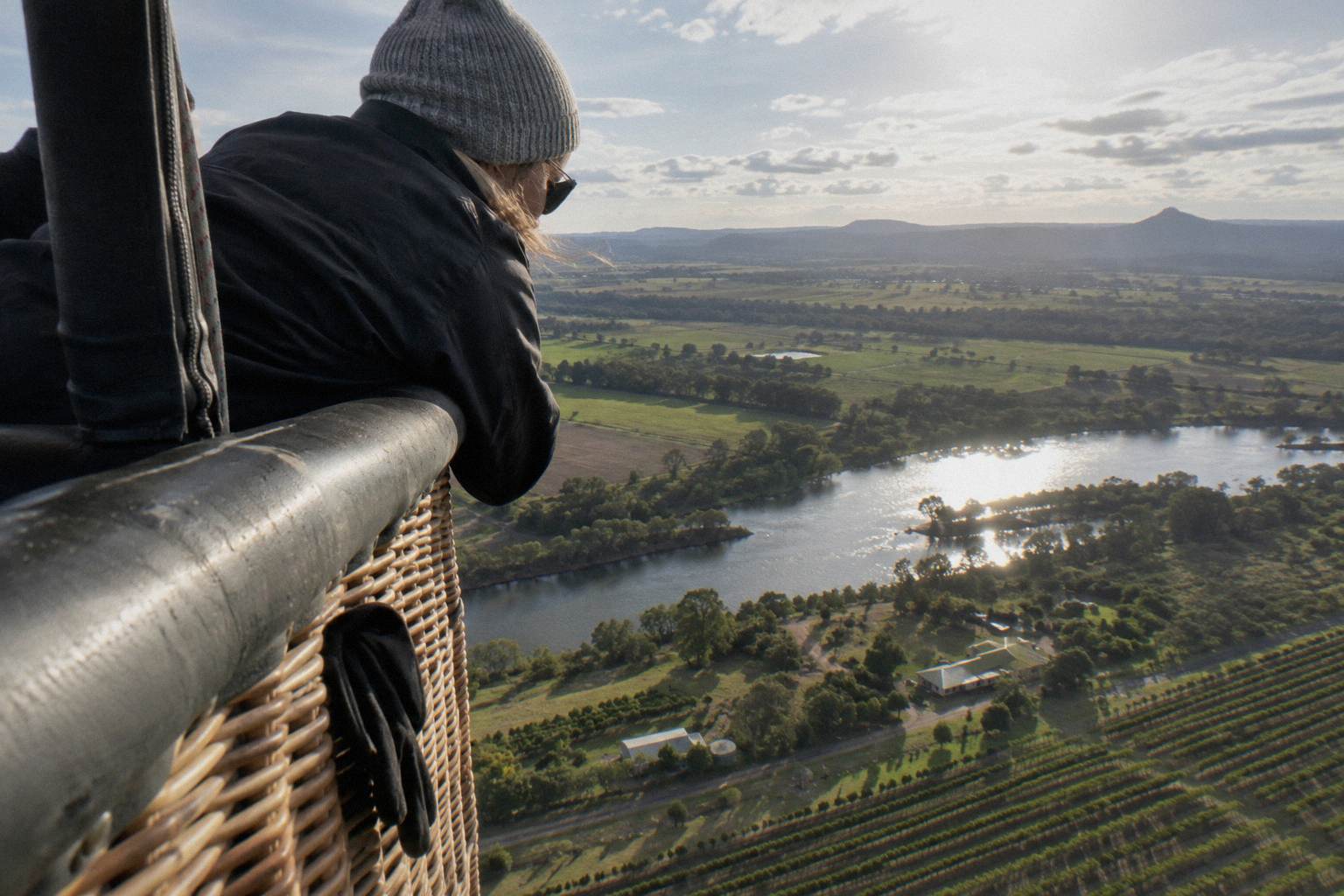
Gloves are not on the operator's published list but earn their place in the coldest months: check-in in July sits at the bottom of the temperature curve, and if you choose to help with inflation and pack-down, which the operator invites as optional, your hands are on cold wicker and dewy fabric. Warm socks matter for the same reason your shoes do; your feet are in wet grass. A hair tie beats a hat for anyone with long hair, and the two together are better than either alone.
The camera question is settled: the operator recommends bringing a camera or video camera and reminds passengers it stays the guest's responsibility at all times. There is no published restriction on phone use in the basket. In-flight digital photos from a camera mounted on the balloon can be pre-purchased or chosen at breakfast, so a pocket for your phone and a plan for where your camera lives while you climb the footholds are both worth deciding before the morning.
| Extra | Operator stated? | Worth it? |
|---|---|---|
| Hat | Yes, recommended | Yes, burner heat and winter cold |
| Sunglasses | Yes, recommended | Yes, low sun after take-off |
| Camera | Yes, recommended, guest's responsibility | Yes |
| Gloves | Not mentioned | Winter months only |
| Warm socks | Not mentioned | Winter and spring, dew |
| Water bottle | Not mentioned | Optional; hands are full enough |
| Backpack | Not addressed | No stowage in the basket; use pockets |
What Not To Wear And What Trips People Up
The banned list is short and firm: sandals, thongs, open toe shoes and high heels, plus white clothing. The traps around it are less obvious: dressing for the day's maximum instead of the pre-dawn minimum, wearing one heavy jacket instead of layers, bringing more than pockets can hold, and forgetting there are no toilets after the group leaves the Visitor Information Centre. Each of these is avoidable with five minutes of planning.
The first mistake is the most common: checking the forecast maximum, which in January averages 31.2 degrees, and dressing for it. The flight ends before that number is ever reached. The second is the inverse in winter, where a single bulky coat is right for the paddock, too hot once the burner runs, and useless as something to carry at breakfast. The third is footwear chosen for the breakfast photo rather than the field. The fourth is bags: there is no stowage, no seats and a climb over a 1.2 metre wall, so anything not on your body is a liability.
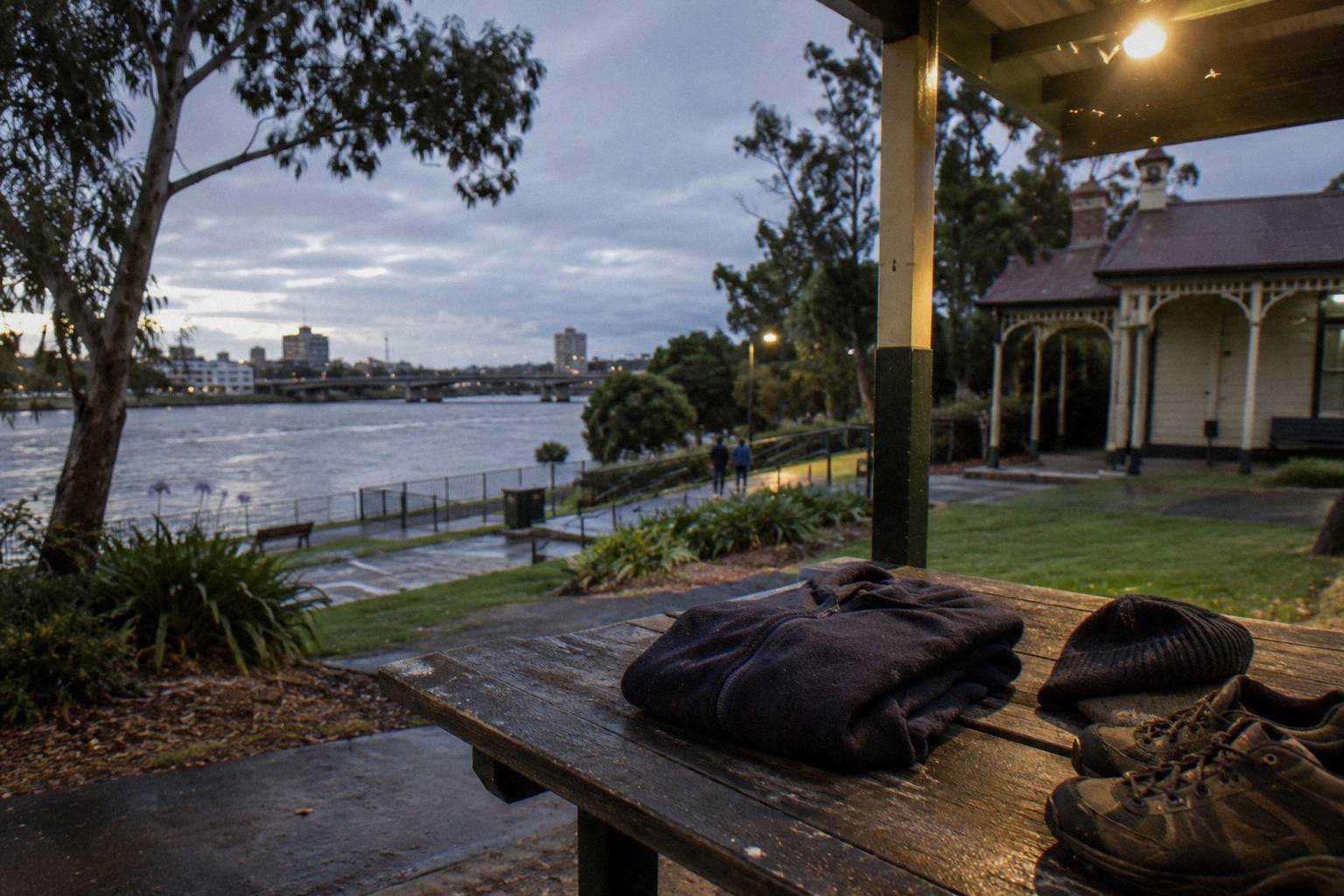
The fifth trap is forgetting the shape of the group day. The morning runs about 3 to 4 hours in total: the Visitor Information Centre car park, the drive to the launch site, 20 to 30 minutes of set-up you can help with, about an hour standing in the basket, the landing and pack-down, then breakfast at Fourth Child Restaurant, 215 Brisbane Street, where the commemorative flight certificate is presented. Clothing has to be right for the paddock first and presentable enough for a restaurant second, in that order. The operator's on-the-day page sets out this sequence: the operator's on-the-day guide lists the full programme.
A sixth trap belongs to a small group of travellers: the operator asks anyone who has been scuba diving the day or night before to check with a dive master before flying, which is a clothing-adjacent health point worth knowing when you pack for a coast-and-balloon weekend. And if the whole morning is called off for weather, the operator offers a reschedule or refund, so pack with a possible second date in mind rather than one throwaway outfit.
The GoBallooning Gold Coast Flight With Photos, rated 4.9 from 707 reviews, handles the extras question differently: in-flight photos are part of its product rather than an optional purchase, it runs about 4 hours from a Main Beach meeting point, and children must be at least 3 years old to fly. It is a different operator launching from the Gold Coast, not an Ipswich flight, but the photo comparison is a real decision point if images are your priority.
Packing For The Nearby Scenic Rim And Gold Coast Flights
The same layering, enclosed-shoe and no-white logic applies to the nearby flights, but their meeting arrangements differ: the Gold Coast options include hotel pickup from Surfers Paradise or Broadbeach, while the Scenic Rim flights meet at Canungra or Nerang or confirmed points. Each is a different operator with its own rules, so the Floating Images weight, age and clothing policies must not be assumed to carry over. Check each booking page's own terms before you pack.
The practical difference for clothing is where you wait. A hotel-pickup flight means you stand outside only at the launch field, roughly an hour later than an Ipswich check-in, so the coldest exposure is shorter. A self-drive flight to Canungra, such as the Scenic Rim Classic, means a pre-dawn drive on country roads before the field, which argues for keeping a layer in the car you can shed at the meeting point. The Bubbles, Alpacas And Breakfast flight collects from Gold Coast, Surfers Paradise and Broadbeach hotels and runs 5 to 6 hours total, the longest morning of the group, so its layering needs span the widest temperature range.
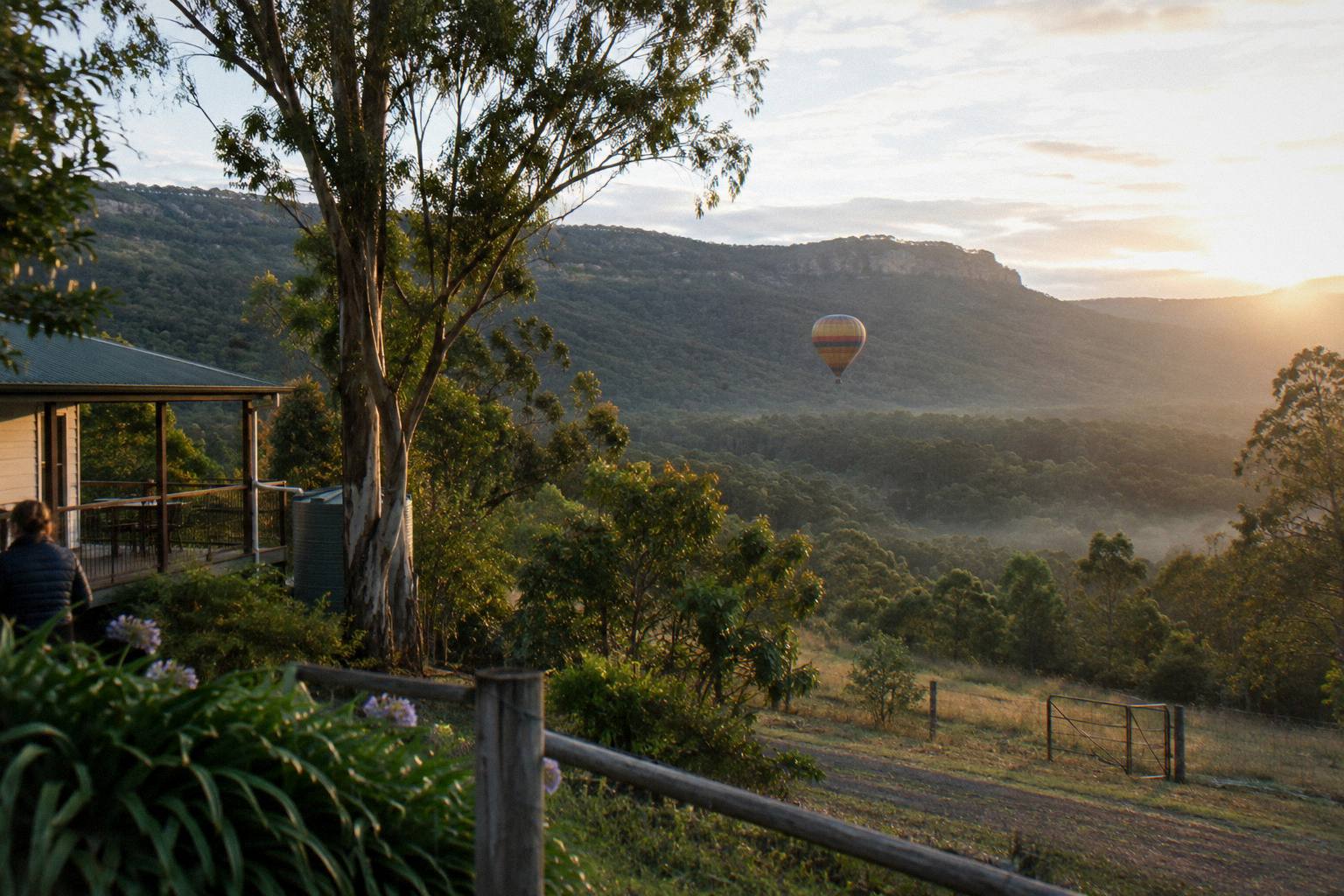
What does not change is the field physics. Every one of these flights launches from grass, lands in grass, and has a basket to climb into. Enclosed shoes are the right call on all of them regardless of what each operator's fine print says, and a hat is sensible wherever a burner sits overhead. The booking page for each flight shows the current price, the meeting detail confirmed at booking, and that operator's own cancellation window, which on the nearby flights is generally free cancellation up to 24 hours before the start time.
Common Questions About What To Wear On A Balloon Flight
Why Can't You Wear White On A Hot Air Balloon?
The operator of the Ipswich flight says to avoid white and publishes no reason for it, so no reason can be given here. Ask the operator when you book if it matters to your outfit choice.
Can I Wear Sandals Or Thongs On A Hot Air Balloon Flight?
No. The operator's rule is sturdy enclosed shoes only, with sandals, thongs, open toe shoes and high heels ruled out, because launch and landing sites are fields with dew or long grass and you climb two footholds over a side about 1.2 metres high.
Will I Be Cold On A Hot Air Balloon Flight?
At check-in, probably. Meeting is 45 minutes before sunrise, in the coldest part of the day, with mean minimums from 19.7 degrees in January to 5.4 in July at the nearest Bureau of Meteorology station. Once the burner runs and the sun rises, most passengers warm up, which is why layers beat one jacket.
Do I Need A Hat And Sunglasses?
The operator recommends both. The burner above the basket radiates heat when it fires, and the low sun after take-off comes straight into an open basket.
Can I Bring A Bag On The Flight?
The operator does not address bags directly, but the basket has no stowage and no seats, everything you bring stays your responsibility, and you climb over the basket wall unaided. Clothing with pockets is the practical answer.
Is The Dress Code The Same On The Nearby Scenic Rim And Gold Coast Flights?
The same logic applies, since every flight launches and lands in fields, but those are different operators with their own terms, so read each booking page rather than assuming the Ipswich operator's rules carry over.