How High Do Hot Air Balloons Go On A Sunrise Flight
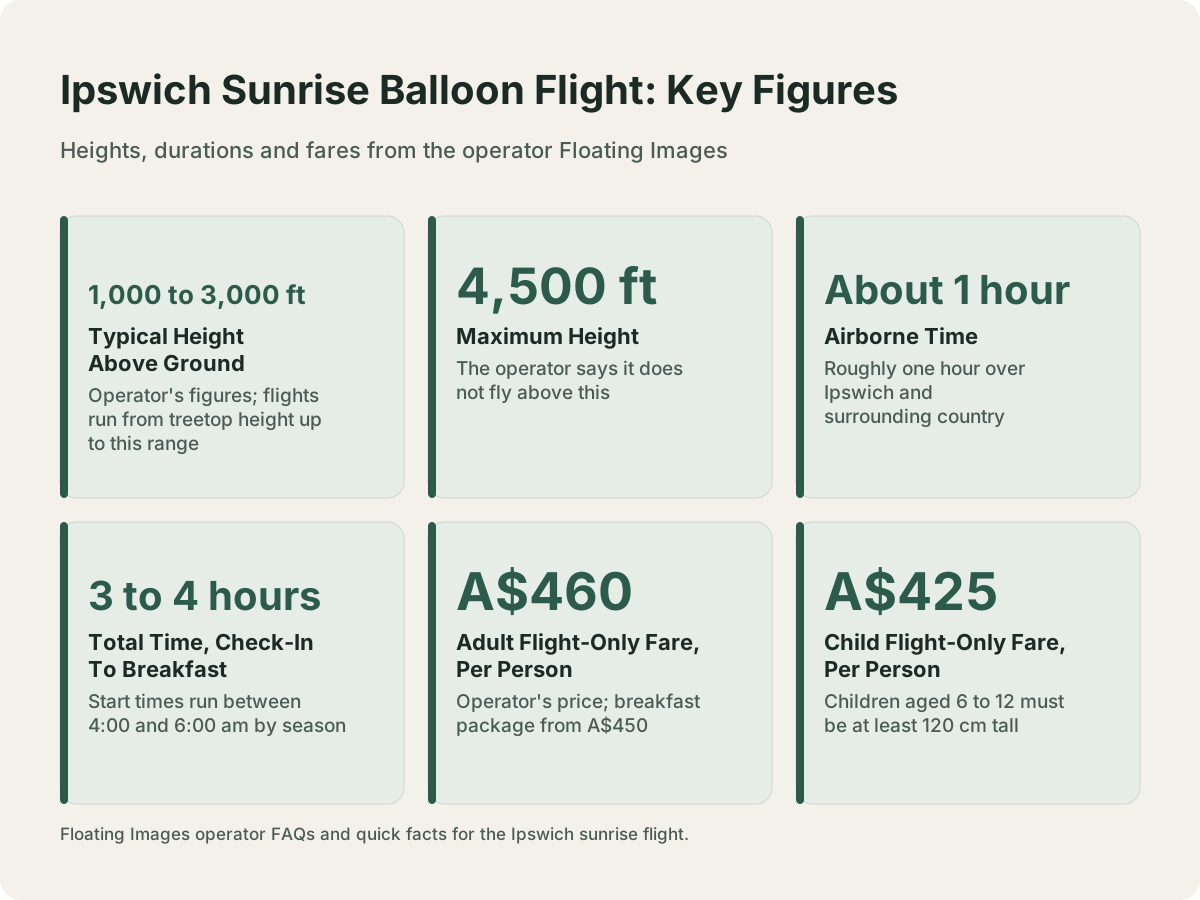
The honest answer comes from the operator's own published figures: the Ipswich sunrise flight typically flies from treetop height up to 1,000 to 3,000 feet, and never above 4,500 feet. Here is what those numbers mean for the view, the basket and anyone who is unsure about heights.
Short answer
Floating Images says its Ipswich flight typically operates from treetop height up to 1,000 to 3,000 feet, and that it does not fly above 4,500 feet. The flight lasts about one hour, passengers stand in a basket with sides about 1.2 m high, and the exact height on the day depends on the wind. The operator's flight-only price is A$460 per adult, A$425 per child.
For the wider picture of flying in this region, start with the Queensland ballooning overview.
| Quick Facts | Detail |
|---|---|
| Typical height | Treetop to 1,000 to 3,000 ft (operator's figures) |
| Maximum height | The operator says it does not fly above 4,500 ft |
| Who decides | The pilot, around the wind on the day |
| Flight time | About 1 hour airborne; 3 to 4 hours total |
| Basket | Standing only, sides about 1.2 m, no seats |
| Meeting point | Ipswich Visitor Information Centre car park, Queens Park |
| Flight-only fare (operator's) | A$460 adult, A$425 child, per person |
| Breakfast package | From A$450 (the operator's "from" price) |
How High Do Hot Air Balloons Go On An Ipswich Flight?
On the Ipswich sunrise flight, Floating Images says balloons typically operate anywhere from treetop height up to 1,000 to 3,000 feet, and that the company does not fly above 4,500 feet. Those figures come from the operator's own frequently asked questions page. No regulator publishes a cruising altitude for scenic flights, and the height is never a dial passengers choose.
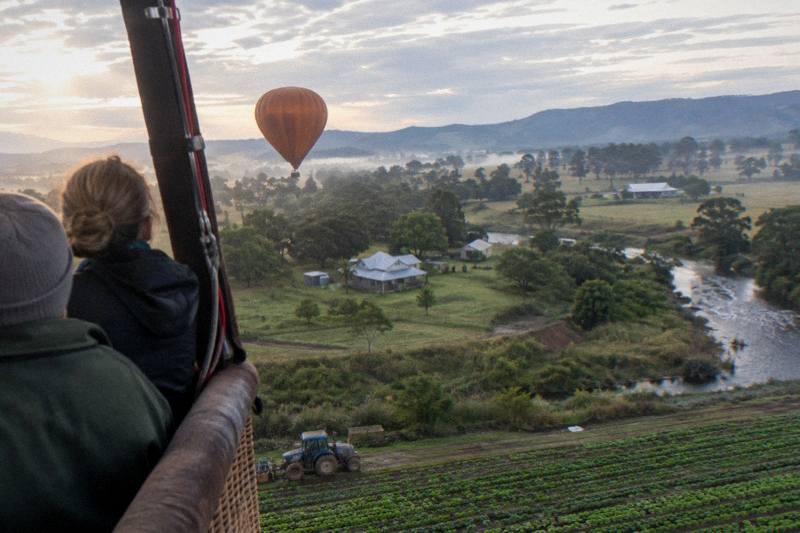
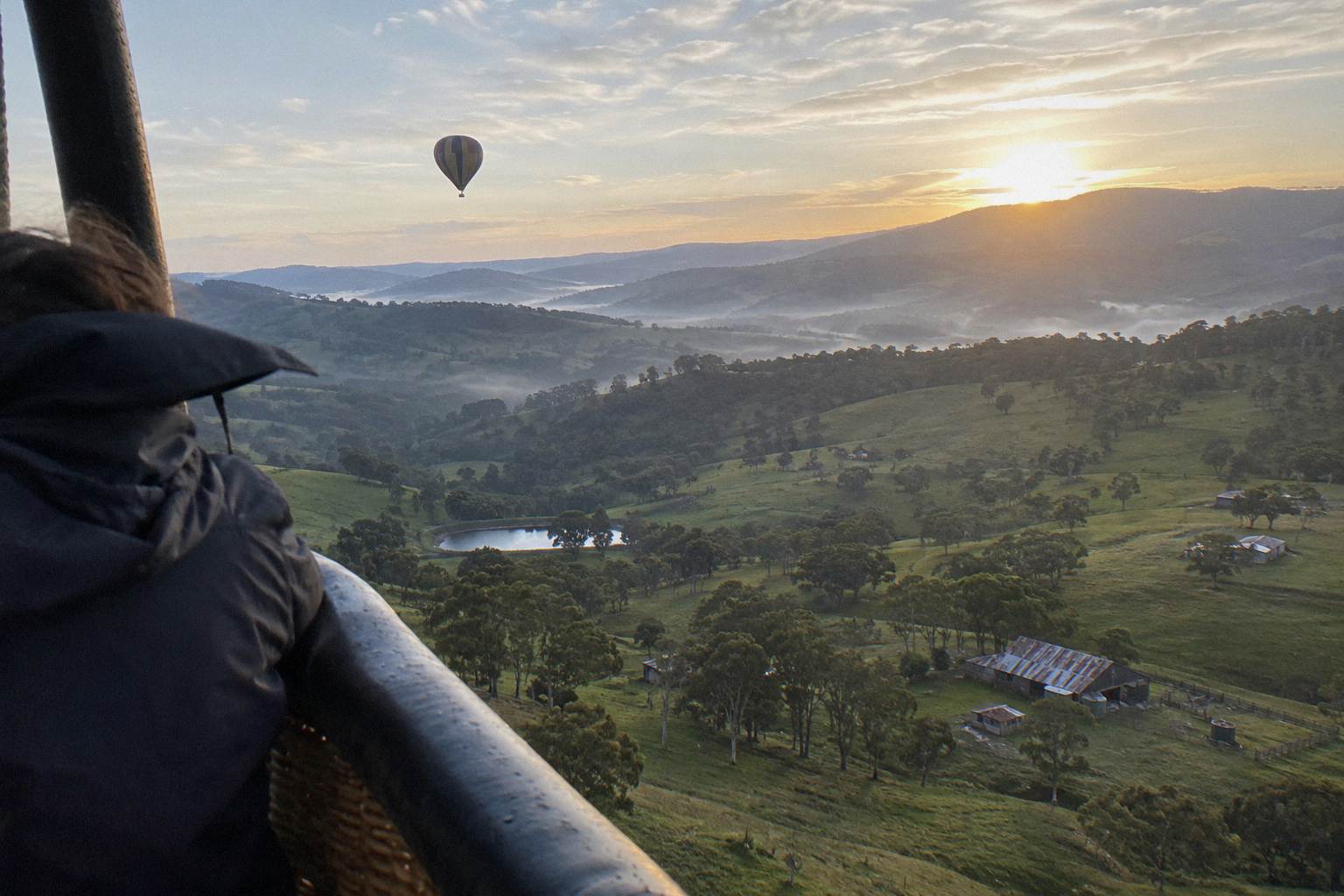
That range is wide on purpose. A balloon has no steering wheel and no brakes: it moves with the wind, and the wind near the treetops is often different from the wind at 3,000 feet. The pilot uses altitude to find a layer that carries the balloon towards a safe landing area, so a flight that needs to drift east may sit low over the Bremer River bends, while one riding a higher layer may climb well above the ranges. The operator names treetop flying as part of the normal experience, and many passengers find the low passes over paddocks and Queenslander rooftops more memorable than the high cruising, because the detail of the heritage city of Ipswich reads best from close in.
What the operator does not do is promise an altitude. The booking page for the Ipswich scenic city and country flight describes a roughly one hour flight over Ipswich and the surrounding country, and the operator's own frequently asked questions carry the height figures quoted here. Commercial balloon flights in Australia operate under CASA Part 131 and an Air Operator's Certificate, which is the regulatory frame around every scenic flight in this region; the civil aviation rules for balloons cover how such operations are certified.
A useful way to read the numbers: 1,000 feet is roughly the height of a tall hill lookout, and 3,000 feet puts the patchwork of the Brisbane, Fassifern and Lockyer valleys into a single frame. The operator says that from altitude almost all of Greater Brisbane is visible, naming the Brisbane skyline, Mt Coot-tha, Moreton Bay, Flinders Peak, Cunningham's Gap and Mount Tamborine among the sights, but it also says plainly that views vary with the wind. No two flights follow the same track, and the launch site itself is chosen each morning from the wind, from a site as close as three minutes' drive or as far as about twenty minutes from the meeting point.
Does The Altitude Feel Scary If You Do Not Like Heights?
Many people who avoid ladders and glass floors fly comfortably in balloons, because the experience lacks the cues that usually trigger vertigo: there is no edge to stand near, the basket sides are about 1.2 m high, and the motion is gentle rather than sudden. But that is a general description, not a promise. The operator makes no claim about how the height will feel, so ask questions before booking.
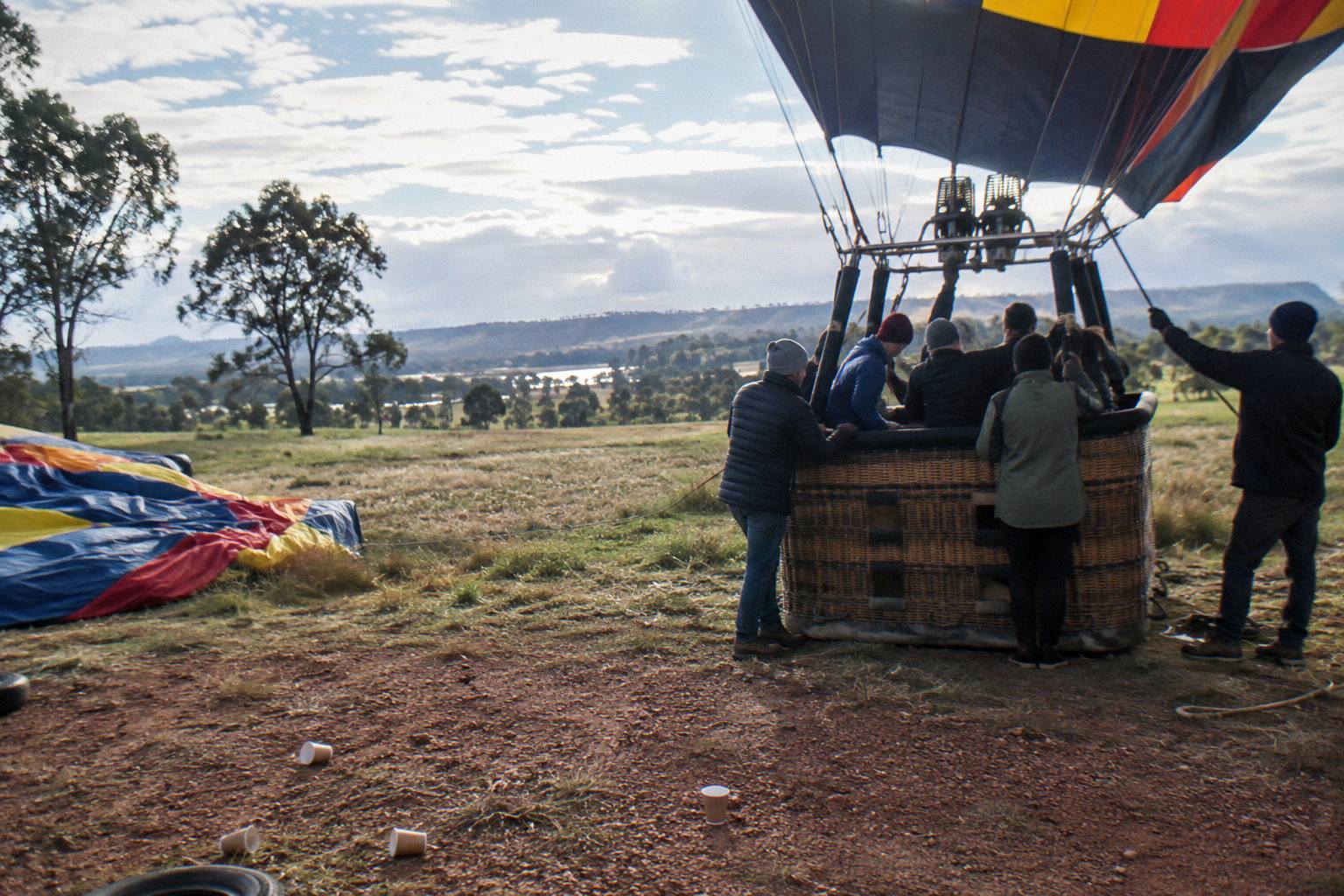
The basket is the key fact. Passengers stand in a wicker compartment whose walls rise to about 1.2 m, roughly chest height on an adult, and children aged 6 to 12 must be at least 120 cm tall precisely so they can see over that edge unaided, with no stools or lifting allowed. You look out, not down. There is no door: everyone climbs in over the side using two footholds, and must be able to climb out unaided at landing, because landings can be bumpy and the basket may briefly lie on its side. That climb, not the altitude, is the first thing to be honest with yourself about.
The second fact is duration and posture. There are no seats: all passengers stand or lean for about one hour, and no seats, walkers, sticks or crutches are allowed. Anyone with a mobility limitation must be accompanied by a support person, and everyone signs a medical waiver. If standing for an hour in a confined compartment sounds harder than the height itself, that is worth knowing now. For the wider health questions, the guide on who should not take a balloon flight works through the operator's policies in detail.
Third, the height changes. A flight is not one long hover at 3,000 feet: it drifts between treetop and cruising altitudes as the pilot works the wind layers, so the ground relationship keeps shifting. Some nervous flyers prefer this, because there is no single moment to brace for. Others find the low passes the intense part. Views and conditions vary with the wind on the day, and the operator is explicit that it will not fly in unsuitable weather, cancelling with a reschedule or refund when conditions do not suit. The safety record and weather pages, starting with whether hot air ballooning is safe, cover that ground.
Each is a different operator with its own meeting arrangements, so read the booking page for the one that fits.
What Can You Actually See From 1,000 To 3,000 Feet?
From the operator's typical band the view takes in the heritage streetscape of Ipswich at low altitude and, from higher layers, the Brisbane skyline, Moreton Bay, the Great Dividing Range and the dams and rivers of the region in one sweep, according to the sights the operator itself names. None of it is guaranteed: the operator says views vary with the wind, the route depends on the day, and the pilot goes where the air allows.
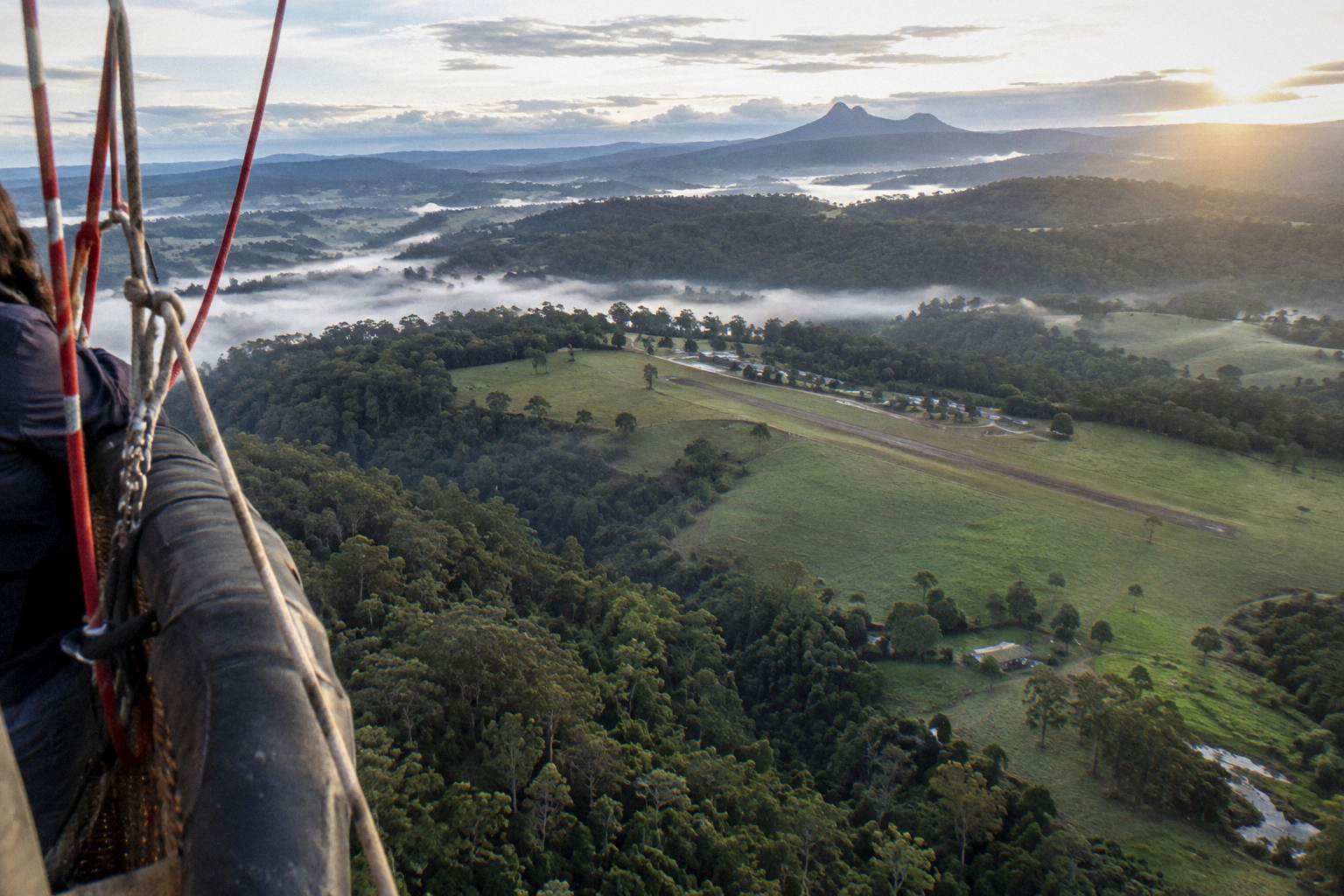
At treetop height the flight reads like a slow drift over a map drawn at full detail: Queensland houses, church spires and parks of the heritage city, the bends of the Bremer River, paddocks with cattle that barely look up. The operator lists Wivenhoe Dam, the Brisbane River, Flinders Peak, Mount Walker, Cunningham's Gap and Mount Tamborine among named sights, plus the McPherson and D'Aguilar ranges. From the higher end of the band, the operator says almost all of Greater Brisbane is visible. Whether the flight spends its hour low, high or threading between the two is decided by the wind, not the brochure.
Photography is the practical companion to the view, and the operator recommends bringing a camera or video camera, which stays the guest's responsibility at all times. In-flight digital photos from a remote-controlled camera mounted on the balloon can be pre-purchased or chosen at breakfast afterwards. The dedicated balloon flight photography guide covers what to bring and how the photo purchase works. For framing and settings, the general rule from altitude is that the low passes reward a fast shutter and the wide vistas reward patience with haze.
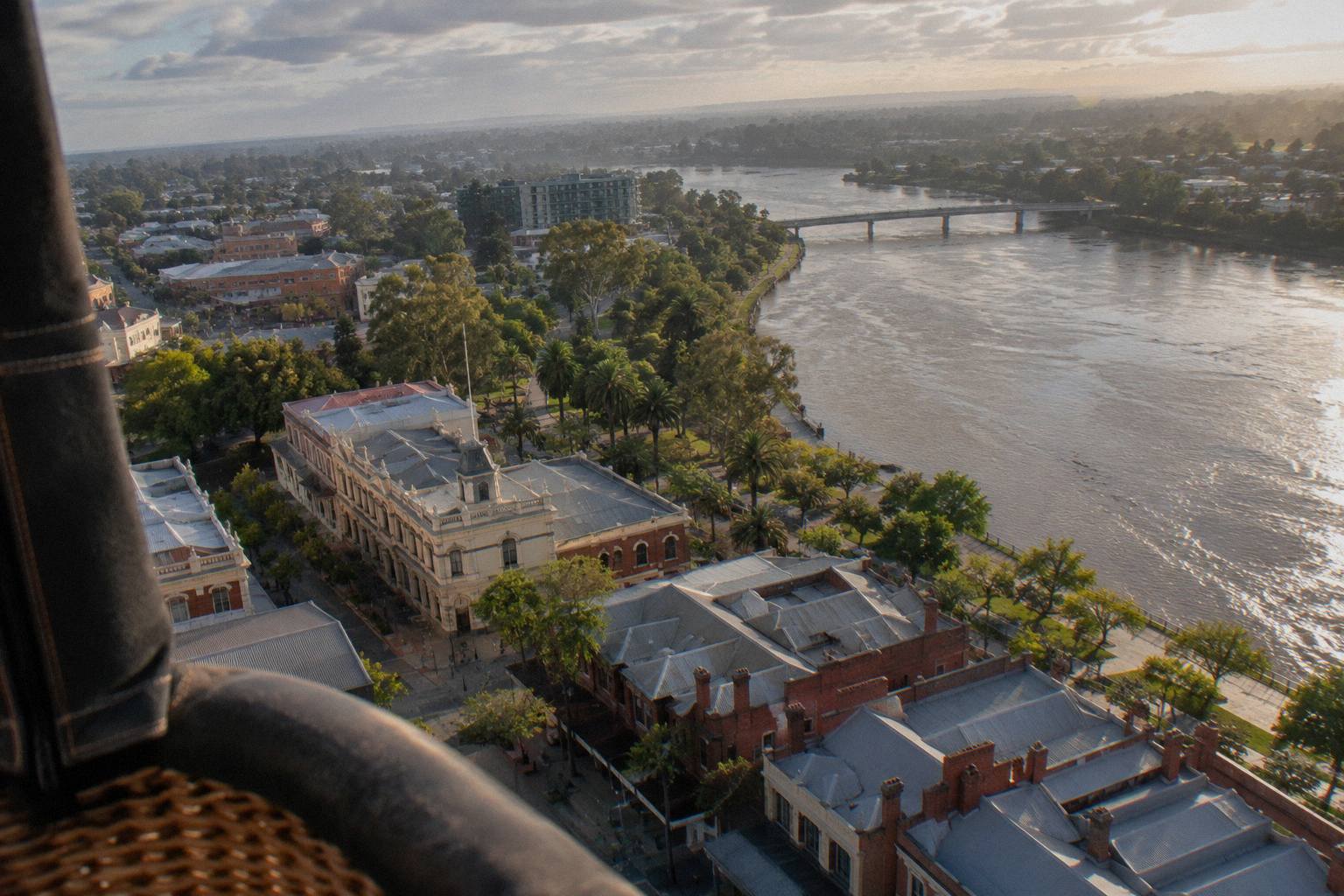
One honest caveat: the height that gives the grand view also gives the cold. It is measurably cooler at altitude than at the meeting point, and the flight begins before dawn in every month of the year. The what to wear on a balloon flight guide and the operator's own advice agree on the essentials: comfortable layers, a hat, sunglasses, and sturdy enclosed shoes for dew or long grass, with sandals, open toes and heels ruled out. The operator also suggests avoiding white clothing.
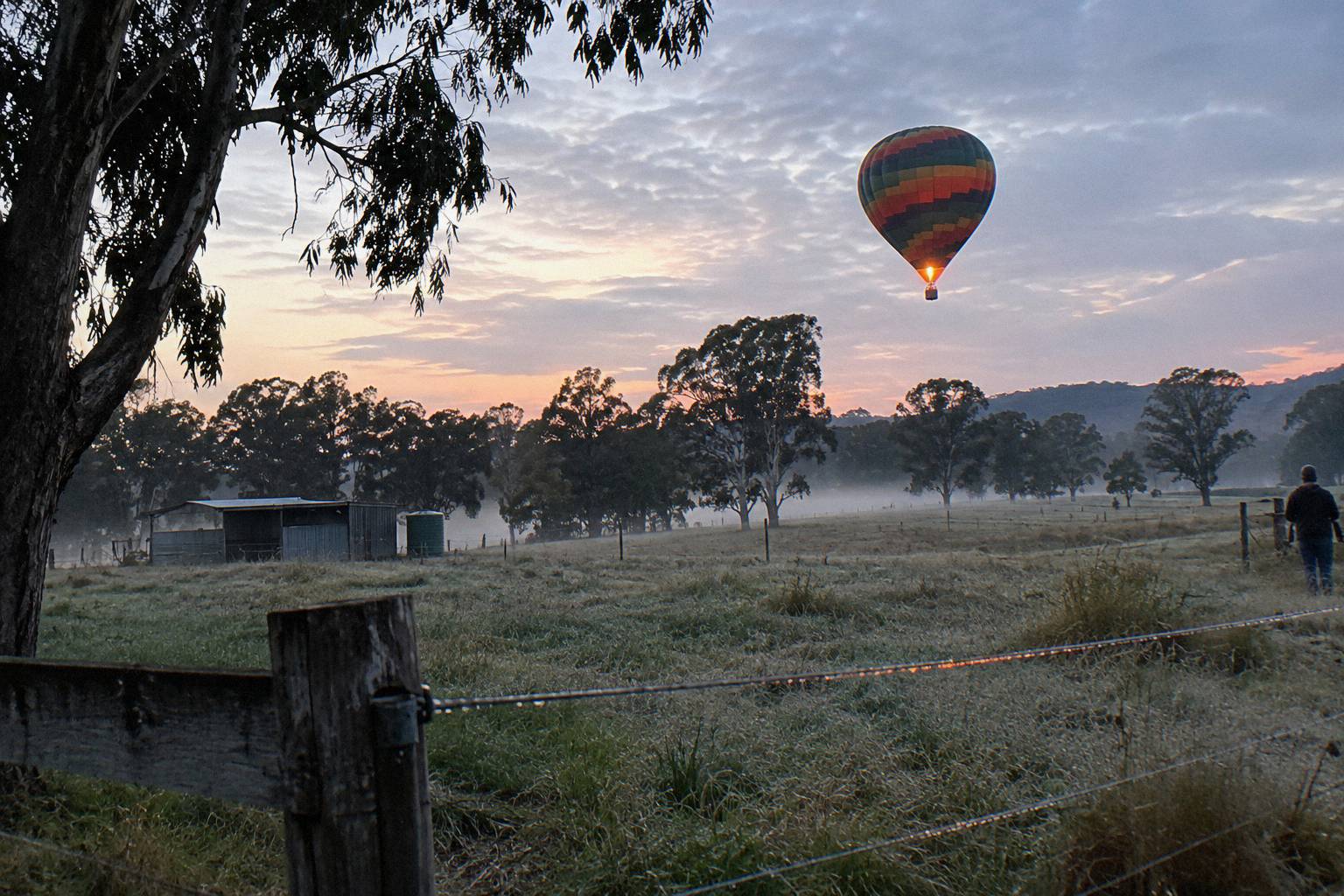
How Long Are You At Altitude, And When Does The Flight Start?
The airborne portion lasts about one hour, inside a total programme of about 3 to 4 hours from check-in to breakfast. The operator's stated start times run between 4:00 and 6:00 am depending on the season, because check-in is always 45 minutes before sunrise. The exact time is on your booking confirmation, and the weather call is the evening before.
Because the flight chases sunrise, the clock shifts across the year. Queensland has no daylight saving, so winter flights meet in the dark at civil-dawn times and summer check-ins land around 4 am. The operator publishes its own estimated meeting-time table, reproduced below alongside approximate sunrise times computed from the NOAA solar position calculation for Ipswich.
| Months | Operator's estimated meeting time | Approximate sunrise (computed) |
|---|---|---|
| Nov to Dec | 4.00 to 4.15 am | 04:47 to 04:49 |
| Jan to Feb | 4.15 to 4.45 am | 05:06 to 05:31 |
| Mar to Apr | 4.45 to 5.15 am | 05:49 to 06:05 |
| May to Jun | 5.30 to 6.00 am | 06:21 to 06:36 |
| Jul to Aug | printed as 5.30 to 5.15 am (typo on the operator's page) | 06:20 to 06:38 |
| Sep to Oct | 5.00 to 4.30 am | 05:13 to 05:47 |
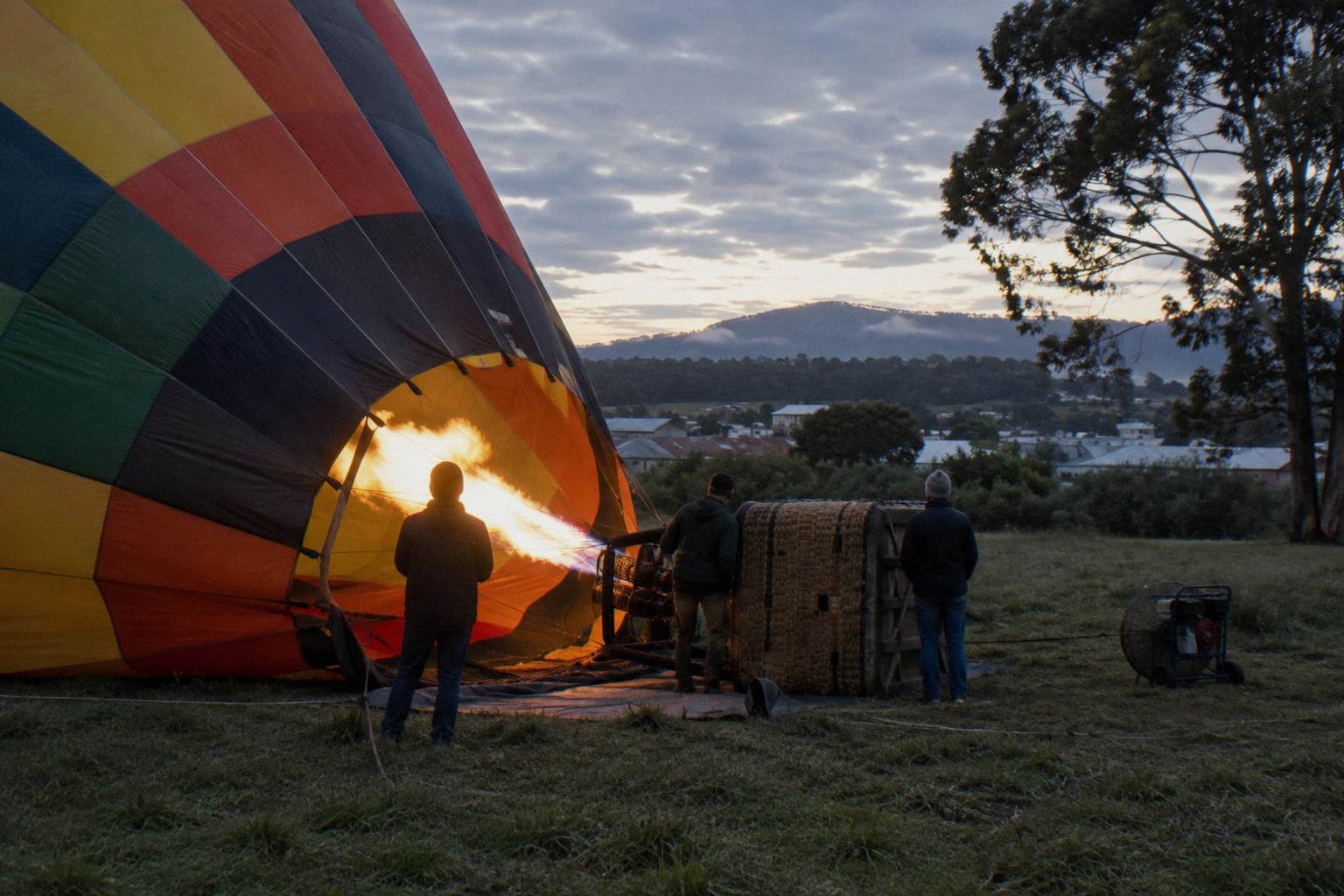
The shape of the morning is fixed even though the hour moves. Guests meet in the car park of the Ipswich Visitor Information Centre at Queens Park, where parking is free and a big wicker basket in the driveway marks the spot. The centre's toilets, including one accessible unisex toilet, open about 10 to 15 minutes before the nominated meeting time, and they are the last toilets of the morning: there are none in the basket, the vehicles, or at the take-off and landing sites. The company vehicle then takes the group to the launch site, balloon set-up takes 20 to 30 minutes, and passengers can optionally help with inflation and pack-down. After landing, the group returns for breakfast at the Fourth Child Restaurant, where the commemorative flight certificate is presented.
Two timing details trip people up. First, the operator's terms count a flight as completed if it lands early but has run over 40 minutes, so "about one hour" is a fair description with a stated floor. Second, there is no Brisbane or Gold Coast pickup: the operator publishes no transfer product at all, and its own drive-time table puts Brisbane CBD 30 minutes away, Brisbane Airport and the Gold Coast 60 minutes, Toowoomba 60, Warwick 90 and the Sunshine Coast 120. The pickup and transport options from Brisbane guide works through the choices, and the operator advises arriving the night before if you rely on public transport, because the first trains start after the summer programme's meeting times. The flight runs seven days a week except 25 December.
Can The Pilot Fly Lower If Someone Is Nervous?
You can ask, and it is a reasonable request to raise when you ring the night before, but the answer belongs to the pilot: altitude is chosen for safety and navigation around the wind, not for passenger preference, and the operator publishes no low-flight or high-flight option at booking. What the operator does promise is a cancellation with a reschedule or refund if the weather is unsuitable.
The practical version of this: mention your concern when you book and again on the evening weather call, when the crew already knows the forecast and the likely launch site. A nervous passenger flagged in advance is a routine matter for any operator, and the pilot's job already includes varying altitude through the flight, since drifting at one height for an hour is rarely useful. What no operator can do is guarantee a low flight, because if the low air is drifting towards powerlines or unsuitable landing country, the safe answer is altitude, full stop. The operator says it is legally obliged to cancel flights when the ground wind is more than 20 km/h.
The booking itself is low risk if the height question settles the wrong way. The operator's published cancellation terms charge A$25 per person for changes 8 to 14 days out and A$50 per person from 72 hours to 7 days, with the full fare forfeited inside 72 hours, and open-dated experience vouchers valid 36 months are transferable, so an undecided flyer can hold a voucher rather than a date. The fine print also notes a non-refundable booking administration fee on tour bookings. Read the terms before you rely on any of this; the FAQ's "reschedule or refund" wording applies to operator-cancelled flights.
For comparison, nearby flights run on the same principle with different geographies. The Scenic Rim Classic flight by Hot Air launches from the Scenic Rim with a Canungra or Nerang meeting point and a roughly five hour programme, and the GoBallooning Gold Coast flight with photos, 4.9 from 707 reviews on its booking page, lifts from Main Beach. Neither launches from Ipswich and neither is the same operator; each carries its own rules, and the booking page for each shows the current price. You can check availability on the Scenic Rim classic if a hinterland launch appeals more than a city one, or read more about Scenic Rim balloon flights.
What Trips People Up About Height And Booking
Four things catch out first-time flyers on this route: expecting a fixed altitude, expecting a seat, expecting a pickup, and reading the "from A$450" package price as a per-person fare when the operator's own per-person figures apply to the flight-only product, at A$460 per adult and A$425 per child. Each of these is answered on the operator's own pages, but they are scattered, so here they are in one place.
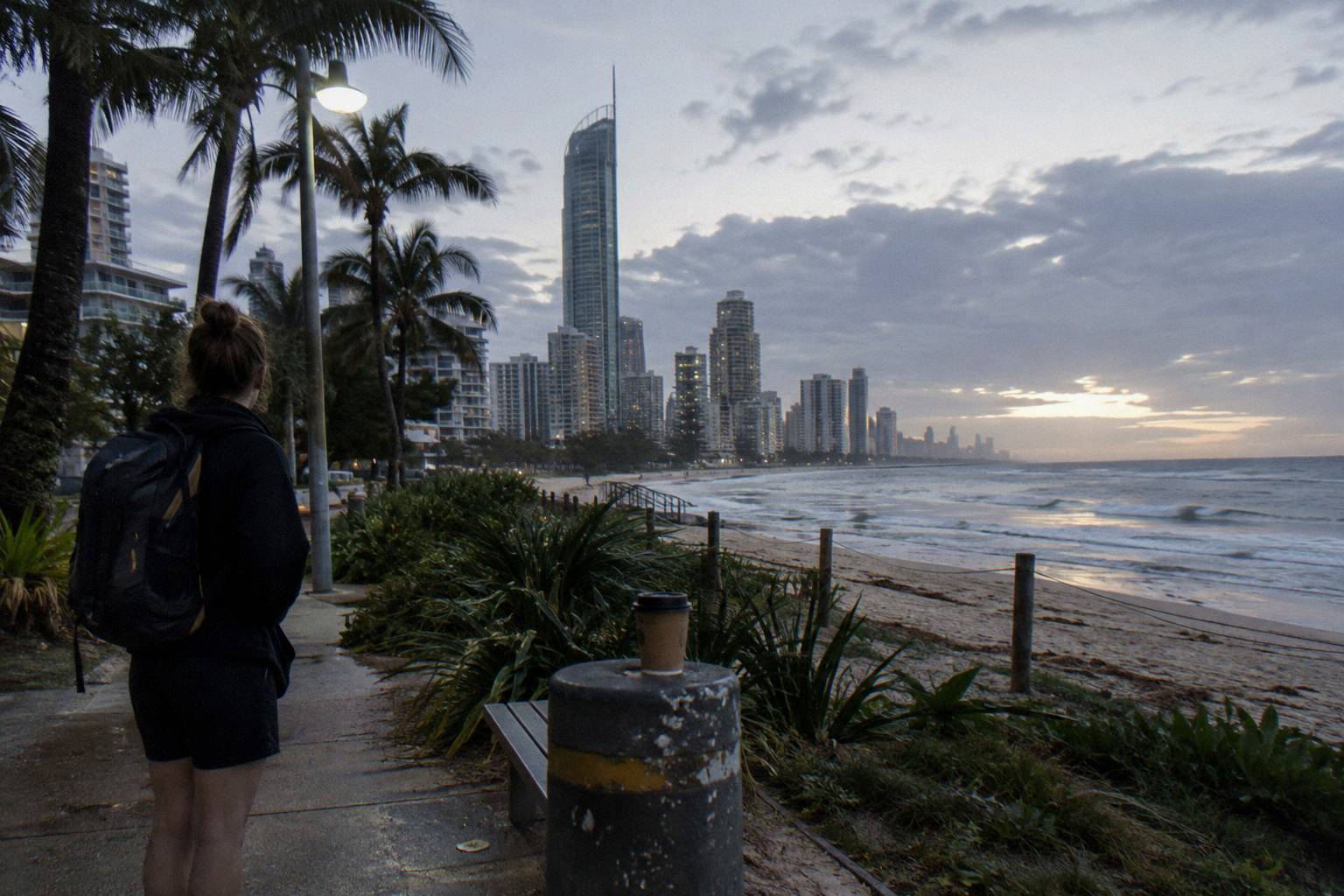
Height expectations first. The treetop-to-3,000-feet band is typical, not scheduled, and the 4,500 feet ceiling is an operator policy, not a legal limit you can look up as a rule of thumb. Passengers who arrive expecting "the highest flight" or a specific number are the ones most likely to feel shortchanged by a low, slow drift, even when that drift is the safer and prettier call for the day's wind. Ask the evening question instead: "what kind of flight is tomorrow shaping up to be?"
Second, the basket realities. No seats, no toilets after leaving the Visitor Information Centre, sides about 1.2 m, an unaided climb in and out, and a landing that can be bumpy with the basket briefly on its side. Children under 6 do not fly at all; ages 6 to 12 need 120 cm of height, a paying adult and a weight under 50 kg for the child fare; 13 and over pays the adult fare. Weight rules matter too: the operator asks to be told over 85 kg, applies a 50% surcharge at 110 kg or more, and cannot carry anyone over 130 kg, stated as its policy under CASA guidelines.
| Common assumption | What the operator actually says |
|---|---|
| The balloon goes to a set height | Treetop to 1,000 to 3,000 ft typically, chosen by the pilot for the wind |
| You can sit down if tired | Standing or leaning only, for about one hour, no seats |
| Breakfast package is A$450 per person | "From A$450" is the operator's from price; per-person fares are flight-only: A$460 adult, A$425 child |
| There is a pickup from Brisbane | No transfer product is published; meet at the Ipswich Visitor Information Centre |
| Flights go regardless of weather | Unsuitable weather cancels the flight; reschedule or refund |
| Anyone of any size can fly | Tell the operator over 85 kg; 110 kg plus means a 50% surcharge; over 130 kg cannot fly |
Third, price labels. The package page lists products "from" a price per group, the voucher page prices the flight-only product per person, and the breakfast package's per-person adult price is not stated on any fetched page. Group discounts exist, 5% for 4 to 6 people and 10% for 7 to 10, booked by phone, with the group's average weight required to be under 85 kg. Prices are valid for travel to 31 March of next year and change each 1 April. The full breakdown, including private charters from A$2,900 weekdays only, sits in the cost and packages guide.
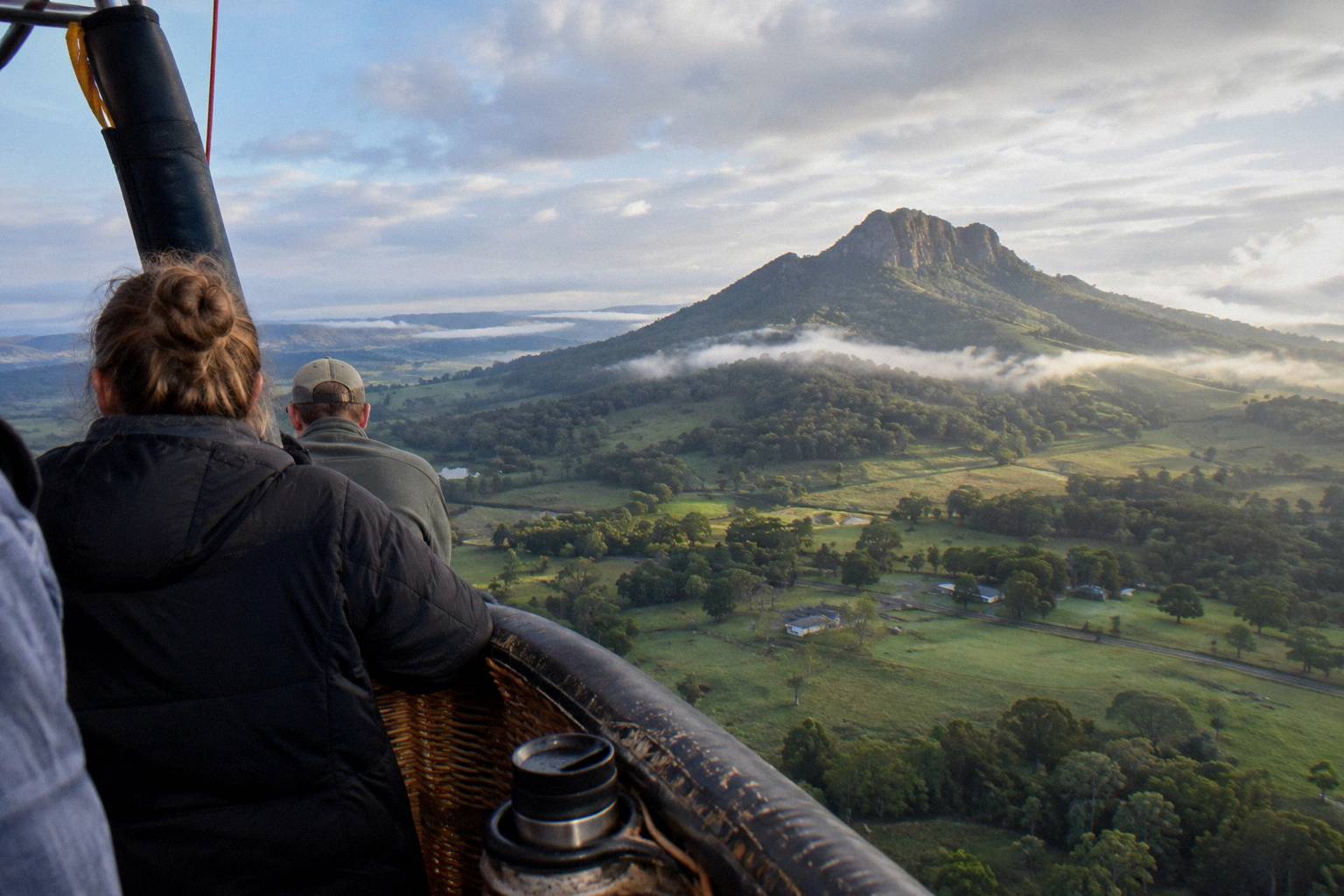
Fourth, the fear-of-heights decision itself. The honest test is not the number of feet but the three physical facts: standing for an hour, chest-high basket walls, and an unaided climb over a 1.2 m side at both ends. If all three sound tolerable, the altitude rarely is the problem it was feared to be; if any one is not, the operator's vouchers or a different format give room to decide. For a photo-led alternative with a big review pool, the Check availability link beside the Gold Coast flight with photos is the comparison worth making.
There is also a middle path worth naming: a winery breakfast flight from the Gold Coast by Hot Air Gold Coast, about 4 hours total with hotel pickup from Surfers Paradise or Broadbeach, 4.8 from 453 reviews on its booking page.
Common Questions About How High Balloons Fly
How High Do Hot Air Balloons Go?
On the Ipswich sunrise flight, the operator says balloons typically fly from treetop height up to 1,000 to 3,000 feet, and that it does not fly above 4,500 feet. The height on the day is the pilot's call, made around the wind, and no altitude is promised at booking.
Is A Balloon Flight Scary If You Fear Heights?
There is no promise either way. The basket walls are about 1.2 m high, everyone stands, and there is no edge to step near, which many nervous flyers find manageable. You must still climb in and out unaided and stand for about an hour, and landings can be bumpy.
Can You Feel How High You Are In A Balloon?
The operator makes no claim about sensations. Flights drift between treetop and cruising heights rather than hovering at one altitude, and conditions vary with the wind on the day.
How Long Is The Balloon Actually In The Air?
About one hour, inside a total programme of about 3 to 4 hours. The operator's terms count a flight as completed if it lands early but has run over 40 minutes.
What Time Does The Flight Start?
Check-in is always 45 minutes before sunrise, so start times run from about 4 am in summer to about 5.30 to 6 am in winter. The exact time for your date is on your booking confirmation, and the weather call is the evening before between 7 and 7.30 pm.
Does The Balloon Fly Higher For Better Views?
Altitude is chosen for safety and navigation, not for the view. The operator says almost all of Greater Brisbane is visible from altitude, but also that views vary with the wind and no route or height is guaranteed.