Will I Be Cold On A Hot Air Balloon Ride?
How cold a sunrise balloon flight near Ipswich actually gets, month by month, with Bureau of Meteorology temperatures, check-in times and what to wear.
In short: Yes, colder than you expect, but not because of altitude. The chill comes from standing still in an open basket before sunrise, and in Ipswich that can mean 5 to 10 degrees at check in from May through August. The Bureau of Meteorology's Amberley station, the closest to Ipswich, puts the July mean minimum at 5.4 degrees, and the lowest ever recorded there is minus 4.8. Layers, a hat and enclosed shoes fix almost all of it.
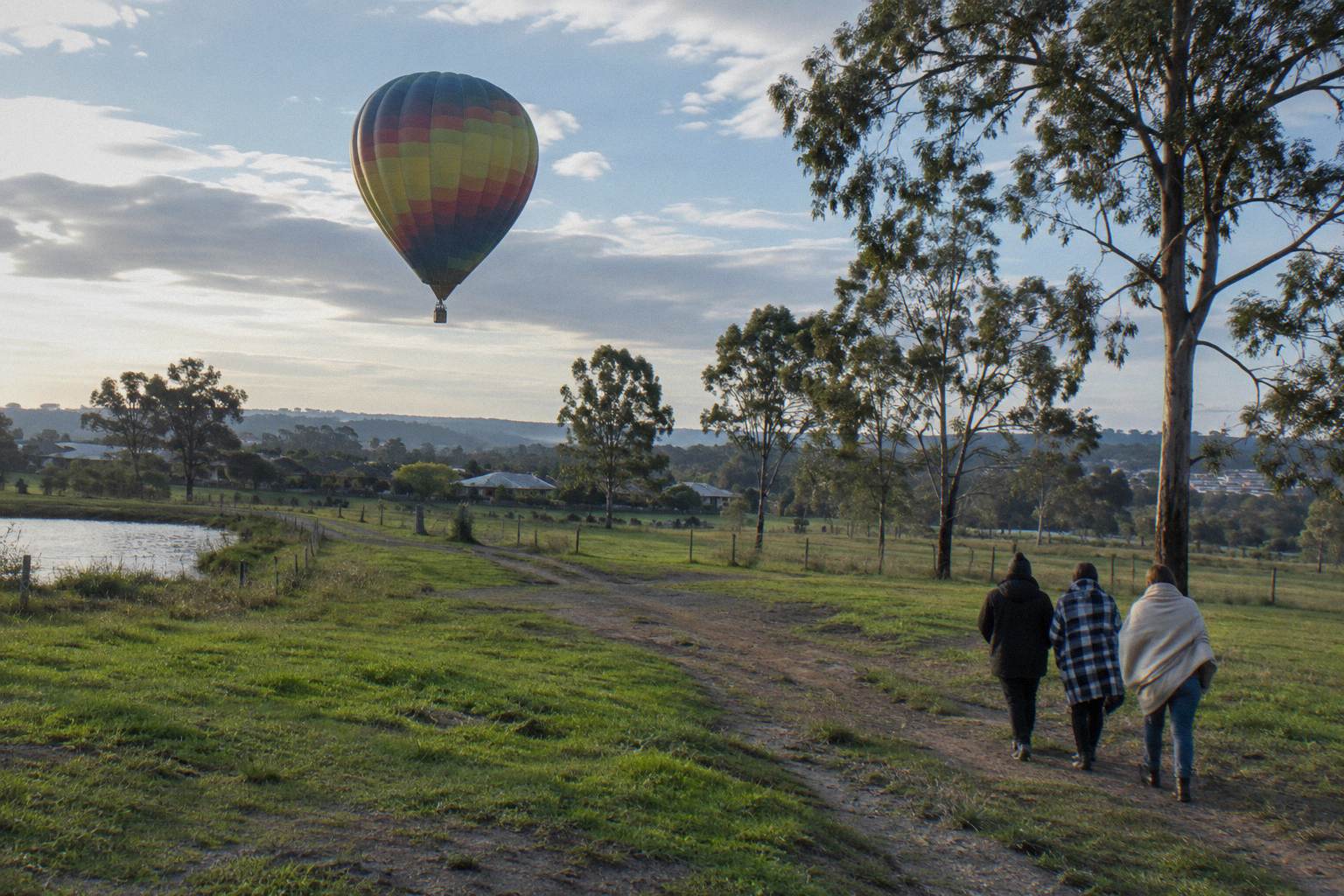
Balloon flights in South East Queensland leave in the dark, because that is when the air is calmest and the weather call can be made safely. The operator of the one flight that launches from Ipswich, Floating Images, always checks passengers in 45 minutes before sunrise, and its own estimated meeting times run from about 4.00am in November and December to 5.30 to 6.00am in May and June. You will be standing in a field or a car park, in the dark, in the quietest and often coolest hour of the day. That is the whole basis of the cold question, and it deserves a proper answer with real numbers rather than folklore.
The one flight that departs Ipswich itself is the Ipswich Scenic City And Country Hot Air Balloon Flight, operated by Floating Images, which meets at the Ipswich Visitor Information Centre in Queens Park. Two other options in the region are the Scenic Rim Classic Hot Air Balloon Flight and the GoBallooning Gold Coast Flight With Photos, both from different operators with their own meeting points well east and south of Ipswich. All three ask the same question of your wardrobe.
You will usually feel a mild chill, though mostly on the ground before sunrise rather than in the air, since a balloon moves with the wind instead of through it and there is no cold blast like on a motorbike. Dressed in layers, most passengers stay comfortable, even though Ipswich's mean minimum temperatures from May to August sit between 5.4 and 10 degrees.
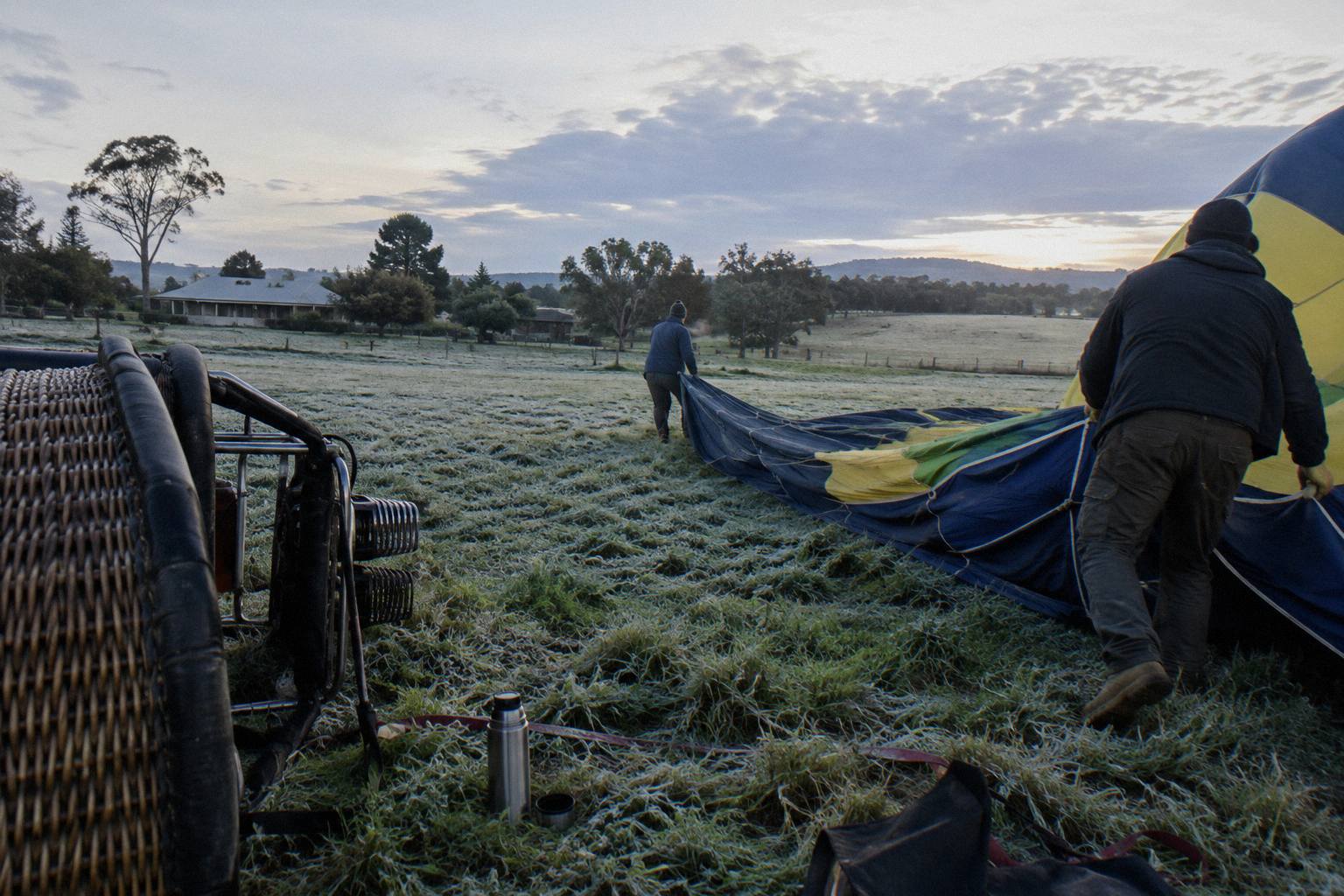
The honest answer has three parts. First, the standing around. Floating Images says balloon set up takes 20 to 30 minutes, and passengers can optionally help with inflation and deflation, which is a genuinely good way to stay warm. Second, the flight itself. The burner above your head throws out serious heat in bursts, and because the balloon travels with the wind rather than against it, the apparent wind in the basket is usually light. Third, the descent and landing, when the sun may still be low and the pack down happens in dew or long grass, which is why the operator suggests sturdy enclosed shoes and says to avoid sandals, open toe shoes and high heels.
What the research does not contain is any measured in flight temperature. No operator in the roster publishes one, and no study of South East Queensland ballooning offers a figure. So treat any claim of a specific "it is X degrees colder up there" number with suspicion. What can be said from the record is how cold the ground beneath the flight gets, month by month, and that is what the next section does.
How Cold Are Ipswich Mornings, Month By Month?
The Bureau of Meteorology's Amberley station, the closest long record to Ipswich, shows mean minimum temperatures from 19.7 degrees in January down to 5.4 degrees in July. The lowest temperature ever recorded at the station is minus 4.8, in July, and the lowest ground temperature is minus 9.1, in August. Those are the numbers a sunrise passenger is dressing against.
A balloon check in lands close to the coldest part of the day, so the mean minimum is the most useful figure in the table below. The 9am temperature is included because it shows how quickly the morning warms once the sun is up: by the time breakfast comes around, June has a mean 9am reading of 13.3 degrees and July 12.2.
| Month | Mean minimum (C) | Mean 9am temp (C) | Approximate sunrise, Ipswich | Approximate check in |
|---|---|---|---|---|
| January | 19.7 | Not stated | 05:06 | 04:21 |
| February | 19.5 | Not stated | 05:31 | 04:46 |
| March | 17.9 | Not stated | 05:49 | 05:04 |
| April | 14.0 | Not stated | 06:05 | 05:20 |
| May | 10.0 | Not stated | 06:21 | 05:36 |
| June | 7.0 | 13.3 | 06:36 | 05:51 |
| July | 5.4 | 12.2 | 06:38 | 05:53 |
| August | 6.2 | 14.2 | 06:20 | 05:35 |
| September | 9.5 | Not stated | 05:47 | 05:02 |
| October | 13.4 | Not stated | 05:13 | 04:28 |
| November | 16.3 | Not stated | 04:49 | 04:04 |
| December | 18.4 | Not stated | 04:47 | 04:02 |
The sunrise column is a computed table, derived from the NOAA solar position calculation for Ipswich, and every figure in it is approximate. Queensland keeps standard time all year, with no daylight saving, so the shift through the year is purely seasonal. The computed times line up with the operator's own meeting time table, which prints 4.00 to 4.15am for November and December and 5.30 to 6.00am for May and June. The climate figures are from the Bureau of Meteorology's Amberley climate averages, the station nearest Ipswich.
Two details worth noticing. The calmest 9am winds of the year, at 5.2 to 5.9 km/h, fall between May and August, which is exactly when the mornings are coldest, so the calmest mornings and the coldest mornings are the same months. And winter is also the clearest: the mean 9am cloud cover is lowest in July and August. Cold, calm and clear tend to arrive together.
What Should You Wear On The Flight?
The operator's advice is comfortable layers, a hat, sunglasses and sturdy enclosed shoes, and it says to avoid white clothing. Layers work because the morning runs cold to warm: a 5.4 degree car park at check in, then set up, then burner heat in the basket, then sunshine by breakfast time. Enclosed shoes matter for dew and long grass at the launch and landing sites.
This is the operator's own clothing guidance, from its FAQ and on the day pages, and it is the only clothing claim on this page that carries authority. The operator's on the day page is the source for the recommendations. A hat is listed for a practical reason passengers often miss: the burner sits above the basket and radiates heat downward between blasts, and a hat takes the edge off that. Sunglasses matter after sunrise, when low light comes straight across the valleys.
There are basket realities that shape the clothing choice too. There are no seats: everyone stands or leans for the roughly one hour flight, and no stools, walkers, sticks or crutches are allowed, so clothing needs to let you move and brace comfortably. The basket side is about 1.2 metres high and passengers climb in and out unaided using two footholds. Tights under trousers, a warm mid layer and a windproof outer layer you can shed later is a sound combination for winter. For a deeper run through the clothing question, the site's guide on what to wear for a balloon flight covers it in full.
A short packing list, drawn only from the operator's stated advice:
- Comfortable layers you can add or remove across the morning
- A hat and sunglasses
- Sturdy enclosed shoes, because of dew and long grass
- Nothing white, per the operator's recommendation
- A camera if you want it, which stays your responsibility at all times
Does The Burner Keep You Warm?
Partly, and unevenly. The burner fires in bursts rather than continuously, so the basket alternates between waves of heat and cool stillness, and passengers standing directly under the envelope feel it most. The operator recommends a hat precisely because of that downward heat. Do not plan on the burner as your only warmth, especially for the 20 to 30 minute set up on the ground before the flight.
The heat from a balloon burner is intense but local. When it fires, anyone close beneath it feels a strong warm push, and when it stops, the morning reasserts itself quickly. Passengers on the far side of the basket, or shorter passengers further from the flame, feel much less of it. The practical reading: treat burner heat as a bonus during the flight, and dress for the ambient temperature in the table above.
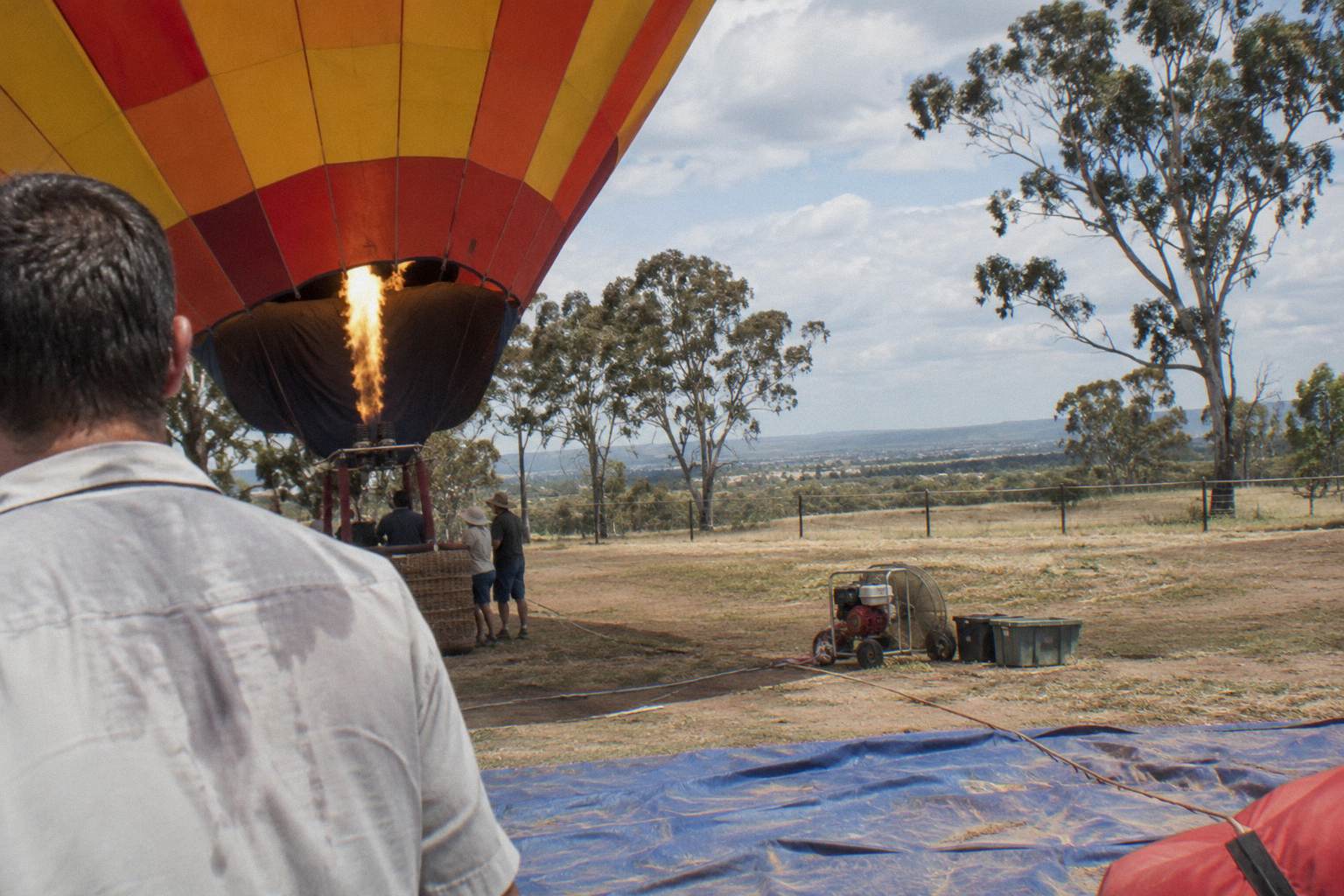
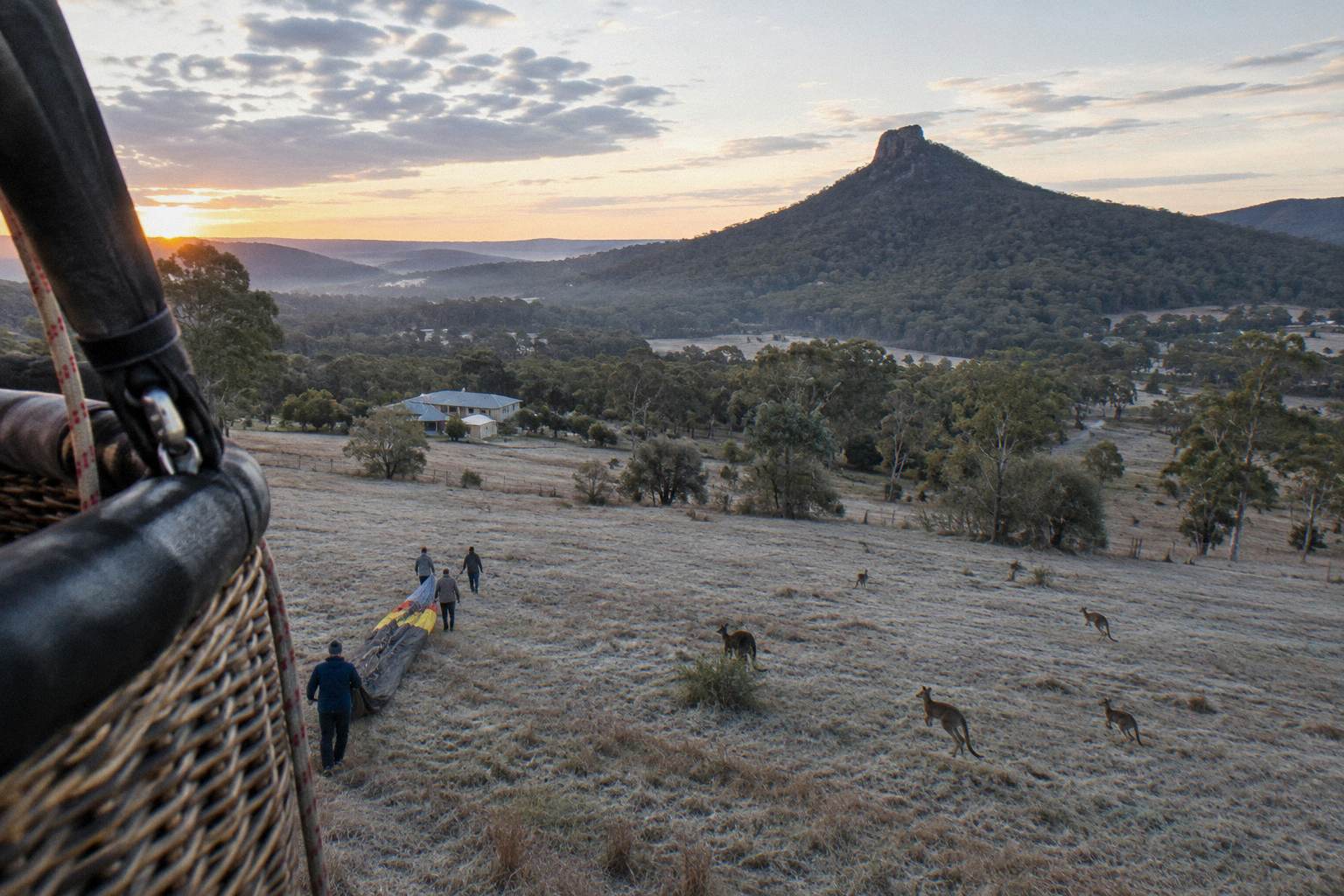
The coldest stretch of the whole programme is often the wait and the set up. Floating Images says the launch site is chosen each day from the wind, from as near as three minutes' drive to as far as about 20 minutes from the meeting point, and a company vehicle takes guests there. Standing in a paddock in the dark while the envelope inflates, with grass wet underfoot, is where the layers earn their place. Helping with the inflation, which the operator invites passengers to do, is the warm option.
Do Some Months Feel Colder Than The Numbers Suggest?
Yes, three factors add chill beyond the thermometer. Mean 9am humidity peaks at 77 per cent in June, dew soaks grass at launch fields, and the lowest recorded ground temperature is minus 9.1 in August, meaning frost underfoot is possible even when the air reading is above zero. Wind is the milder factor here, with May to August the calmest 9am months of the year.
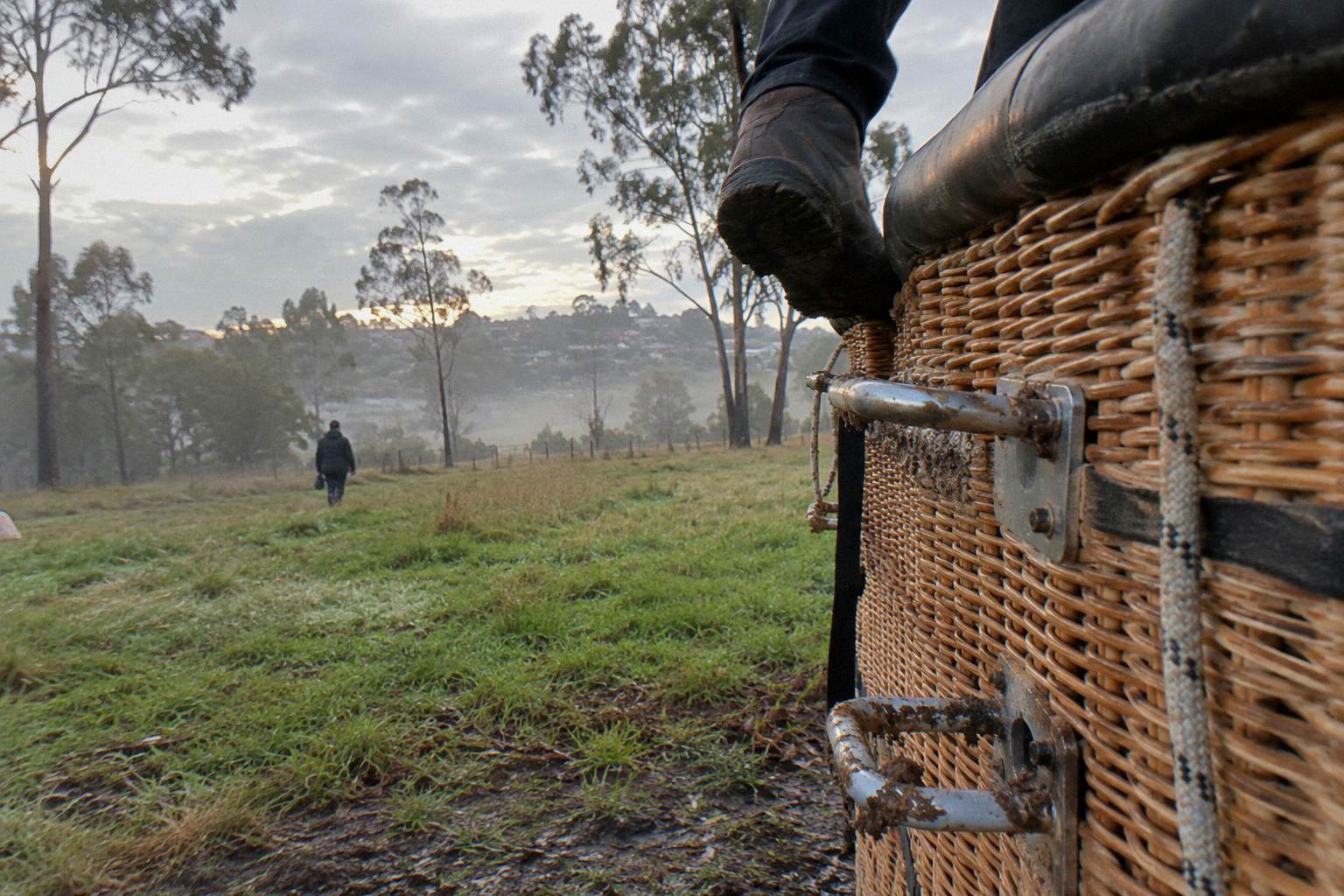
Damp cold feels sharper than dry cold at the same reading, and an Ipswich winter morning supplies damp. June averages 44.5 mm of rain spread over the month and July 37.3 mm, and the mean 9am humidity in June is the highest of the year. On a clear, calm winter morning, radiation cooling can drop a paddock well below the air temperature, which is what the minus 9.1 ground minimum records. Frost on the grass at the launch site is a real winter possibility, another reason enclosed shoes beat sneakers with mesh.
October carries a different caveat. The ATSB investigated a 2021 occurrence near Yamanto in which a balloon descended into localised fog, and its report notes the forecast that morning carried a 30 per cent probability of fog. The Bureau's statistics pages carry no fog day figure for the station, so no monthly fog ranking can be printed here, but the report is official evidence that spring mornings near Ipswich can hold fog. Fog chills differently again, damp and grey, and it is one reason flights are weather dependent and confirmed the evening before.
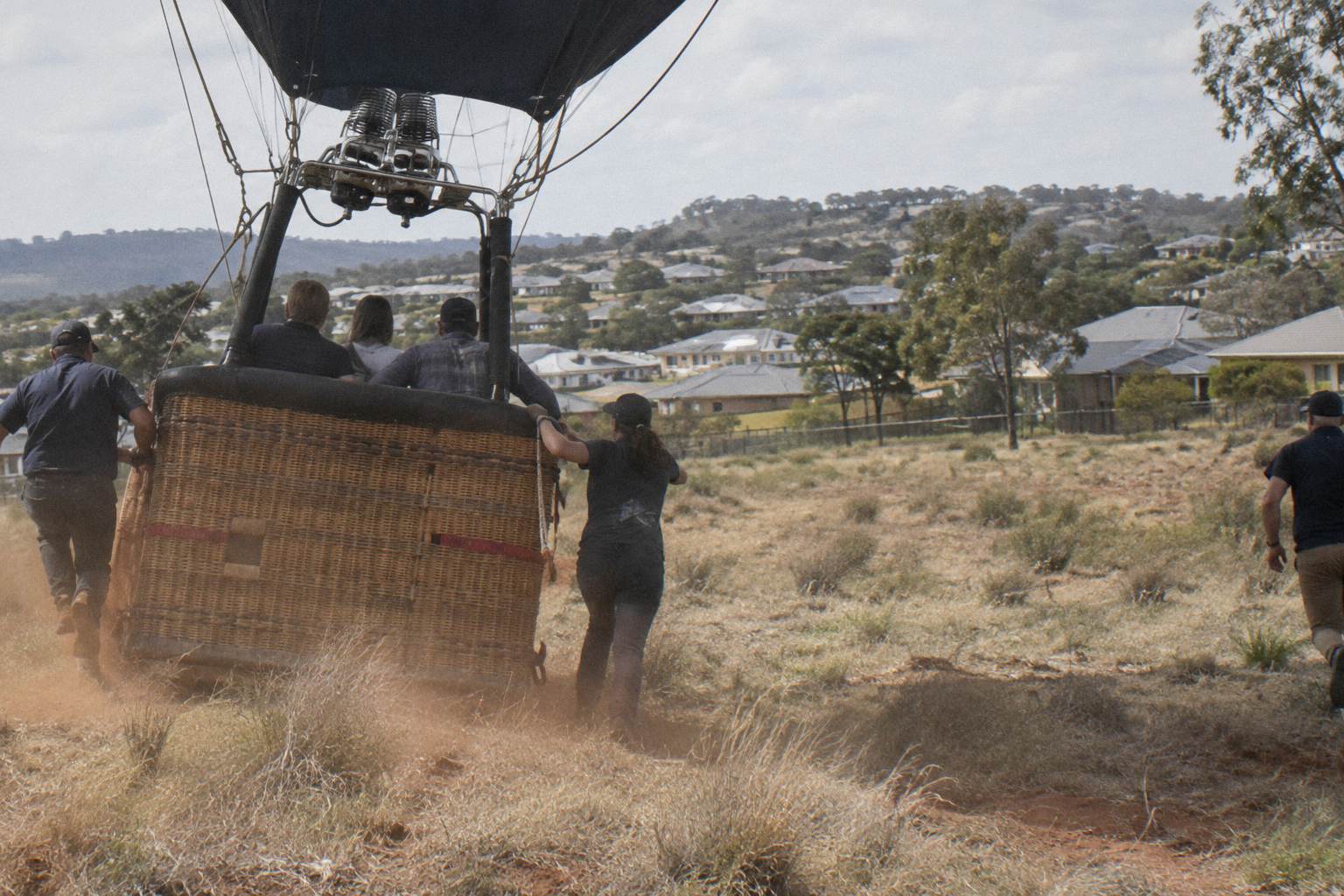
Cold Versus The Alternatives Nearby
The nearby flights from the Gold Coast and the Scenic Rim face the same pre dawn mathematics with slightly milder coastal numbers, but no temperature record for their launch fields is published in this site's research, so no comparison figure can be printed. What differs practically is the wait: several Gold Coast options include hotel pickup, which trades a warm bed for an earlier, longer vehicle ride to the launch site.
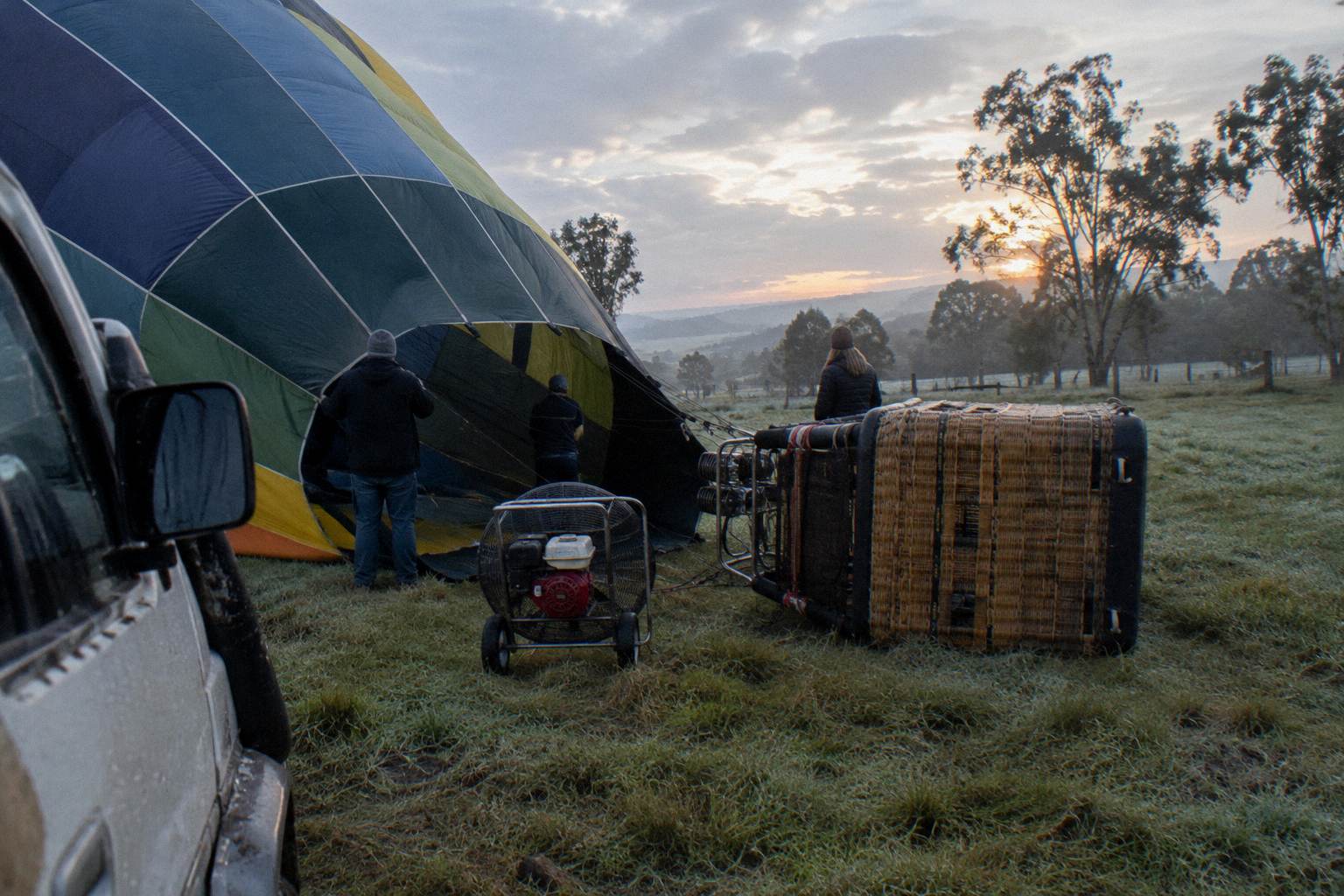
The Scenic Rim Classic Hot Air Balloon Flight, run by a different operator, meets at Canungra or Nerang for a self drive check in, with a coach ride to the launch site, and runs about five hours in total with an hour in the air. The GoBallooning Gold Coast Flight With Photos meets at the Sheraton Grand Mirage at Main Beach and runs about four hours. Both are near enough to Ipswich's climate for the same layering advice to apply, and both are confirmed the evening before when the weather is in doubt. Their booking pages show the current price.
The Ipswich flight keeps the programme compact by comparison: about 3 to 4 hours in total from the Queens Park meeting point, with breakfast afterwards at Fourth Child Restaurant in Brisbane Street, where the certificate is presented. The operator's flight only fares are A$460 per adult and A$425 per child, published per person on its voucher page, with the breakfast package from A$450 and a flight for two from A$990. A hot breakfast at the end is itself part of the cold weather plan.
If the pre dawn chill is the thing holding you back from booking, the working plan is simple: book the month that suits your calendar, because the operator says it generally flies year round and names no best season, then dress in layers for the mean minimum in the table above. If a January minimum of 19.7 degrees sounds far more appealing than July's 5.4, that is a legitimate way to choose a date. For a wider look at the seasonal trade offs, the companion piece on which month suits a balloon flight works through the rainfall and wind record too. You can also check availability once you have a month in mind, and the site's publisher, Ipswich Hot Air Balloon, keeps the flight details on its tour page year round.
What Trips People Up About Cold And Balloons
Three mistakes recur. People dress for the forecast daytime maximum rather than the pre dawn minimum, they wear shoes that soak through in dew within minutes, and they assume the burner will keep them warm for the whole programme, forgetting the 20 to 30 minute set up on the ground. Each one is avoidable with the operator's own clothing advice.
The maximum versus minimum error is the big one. On a July day the mean maximum is a pleasant 21.4 degrees, and it is easy to read that on a weather app the night before and pack light. But check in is 45 minutes before a 6.38am sunrise, right in the coldest window, against a mean minimum of 5.4. The phone screen shows the day's peak; the basket shows its floor.
The second error is footwear. The operator's advice about sturdy enclosed shoes for dew or long grass is not boilerplate. Launch sites are working paddocks and parkland chosen that morning for the wind, and grass in Ipswich winter is reliably wet. Mesh running shoes and sandals fail fast; the operator's own rule bans sandals, open toe and heels outright.
The third is relying on the burner, covered earlier: it fires in bursts, warms unevenly, and does nothing for you on the ground before take off or after landing while the balloon is packed down. Pack down help is optional, and standing still through it, in shade, after the flight, is a genuinely cold quarter hour in July if you under dressed.
Common Questions About Cold On A Balloon Ride
Will I Be Cold On A Hot Air Balloon Ride?
Most likely, mildly, and mostly before sunrise. In Ipswich the mean minimum ranges from 19.7 degrees in January to 5.4 in July, and check in falls 45 minutes before sunrise, near the coldest point of the day. Layers, a hat and enclosed shoes handle it.
How Much Colder Does It Get Inside The Basket?
No in flight temperature figure exists in this site's research, so no number can be printed. The basket moves with the wind rather than through it, so there is no constant wind chill, and the burner adds bursts of heat during the flight.
Is Winter Too Cold To Fly?
No. The operator says it generally flies year round and names no best season, and the Bureau's record shows May to August brings both the coldest mornings and the calmest 9am winds, 5.2 to 5.9 km/h, which is favourable for ballooning.
Should I Wear A Jacket Even In Summer?
A light layer is wise in any month. Even January's mean minimum of 19.7 degrees feels cool standing still in the dark with dew on the grass, and the morning warms quickly once the sun rises, so something you can remove works best.
Why Does The Operator Say To Avoid White Clothing?
The operator recommends avoiding white without publishing a detailed reason, so ask when you book. The same page recommends comfortable layers, a hat, sunglasses and sturdy enclosed shoes for dew and long grass.
Are There Toilets To Warm Up In Before The Flight?
The Ipswich Visitor Information Centre opens its toilets about 10 to 15 minutes before the nominated meeting time, and the breakfast restaurant has toilets. Once the group leaves the centre there are no toilets in the basket, the vehicles or at the launch and landing sites.