What Month Is Best For A Hot Air Balloon Ride Near Ipswich?
Month-by-month wind, rain, cloud, temperature and sunrise data for choosing a hot air balloon flight near Ipswich, with the operator's own timing and cancellation terms.
In short: there is no official best month, and Floating Images, the operator of the Ipswich flight, gives none: it says it can generally fly year-round. The Bureau of Meteorology averages for Amberley, the station nearest Ipswich, show May to August as the calmest mornings, with mean 9am wind of 5.2 to 5.9 km/h, and the same months bring the least rain and clearest skies. Winter dawns are cold, with a July mean minimum of 5.4 degrees, so the choice comes down to calm air versus warm fingers. This page sets out the numbers month by month, plus the computed sunrise and check-in times, so you can weigh the trade-offs yourself. If a fixed date goes wrong, nearby Scenic Rim and Gold Coast flights are alternatives, and open-dated vouchers from the Ipswich operator stay valid 36 months.
Floating Images Hot Air Balloon Flights is the only operator covered here that launches from Ipswich, meeting in the car park of the Ipswich Hot Air Balloon guide site's local flight at the Ipswich Visitor Information Centre, Queens Park. Its check-in is always 45 minutes before sunrise, and the exact time appears on your confirmation. Everything below comes from the operator's own pages and from Bureau of Meteorology climate averages, so you can match a month to what matters to you: still air, dry ground, clear skies or a civil start time.
What Month Is Best For A Hot Air Balloon Ride?
No single month is officially best for a hot air balloon ride: the Ipswich operator declines to name one and says it can generally fly year-round, so any definitive answer would be filling a gap the data does not fill. Bureau of Meteorology averages do show May, June, July and August bring the calmest, driest mornings around Ipswich, while November to February bring the warmest dawns but the windiest mornings and wettest months.
The deciding weather for a balloon is ground wind. The operator says it is legally obliged to cancel flights when the wind is more than 20 km/h on the ground, and it makes the call the evening before, asking passengers to ring between 7 and 7.30pm. Those 9am wind averages matter because a balloon flies at dawn, the calmest part of the day, and the Amberley figures at 9am sit well inside the flying window in every month of the year. Cancellation, reschedule and refund terms are covered in detail in how balloon flights handle weather.
Your own best month depends on what you are optimising for. A photographer may want July's clear skies and late sunrise. A visitor escaping a southern winter may want September's mild mornings and 5.47am sunrise. A family with small children, noting the operator's minimum age of 6 and its 120 cm basket-edge rule, may prefer any month where check-in falls after 5am, which the computed table below shows runs from April to September. The Ipswich Scenic City And Country Hot Air Balloon Flight with Floating Images runs seven days a week except 25 December, so the calendar is largely yours to choose.
The Ipswich flight is the one local launch, with the operator's published flight-only fares of A$460 adult and A$425 child per person, from A$450 for the breakfast package and from A$990 for a flight for two. The two breakfast-inclusive Scenic Rim and Gold Coast hinterland options are other operators entirely, launching near Canungra and from the Gold Coast, with the current price on the booking page. If your month is dictated by school holidays or a wedding date, the local launch with a voucher beats chasing a season.

Wind And Rain By Month: The Numbers That Decide
Bureau of Meteorology averages show May to August as the calmest, driest window around Ipswich, with mean 9am wind of 5.2 to 5.9 km/h and monthly rainfall of 27.4 to 55.5 mm. November, December and February sit at the other end, with 9am winds of 8.4 to 9.2 km/h and rainfall of 84.7 to 121.6 mm, still under the operator's 20 km/h ground wind cancel threshold.
Balloons fly at dawn precisely because mornings are calmer than afternoons. The same Amberley record shows mean 3pm wind of 11.1 to 17.9 km/h, roughly double the 9am figures, which is why no balloon operator schedules afternoon flights. The Bureau's statistics are long-term averages, published for the Amberley station on the Bureau of Meteorology climate averages page, and they describe typical conditions rather than a guarantee for any given day.
| Month | Mean 9am wind (km/h) | Mean rainfall (mm) | Mean minimum temp (C) |
|---|---|---|---|
| January | 8.8 | 116.6 | 19.7 |
| February | 8.4 | 121.6 | 19.5 |
| March | 7.9 | 90.6 | 17.9 |
| April | 6.1 | 53.0 | 14.0 |
| May | 5.2 | 55.5 | 10.0 |
| June | 5.5 | 44.5 | 7.0 |
| July | 5.3 | 37.3 | 5.4 |
| August | 5.9 | 27.4 | 6.2 |
| September | 7.4 | 32.6 | 9.5 |
| October | 8.5 | 74.4 | 13.4 |
| November | 9.2 | 84.7 | 16.3 |
| December | 8.6 | 119.8 | 18.4 |
Read the table as trade-offs, not verdicts. July and August pair the lowest rain with the lowest overnight temperatures, and the record low at Amberley is minus 4.8 degrees in July, with a ground temperature of minus 9.1 recorded in August. The operator suggests comfortable layers, a hat and sturdy enclosed shoes, and it says to avoid white clothing, advice that matters most on dewy winter grass. The article on whether a balloon ride feels cold covers dressing for those temperatures in detail.
If you would rather not gamble a single date on the weather at all, an open-dated voucher spreads the risk. The operator's Experience Vouchers are valid 36 months from purchase, are transferable but not refundable, and lock the original price if used within 12 months. When the operator itself cancels for weather, the FAQ says reschedule or refund; the terms and conditions describe payment held in credit with alternative dates offered, so read both before booking.
Sunrise And Check-In Times Through The Year
Check-in is always 45 minutes before sunrise, and around Ipswich that swings from roughly 4.02am in December to roughly 5.53am in July, because Queensland keeps no daylight saving. Sunrise moves across nearly two hours through the year, computed from the NOAA solar position calculation for Ipswich, and the figures below are approximate: the exact meeting time appears on your confirmation. Summer flights mean a very early alarm; winter lets you sleep nearly two hours longer.
The operator's own estimated meeting-time table agrees with the computed sunrise figures: it lists 4.00 to 4.15am for November and December, 4.45 to 5.15am for March and April, and 5.30 to 6.00am for May and June. Its package page gives an overall start window of 4:00 to 6:00am. So the practical question of which month suits you may simply be whether a 4am start fits your plans, and the table below answers it month by month.
| Month | Approximate sunrise (AEST) | Approximate check-in, 45 min earlier |
|---|---|---|
| January | 05:06 | 04:21 |
| February | 05:31 | 04:46 |
| March | 05:49 | 05:04 |
| April | 06:05 | 05:20 |
| May | 06:21 | 05:36 |
| June | 06:36 | 05:51 |
| July | 06:38 | 05:53 |
| August | 06:20 | 05:35 |
| September | 05:47 | 05:02 |
| October | 05:13 | 04:28 |
| November | 04:49 | 04:04 |
| December | 04:47 | 04:02 |
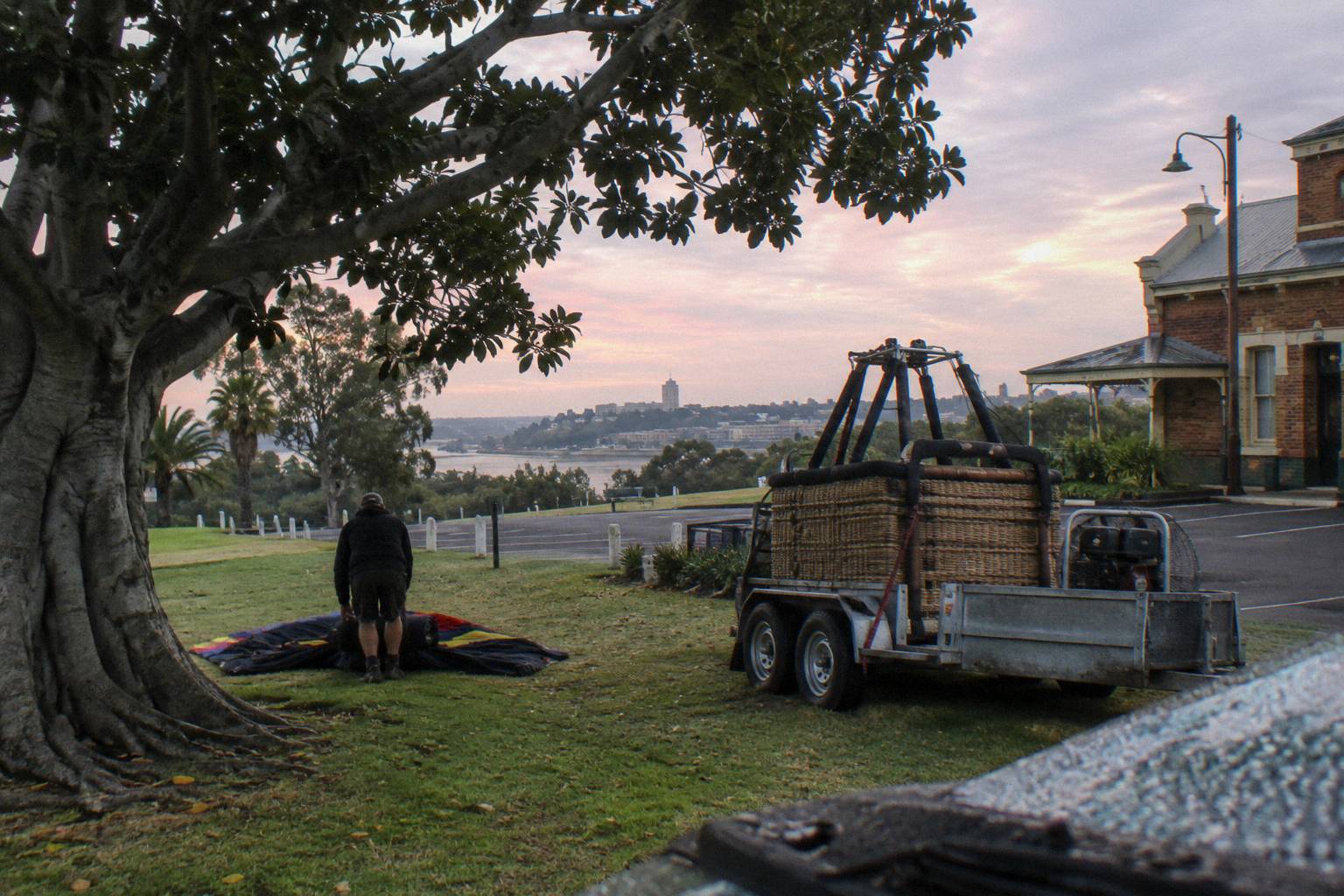
Two planning notes follow from the timing. First, the meeting point is the Ipswich Visitor Information Centre car park at Queens Park, with free parking, and the drive-time table on the operator's site gives 30 minutes from Brisbane CBD, 60 from Brisbane Airport and 60 from the Gold Coast, so an April-to-September check-in after 5am makes those drives easier. Second, the operator advises arriving the day before if you rely on public transport, because trains do not run early enough for the summer program. The guide to sunrise balloon flight timing unpacks the whole morning.
Timing also decides what you do afterwards. The programme runs about 3 to 4 hours in total, with about 1 hour in the air, and breakfast at the Fourth Child Restaurant follows the flight, where the commemorative certificate is presented. A winter 5.53am check-in still has you finished before a late breakfast elsewhere in Ipswich; a December 4.02am start means the whole morning is rearranged around it.
If a Gold Coast base suits your dates better, the Bubbles, Alpacas And Breakfast Balloon Flight, a different operator launching from the Gold Coast hinterland with hotel pickup from Surfers Paradise and Broadbeach, runs 5 to 6 hours with the same 1 hour in the air, and the booking page shows the current price.
Cloud, Fog And The Visibility Question
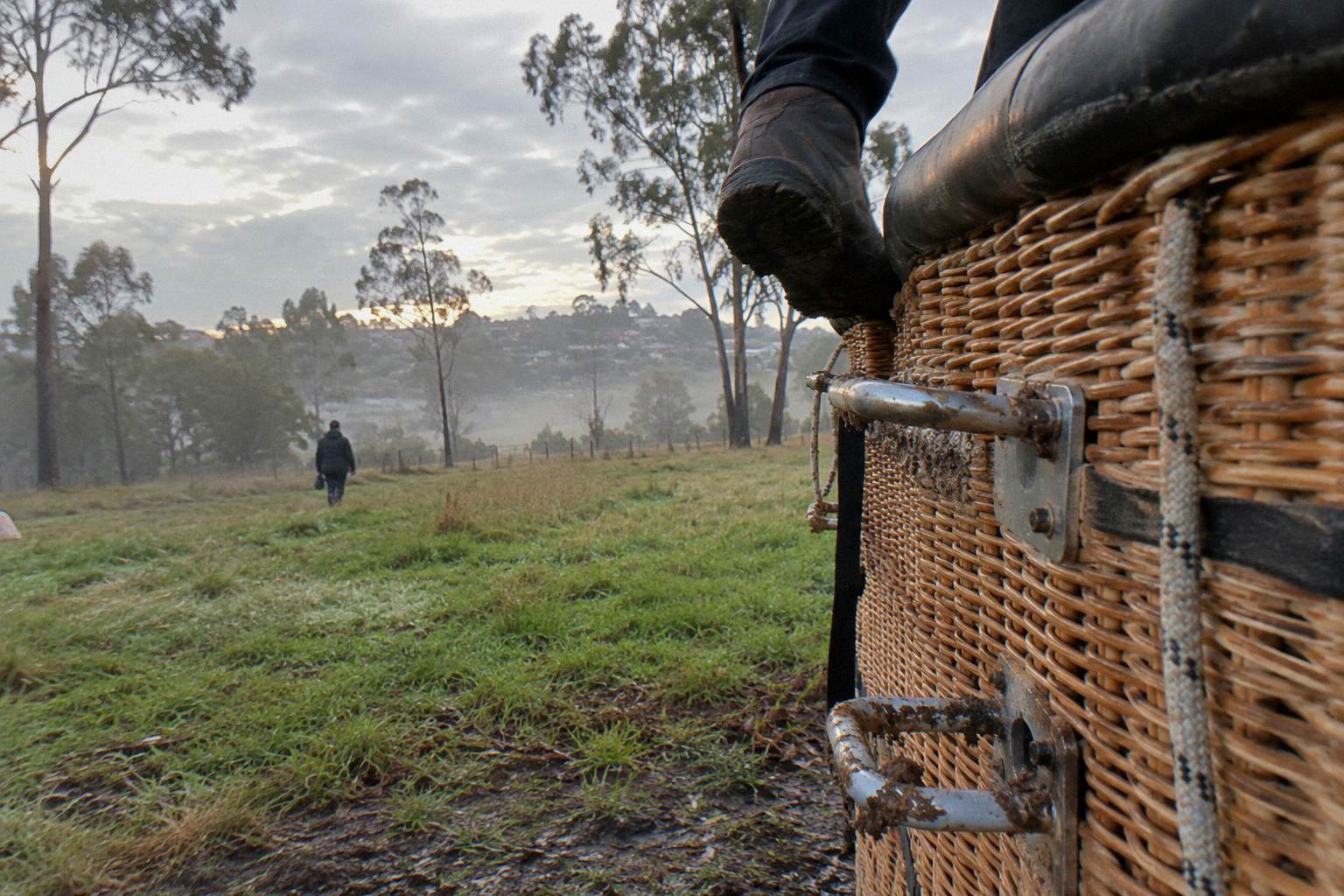
July and August bring the clearest mornings at Amberley, averaging 2.7 and 2.5 oktas of cloud at 9am, while May and June are the most humid at 76 and 77 per cent. Fog is harder to pin down: the Bureau publishes no fog-day or inversion figures, but an ATSB investigation confirms localised fog on a spring morning near Yamanto, close to Ipswich, in October.
That investigation, AO-2021-042, examined a Floating Images scenic charter on 8 October 2021 that descended into localised fog with visibility of about 10 m, struck a tree at about 4 knots, climbed out and landed in a clear paddock with no injuries. The ATSB investigation report found the pilot entered an area of reduced visibility contrary to the VFR visibility requirement, in a limited-scope investigation. It is stated here as fact, neutrally, because it is the one official record of Ipswich spring fog; no other ATSB report was found for the operator.
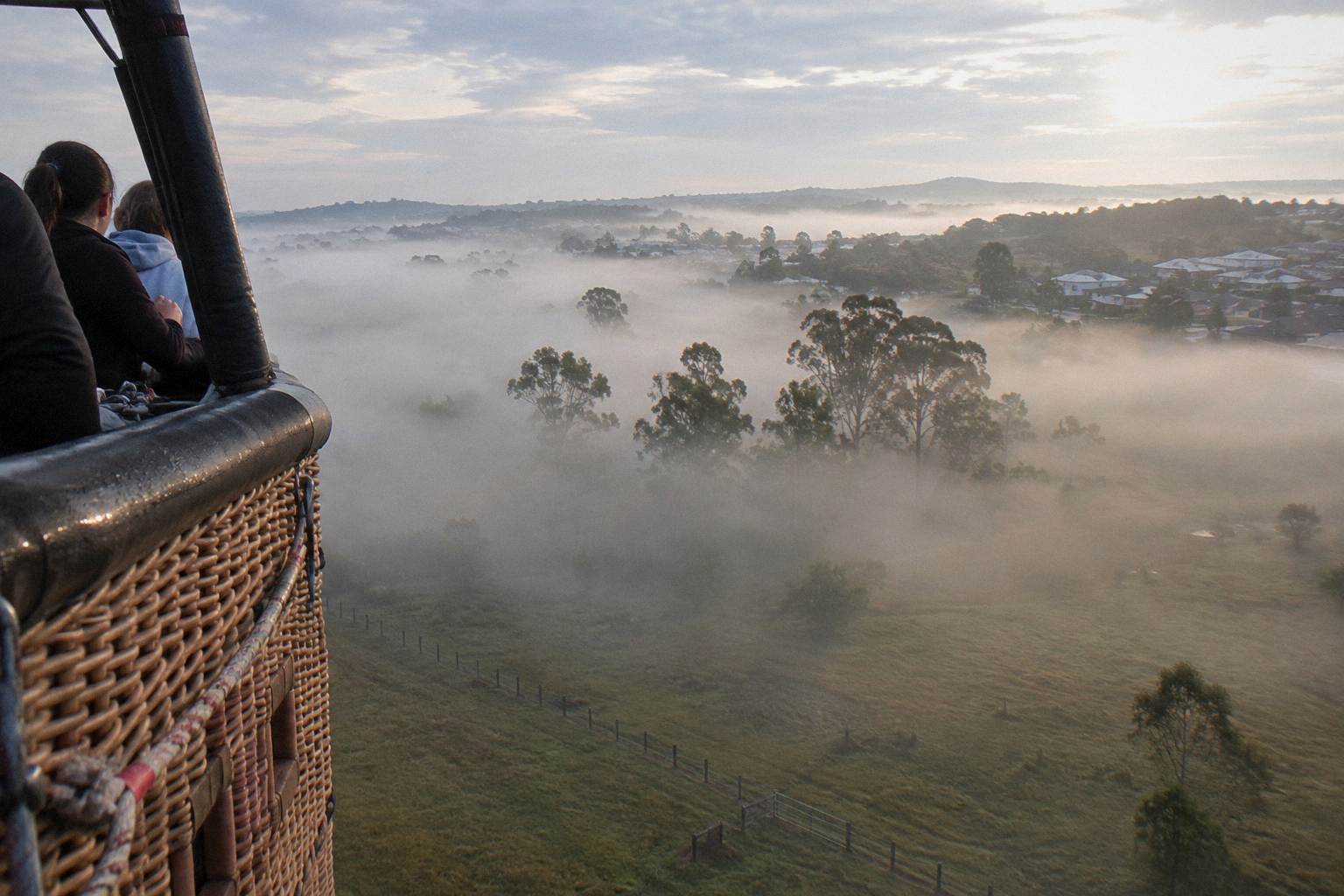
The practical takeaway for picking a month is modest: spring mornings, September to November, carry the clearest cloud statistics but a documented fog risk, which is exactly why the operator confirms flights the evening before and holds a 20 km/h ground-wind limit. The operator's FAQ page, at the Floating Images FAQs, is where its weather-call process is published. Summer's storm season is a different matter: December and January's 119.8 and 116.6 mm mean rainfall mostly falls as afternoon and evening storms, while the dawn flight window often escapes them.
Warm Months Versus Cold Months On The Day
On warm summer mornings a t-shirt is fine at check-in, with January dawns near a 19.7 degree mean minimum, while cold July mornings average 5.4 degrees and can fall well below zero on the record, so dress in layers for the roughly 1 hour standing flight; since the burner overhead adds heat along the way, cold is a comfort matter, not a safety one.
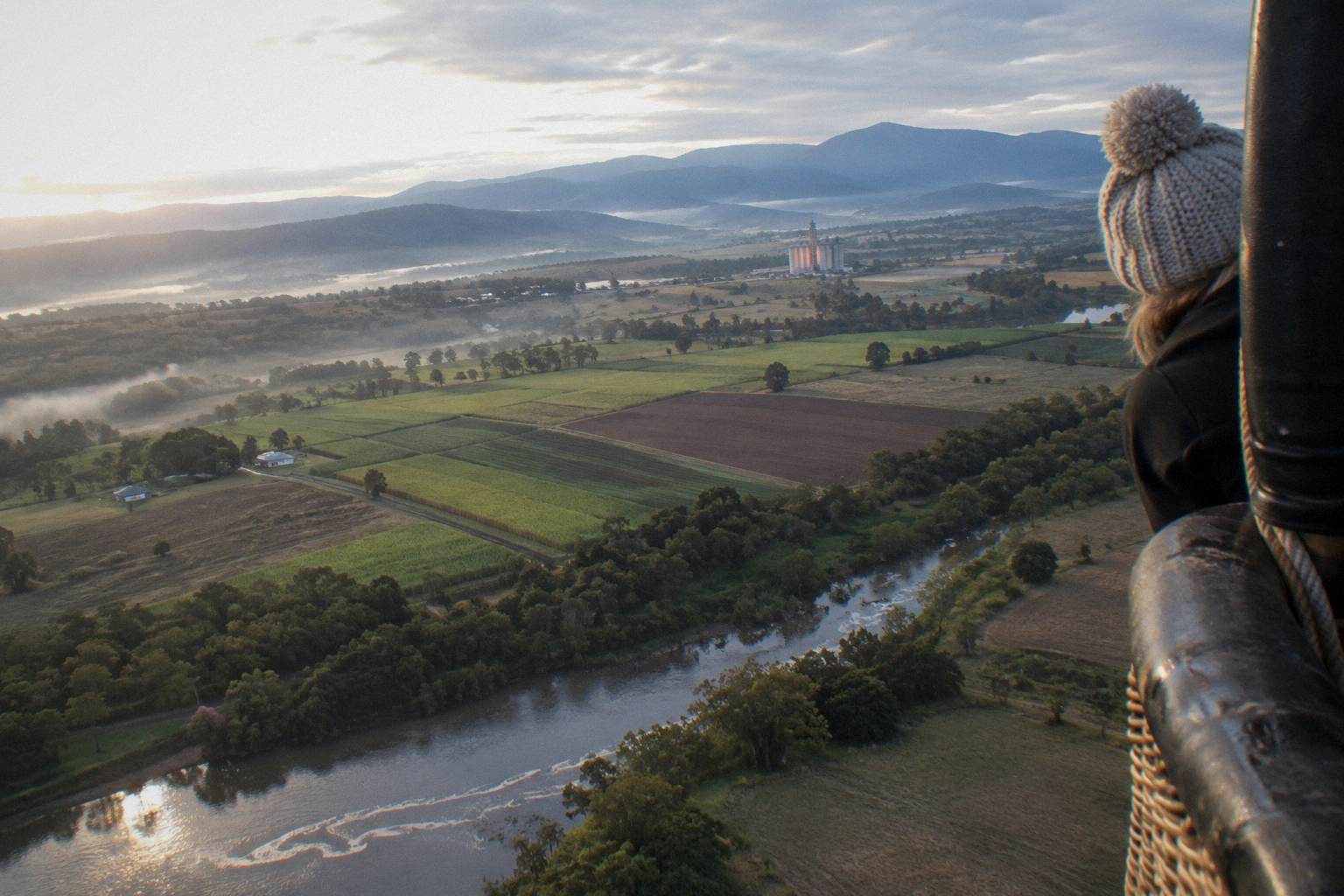
Neither end of the year is wrong. Summer's case is the mild morning and the shortest, darkest setup: a 4am meet means balloon inflation happens in full dark, which many guests find the most striking part. Winter's case is the calmest air in the record, the clearest skies, the driest ground and the latest check-in. What to wear is settled by the operator's own advice: layers, a hat, sunglasses and enclosed shoes, no sandals or heels, and skip white clothing. The guide on what to wear on a balloon flight turns that advice into a packing list.
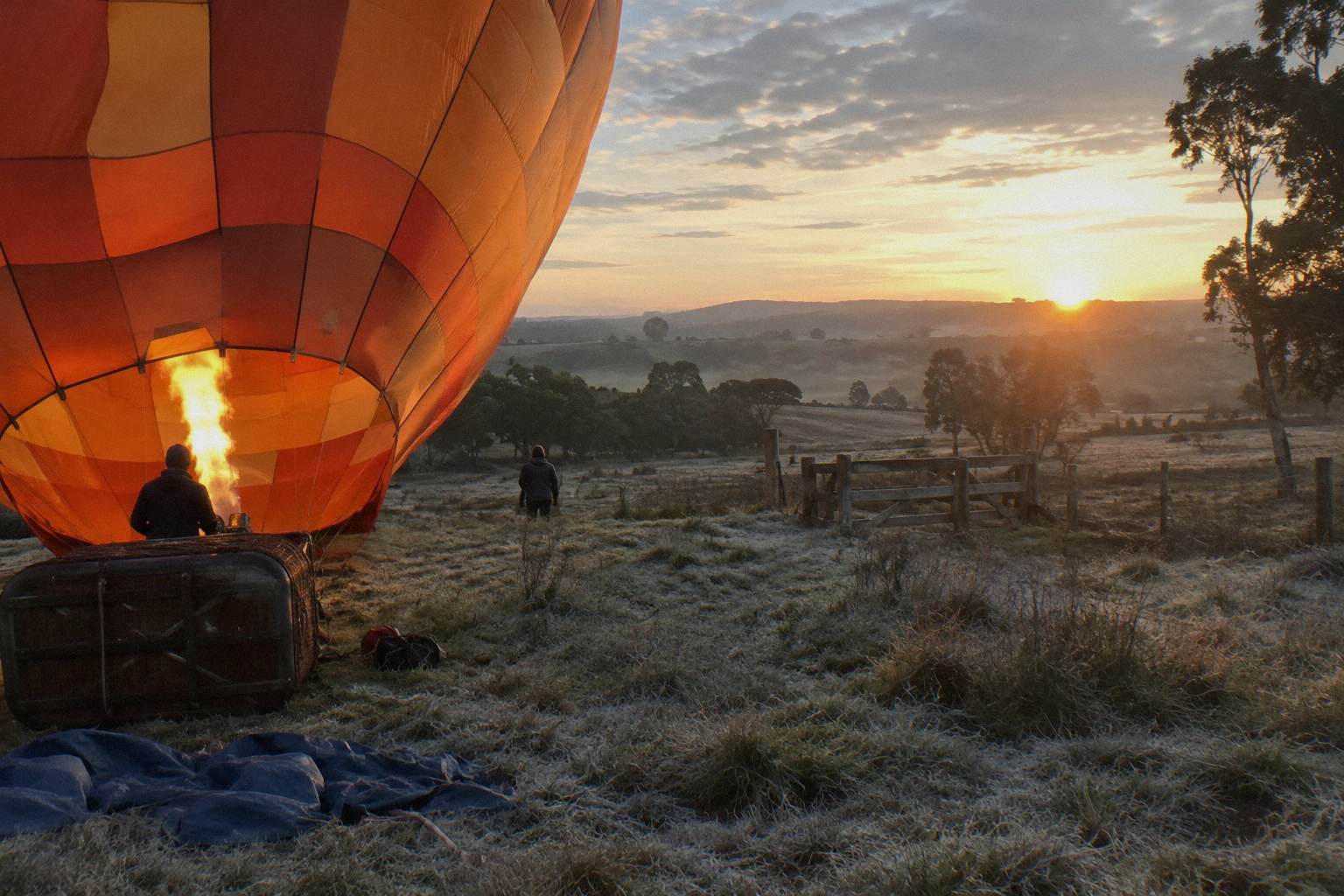
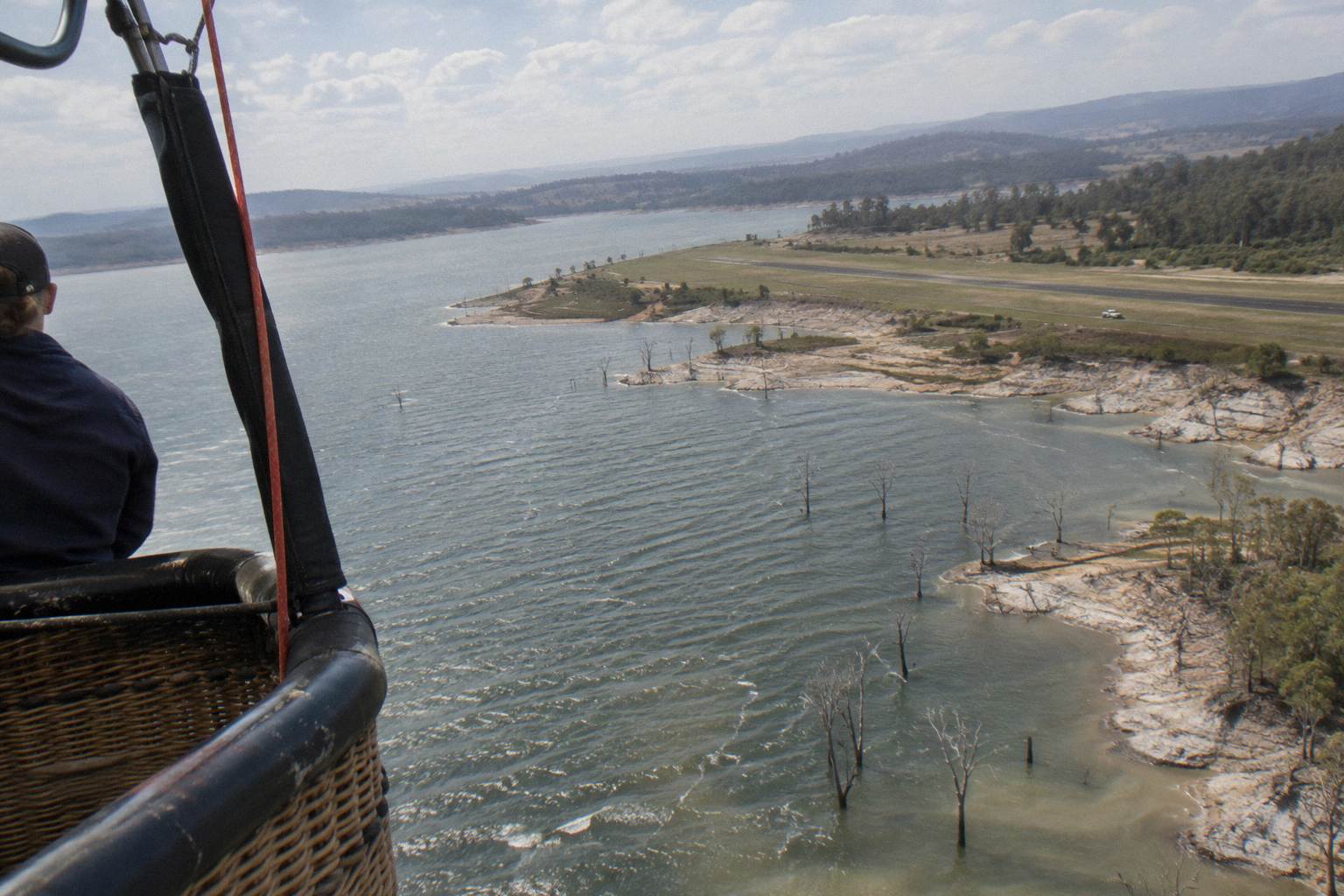
Season also changes the ground you fly over. The operator says views vary with the wind and it promises no specific sight, but its named sights include the heritage city of Ipswich, the Brisbane skyline, Wivenhoe Dam and the ranges of the Great Dividing Range. Summer paints the Lockyer and Fassifern valleys green after December and January rain; winter browns them off but pairs them with the year's clearest air. Neither is better: it is a preference.
Nearby Flights When Your Month Is Fixed
If your travel month is locked by school holidays or an event, nearby Scenic Rim and Gold Coast flights offer alternatives, each run by different operators that launch nowhere near Ipswich. The Brisbane Scenic Rim Balloon Flight With Canungra Vineyard Breakfast by Hot Air Gold Coast lasts about 4 hours with 1 hour in the air, includes a Canungra vineyard visit and wine tasting, and is rated 5.0 from 23 reviews.
That 24-hour free-cancellation window is genuinely useful when a month is fixed and the weather is not: it lowers the cost of a bad-luck dawn to zero, provided you pull the pin in time. The Scenic Rim flights are weather dependent and confirmed the evening before, like the Ipswich one. None of the nearby operators publishes a price on the booking pages this site carries, so treat the calendar and cancellation terms, not the fare, as the planning input, and check the current price when you look at dates. The guide to Scenic Rim balloon flights compares them in full.
The Ipswich flight remains the only one of the eight that launches from Ipswich, and its own cancellation ladder is stricter: A$25 per person to change 8 to 14 days out, A$50 per person from 72 hours to 7 days, and the full fare inside 72 hours, while operator-cancelled flights get reschedule or refund. If your month is fixed and your date is flexible inside it, book the local launch early in the stay so a weather postponement still fits, a tactic that costs nothing and rescues many a trip.
What Trips People Up When Picking A Month
Three mistakes cost readers real money: trusting a claimed best month that no operator or agency publishes, booking a single hard date with no slack, and assuming summer means calm because it means warm. The Amberley record shows the opposite pairing: the warmest months, December to February, are also the windiest at 9am and the wettest, while the coldest months are the calmest. Treat any definitive best-month claim, including from this page, as a red flag.
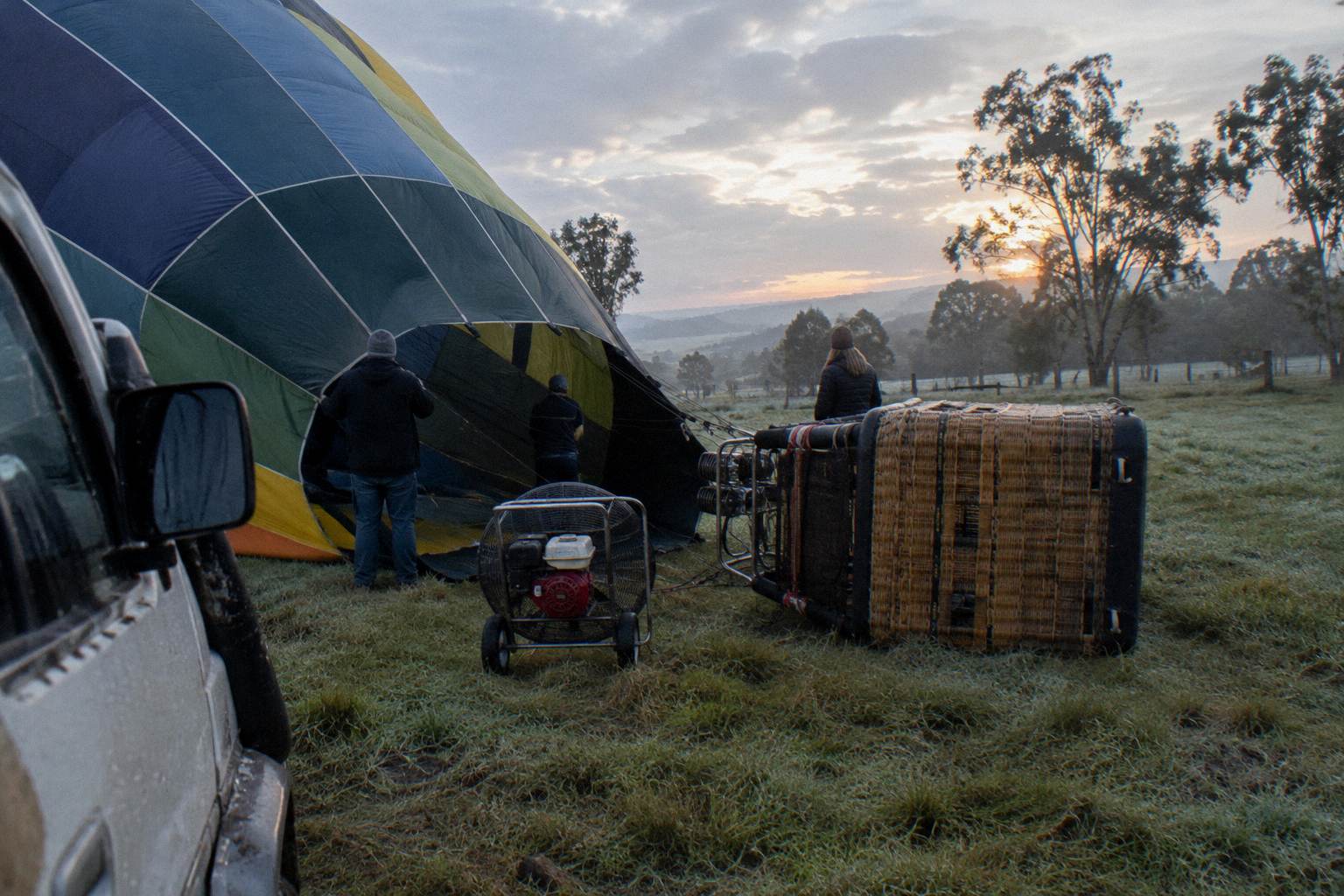
The first mistake is fixed by the tables above: pick by your own trade-off between wind, rain, cold and start time. The second is fixed by scheduling: the operator flies seven days a week except 25 December, so a Tuesday flight with the weekend as backup beats a Saturday-only plan in any month. The third is fixed by the drive-time reality: a Gold Coast departure at 60 minutes and a Brisbane CBD one at 30 minutes both precede a check-in that can be 4.02am in December, and missed check-ins fall inside the full-fare cancellation window.
A fourth trips families. Child fares apply to ages 6 to 12 with a paying adult, a 120 cm minimum height and a 50 kg weight cap, and ages 0 to 5 cannot fly at all. If those rules push you toward school-holiday months, you are automatically in the windier, wetter half of the year, which is a real trade-off worth naming rather than a reason to stay grounded. Weigh it against what to ask the operator, covered in balloon flight cost and packages, and book with a spare morning.
The last mistake is calendar-based: public holidays can close the breakfast restaurant, and 25 December has no flights at all. Valentine's Day and public holidays are also excluded from the weekday-only private charter, which runs from A$2,900. If a special-occasion date in a fixed month is the plan, the balloon flight proposal guide covers what the operator can and cannot stage.
Common Questions About Choosing A Ballooning Month
What Month Is Best For A Hot Air Balloon Ride?
No official best month exists, and the Ipswich operator publishes none: it says it can generally fly year-round. Bureau of Meteorology averages for Amberley show May to August as the calmest, driest, clearest mornings, and November to February as the warmest but windiest and wettest. Pick by your own trade-off between air, rain, cold and check-in time.
Do Balloons Fly In Winter Near Ipswich?
Yes. Winter is statistically the calmest time: mean 9am wind of 5.2 to 5.9 km/h from May to August, the lowest rainfall and the clearest skies in the record. It is cold, with a July mean minimum of 5.4 degrees, so dress in layers per the operator's advice.
What Time Is Check-In In Each Month?
Always 45 minutes before sunrise. Around Ipswich that is roughly 4.02am in December and 4.04am in November at the early end, and roughly 5.51am in June and 5.53am in July at the late end, from sunrise times computed with the NOAA solar position calculation. Your confirmation carries the exact time.
Which Months Have The Most Cancellations?
No cancellation-by-month statistic exists in the operator's pages or the Bureau's record, so none is claimed. The driver of cancellations is the operator's stated 20 km/h ground-wind limit and unsuitable weather generally, with fog a documented spring-morning possibility near Ipswich per an ATSB report. Flights are confirmed by phone the evening before.
Is Summer Too Hot For Ballooning?
No. The flight happens at dawn before the day heats up: January's mean minimum is 19.7 degrees and its 9am wind averages 8.8 km/h, within the flying window. Summer's drawbacks are the very early check-in, the wettest months and the freshest morning breeze in the record, not heat.
Can I Book A Date Now And Change The Month Later?
Partly. The operator's open-dated vouchers are valid 36 months and transferable, and using one within 12 months locks the original price. Changing a booked date costs A$25 per person at 8 to 14 days' notice and A$50 per person from 72 hours to 7 days, with the full fare forfeited inside 72 hours. Nearby operators' booking pages allow free cancellation up to 24 hours before.
If the Ipswich sunrise flight matches your month, Check availability for your dates, and keep one spare morning in reserve: the weather call is made the evening before, and the calm air you came for belongs to no particular month, only to the dawn you are given.